
23 October 2026, 14:38
Loading...
Germany's plan to support new gas-fired power plants collapsed with the government

David Vobořil
15 December 2024, 08:44
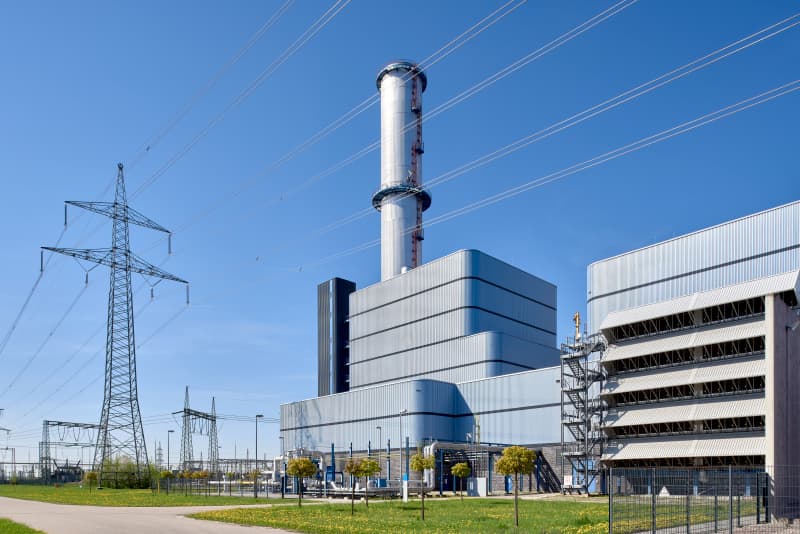
The outgoing German government failed to pass a law enshrining support for the construction of new gas-fired power plants. According to the German energy industry association, this critical issue must be included in the new government's agenda for its first 100 days in office. Plans to launch auctions for these power plants in the first half of 2025 are therefore unrealistic.
Chancellor Olaf Scholz's outgoing government failed to pass a law enshrining support for the construction of new gas-fired power plants. They are intended to ensure sufficient capacity in Germany's power system for periods when the sun is not shining and the wind is not blowing.
According to the German Association of Energy and Water Industries (BDEW), this issue must be included in the new government's agenda for its first 100 days in office.
“The expansion of dispatchable power generation capacity remains critically important,” BDEW chief Kerstin Andreae said after Germany's Ministry for Economic Affairs and Climate Action (BMWK) said the minority government no longer saw any chance of passing the law before the February election.
According to Tagesspiegel, the conservative opposition party Christian Democratic Union (CDU) made clear it would not support the Power Plant Security Act in parliament, meaning Scholz's minority government, comprising the Social Democratic Party (SPD) and the Green Party, does not have enough votes to pass the law.
"Unfortunately, implementation is no longer possible because the necessary majority is lacking. We are therefore now focusing on what is feasible,"the BMWK said, stressing that the construction of backup power plants, with costs estimated at around 17 billion euros by 2045, had already been agreed with the European Commission.
Auctions for new hydrogen-ready gas-fired power plantswere due to begin in the first half of 2025, with the first plants expected to enter operation by 2030.
“These targets are no longer realistic,” Tagesspiegel wrote.
Since gas-fired power plants are intended to replace coal-fired power plants that are gradually being shut down, delays could affect the schedule for Germany's coal phase-out. The German government has approved ending coal-fired power generation in the western part of North Rhine-Westphalia (NRW) by 2030, well ahead of the official 2038 deadline. In eastern Germany, the government expects the operation of coal-fired power plants to become economically unviable before then because of European carbon allowance prices.
Gas-fired power plants that are to be converted to burn hydrogen later are essential to meeting Germany's ambitions to gradually phase out coal mining and to ensuring the country's security of supply, Andreae added.
Mona Neubaur, North Rhine-Westphalia's Green Party economy minister, said in a report to the state parliament that a federal-level support agreement and the swift launch of auctions were necessary to meet the earlier 2030 deadline for ending coal-fired power generation.
Public broadcaster WDR reported that coal might otherwise be needed in North Rhine-Westphalia until at least 2033. Without clarification from the federal government and the EU, the state would not be able to provide investors with the necessary conditions on its own.
Translation disclaimer
This article is a machine translation of the Czech original and has not yet been fully reviewed. In case of any doubt, please refer to the Czech version.
Sdílejte článek prostřednictvím:
You might also like


23 October 2026, 11:01


23 October 2026, 06:34