
28 October 2026, 15:10
Loading...
Poland's new government is changing the country's energy policy
Veronika Jurcová
11 March 2024, 11:31
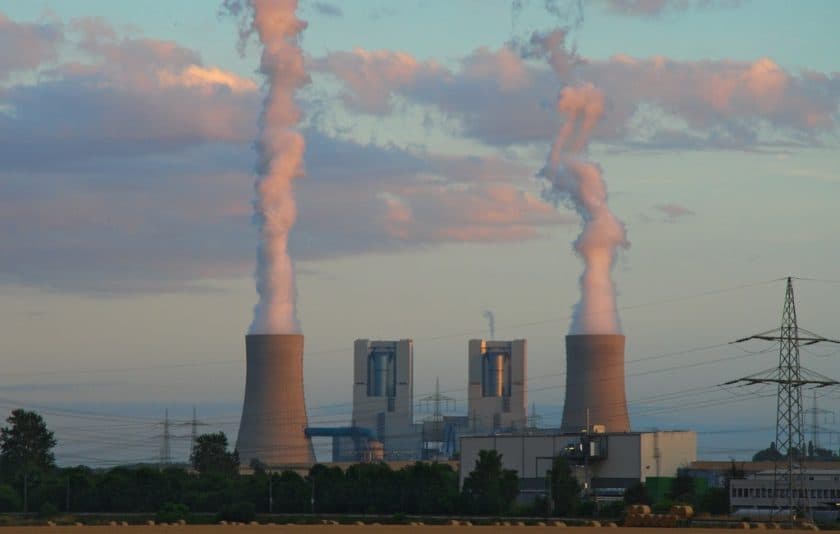
Poland's new government is opening the way to overcoming the dependence of the country's energy mix on coal and is seeking to align energy policy with the EU's climate goals. It is looking for solutions through more intensive electrification and increased electricity generation from renewable sources, primarily wind power, as well as nuclear energy, the Euractiv website reports.
After 8 years in power, the far-right Law and Justice party (PiS) lost to the centrist opposition in 2023. The new government, which aims to shift the country towards greater sustainability, faces considerable challenges.
Polish State Secretary for Climate and the Environment Krzysztof Bolesta described Poland's situation as very difficult at a conference in Brussels on 4 February. Coal accounts for 70% of the electricity generated in Poland, and almost half of households in the country use it for heating. Coal mining also remains an important economic factor in rural areas. As a result, although Poland accounts for only 8% of the EU population, the country emits 12% of the EU's CO2 emissions.
Although Poland's official deadline for a complete coal phase-out is 2049, the deployment of renewable energy is still being held back by administrative barriers.

Source: CLEW/Narawad. Poland: energy consumption by source, 1990-2022
The new government's priorities and coal phase-out
The high share of coal is the cause of very poor air quality in Poland.
"This is the number one priority for change, because you cannot live in a country that is basically killing you," Krzysztof Bolesta said.
The "Clean Air" programme aims to eliminate smog episodes in Poland. It has a budget of 25 billion euros through 2030, with part of the funding coming from the EU. Poland will introduce stricter standards, while also investing more in renewable energy, energy storage and the electrification of local public transport.
Another political priority for the new government is to present an action plan for electrifying the country, with a target of 35% by 2030.
Electrification is considered the preferred option in most sectors of the economy because of its positive impact on air quality. But electricity demand will grow, and it is currently met mainly by coal-fired power plants.
"Poland is in a difficult position because we have to phase out coal while avoiding excessive investment in gas," says Joanna Maćkowiak-Pandera, president of the Forum Energii think tank.
Solutions for the energy transition
According to Poland's new energy and climate plan for 2030, the aim is to achieve at least a 50% share of renewables in electricity generation and 30% in final energy consumption. However, during the general election campaign, Prime Minister Donald Tusk pledged to reach a 68% share of renewable electricity by 2030.
"It has to be a portfolio of solutions," Bolesta says, adding that the scale of the task of bringing Poland closer to climate neutrality means that it cannot focus on electricity alone in the short term. Nuclear energy is therefore a solution over a longer time horizon.
Poland's first nuclear power plant is planned near Choczewo on the Baltic Sea coast. Construction is expected to begin in 2026, with the plant due to enter operation by 2033.
The government is also betting on wind power, a technology that previous governments restricted by banning the construction of wind turbines near residential areas. The ban was eased following pressure from the EU.
Companies building wind farms hope the new government will further reduce the minimum setback distance from homes, doubling the area available for onshore wind farms.
Bolesta also announced that Poland will invest in carbon removal technologies and biomethane production. The latter has particular potential because of the country's large agricultural sector.
Translation disclaimer
This article is a machine translation of the Czech original and has not yet been fully reviewed. In case of any doubt, please refer to the Czech version.
Sdílejte článek prostřednictvím:
You might also like

28 October 2026, 13:08

28 October 2026, 11:10

28 October 2026, 09:08
