
1 November 2026, 21:20
Loading...
Restarting nuclear units helps Japan reduce gas imports

Eduard Majling
14 February 2024, 07:01

Following the accident at the Fukushima nuclear power plant in March 2011, Japan gradually shut down all of its remaining nuclear units. The resulting shortfall in nuclear power generation was made up by fossil fuels, which also contributed to a sharp rise in imports of liquefied natural gas. However, as more units have gradually restarted, the country has managed to reduce its LNG imports in recent years.
The accident at the Fukushima nuclear power plant, which occurred nearly 13 years ago, had a major impact on Japan’s energy sector. Following the accident, the country gradually shut down all 48 nuclear units, which had previously generated up to 300 TWh of electricity annually.
According to data from the U.S. Energy Information Administration (EIA), Japan generates most of its electricity from fossil fuels. In 2022, these accounted for 71% of the country’s electricity generation, with natural gas making up a third of that share. As more units gradually return to operation, LNG imports are falling. After three units came back online in 2018, LNG imports fell by 7% in 2019, according to the agency. They then fell by a further 7% between 2019 and 2022.
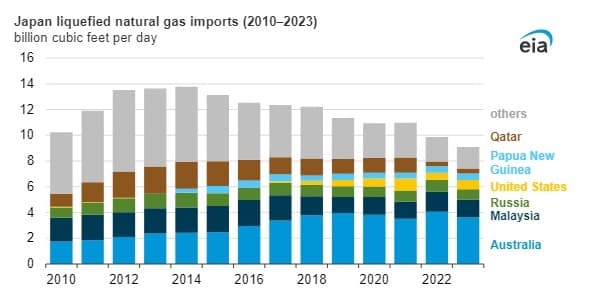
Japan's liquefied gas imports between 2010 and 2023 by country of origin. Source: EIA
The restart of Japan’s nuclear units is proceeding relatively slowly. According to the EIA, by the end of last year, 12 units with a combined installed capacity of 11 GW had successfully returned to operation. A total of 10 units are under review by the nuclear regulator, while a further five have received the regulator’s approval but have yet to restart.
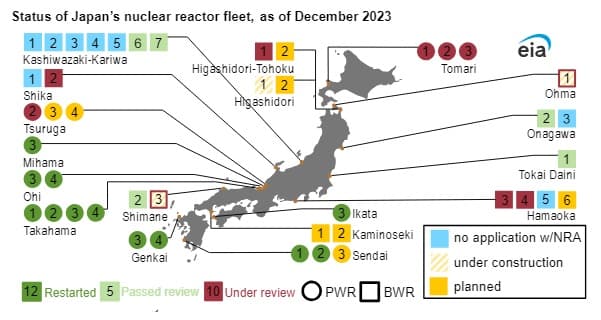
Status of individual nuclear units in Japan at the end of 2023. Source: EIA
Japan imports most of its liquefied gas, up to 90%, under long-term contracts. Australia was the country’s largest LNG supplier last year, with a share of around 43%. Malaysia is the second-largest supplier; Australia took the top spot from it in 2012.
Translation disclaimer
This article is a machine translation of the Czech original and has not yet been fully reviewed. In case of any doubt, please refer to the Czech version.
Sdílejte článek prostřednictvím:
You might also like
1 November 2026, 16:09
1 November 2026, 07:59

31 October 2026, 12:55

31 October 2026, 08:21