1 November 2026, 21:20
Loading...
Slowdown in green energy investment threatens Joe Biden’s climate goals
Veronika Jurcová
19 December 2023, 10:52
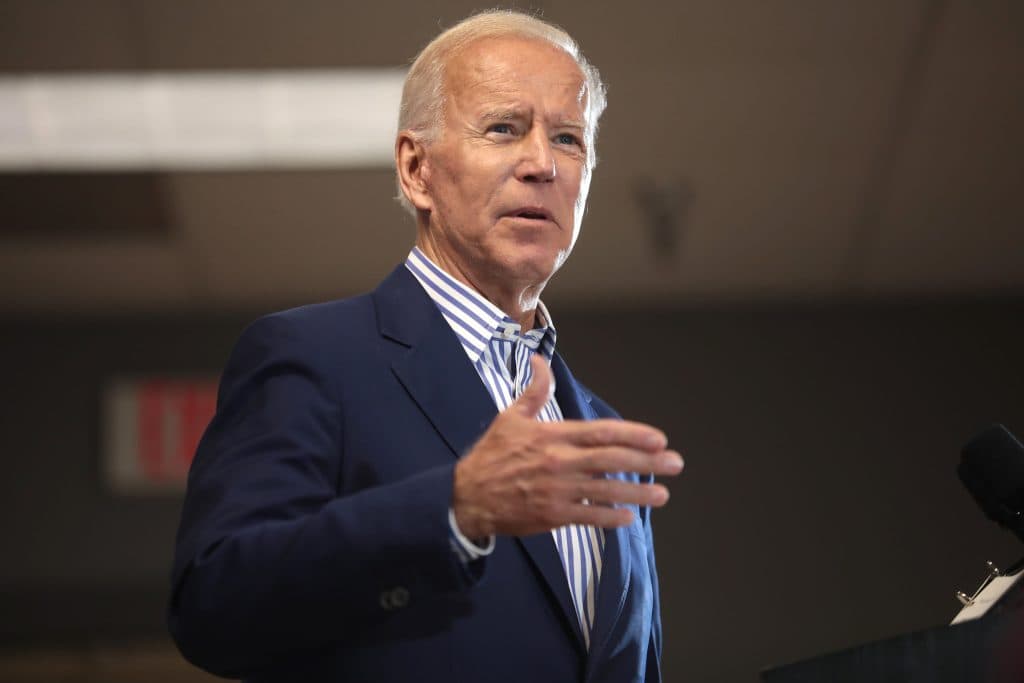
A number of US clean energy investments have been delayed or canceled just one year after Washington passed the landmark Inflation Reduction Act (IRA). The law provides significant financial support for tackling climate change. Financial Times is warning of a risk that the Biden administration’s emissions targets will be delayed.
In August 2022, President Joe Biden signed the Inflation Reduction Act (IRA), which allocated 370 billion dollars to accelerate the decarbonization of the world’s largest economy. The funding targets investment in innovation, research, improved manufacturing processes, a more robust energy grid and the decarbonization of power generation. The IRA also includes billions of dollars in new or expanded tax credits for the production of low-emission technologies, aiming to bring some manufacturing processes back to the United States from Asia and shorten supply chains, partly in response to the COVID-19 crisis.
In recent weeks, however, several companies behind major subsidy-supported investments have canceled or suspended their plans. The world’s largest offshore wind energy developer, Ørsted, canceled two projects with a combined installed capacity of 2.2 GW in New Jersey this week. Last week, automaker General Motors abandoned plans to produce 400,000 electric vehicles by the middle of next year, citing a slowdown in near-term growth.
In October, BlackRock-backed Navigator CO₂ canceled a 3 billion dollar carbon capture and storage project, citing what the company described as the unpredictable nature of regulatory and government processes.
Reasons for the slowdown
Reasons for delays or outright cancellations include high interest rates, supply chain constraints and obstacles to permitting new infrastructure. Some projects have also been suspended because of uncertainty over tax rules and strict provisions in the new law concerning domestic manufacturing, companies said.
The announcements have prompted some analysts to reassess their assumptions about how quickly the United States will be able to cut greenhouse gas emissions.
In its preliminary report in August 2022, Rhodium Group forecast that US greenhouse gas emissions would fall by 32% by 2030. In July, it revised its forecast to a reduction of at least 29%, citing faster economic growth, lower natural gas prices, slightly higher electricity costs and the challenge of building new green industries.
Ben King, deputy director for energy and climate at think tank Rhodium Group, stressed that the IRA and the earlier 1.2 trillion dollar infrastructure law were never enough to meet US climate targets, and that short-term forecasts may need to be revised.
US President Joe Biden. Author: Gage Skidmore
The Biden administration is aiming to deploy 30 GW of offshore wind capacity by 2030. In recent weeks, however, energy companies Avangrid and Shell have also withdrawn from several projects, alongside Ørsted. According to consultancy BloombergNEF, more than half of all US offshore wind contracts have been terminated this year or are at risk of being terminated.
“Biden’s offshore wind targets look impossible at this point,” said Atin Jain, a senior wind analyst at BNEF, which cut its offshore wind forecast by almost 30% last month. “It is also unlikely that the US will meet its 80% clean energy target by 2030. The US is not bringing enough wind and solar capacity online to meet that goal.”
Other large-scale onshore wind and solar projects have also been affected by financing costs associated with interest rates and the complex process of connecting remote generation to the power grid.
“Despite the enormous opportunities, we continue to face significant market challenges that must be addressed to fully realize the potential of the IRA and achieve the Biden administration’s target of decarbonizing the power sector by 2035,” said Gregory Wetstone, president of the American Council on Renewable Energy.
At the end of 2022, more than 10,000 clean energy projects were waiting to connect to the power grid. According to a report by Lawrence Berkeley National Laboratory, they represented about 1,350 GW of generation capacity and 680 GW of energy storage.
A typical project built in 2022 took five years to go from submitting a grid connection request to commercial operation, compared with three years in 2015. The report says the backlog is growing, partly because IRA incentives are attracting more and more projects.
“The biggest problem in the US right now is the availability of transmission and grid connections,” said Martin Pochtaruk, CEO of solar manufacturer Heliene.
Positive market news
While some major investments are slowing, others are moving forward. Energy company Dominion Energy received approval this week to build a 2.6 GW offshore wind farm in Virginia. Toyota, the world’s largest automaker, announced that it would invest another 8 billion dollars in its battery manufacturing plant in North Carolina.
The White House stressed that the IRA has unlocked record private-sector investment in green energy, including more than 11 billion dollars in solar manufacturing and 7.7 billion dollars in offshore wind. “Biden’s actions are lowering barriers for the private sector, revitalizing American manufacturing, reducing costs and strengthening energy security, while creating well-paid jobs, especially in low-income and energy communities,” a White House spokesperson said.
Michelle Solomon, a senior analyst at Energy Innovation, expects the economic difficulties to be a temporary setback and stresses that regulatory tools are available to help meet emissions targets.
“Clean energy remains an attractive investment, even if it now requires somewhat more investment,”Solomon said. She expects clean energy installations to increase in 2023, helping meet the 2030 emissions targets, if we double down on the factors that can speed up renewable energy deployment.
Translation disclaimer
This article is a machine translation of the Czech original and has not yet been fully reviewed. In case of any doubt, please refer to the Czech version.
Sdílejte článek prostřednictvím:
You might also like
1 November 2026, 16:09
1 November 2026, 07:59
31 October 2026, 12:55
31 October 2026, 08:21