10 October 2026, 07:37
Loading...
American LNG from Texas heads to Europe. Golden Pass begins exports amid geopolitical turmoil
Veronika Jurcová
28 April 2026, 06:18
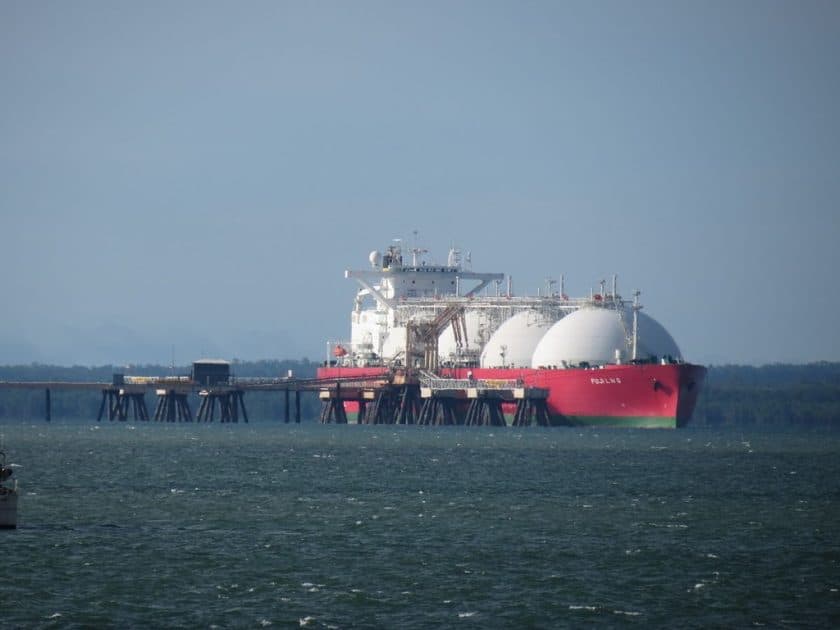
The new Golden Pass LNG export terminal in Texas has shipped its first cargo of liquefied natural gas. The tanker is bound for the Zeebrugge terminal in Belgium and, according to traders, is expected to partly offset supply shortfalls from Qatar following attacks on its LNG infrastructure. The project is starting up amid heightened volatility in the global gas market, underscoring the growing role of the United States in securing Europe’s energy supply, S&P Global reports.
The US Golden Pass LNG project has reached an important milestone, with its first-ever export cargo of liquefied natural gas (LNG) departing the terminal at Sabine Pass, Texas, on April 22. The Al Qaiyyah tanker is bound for Belgium’s Zeebrugge terminal, where it is due to arrive on May 8.
Golden Pass LNG is a joint venture between QatarEnergy, Qatar’s state-owned company, with a 70% stake, and US company ExxonMobil, which holds the remaining 30%. The first export followed shortly after production began at the first liquefaction unit at the end of March. According to the US Energy Information Administration (EIA), it is the tenth major LNG export facility in the United States and the only new US terminal expected to begin supplying global markets in 2026.
Supply shortfalls in Qatar and uncertainty in the Strait of Hormuz increase the importance of new sources
According to several LNG traders in the Atlantic region, the first cargo could partly offset supply shortfalls from Qatar’s Ras Laffan, where production was curtailed following attacks linked to the conflict in the Middle East. Italian energy group Eni has been identified as a likely buyer. Belgium’s Zeebrugge terminal has long been one of the main European entry points for Qatari LNG.
Qatar was targeted in March by direct missile attacks on its LNG facilities in the Ras Laffan industrial area, damaging two large liquefaction trains. As a result, about 17% of the country’s export capacity was knocked offline, equivalent to approximately 12.8 million tonnes of LNG per year. QatarEnergy subsequently said that Belgium and Italy would be among those affected, and acknowledged that it might declare force majeure on some long-term contracts for up to five years.
The start of exports from Golden Pass comes as the conflict is also restricting transit through the Strait of Hormuz, which normally carries about one-fifth of global LNG supplies. Uncertainty surrounding this key shipping route is keeping gas prices in global markets elevated and volatile.
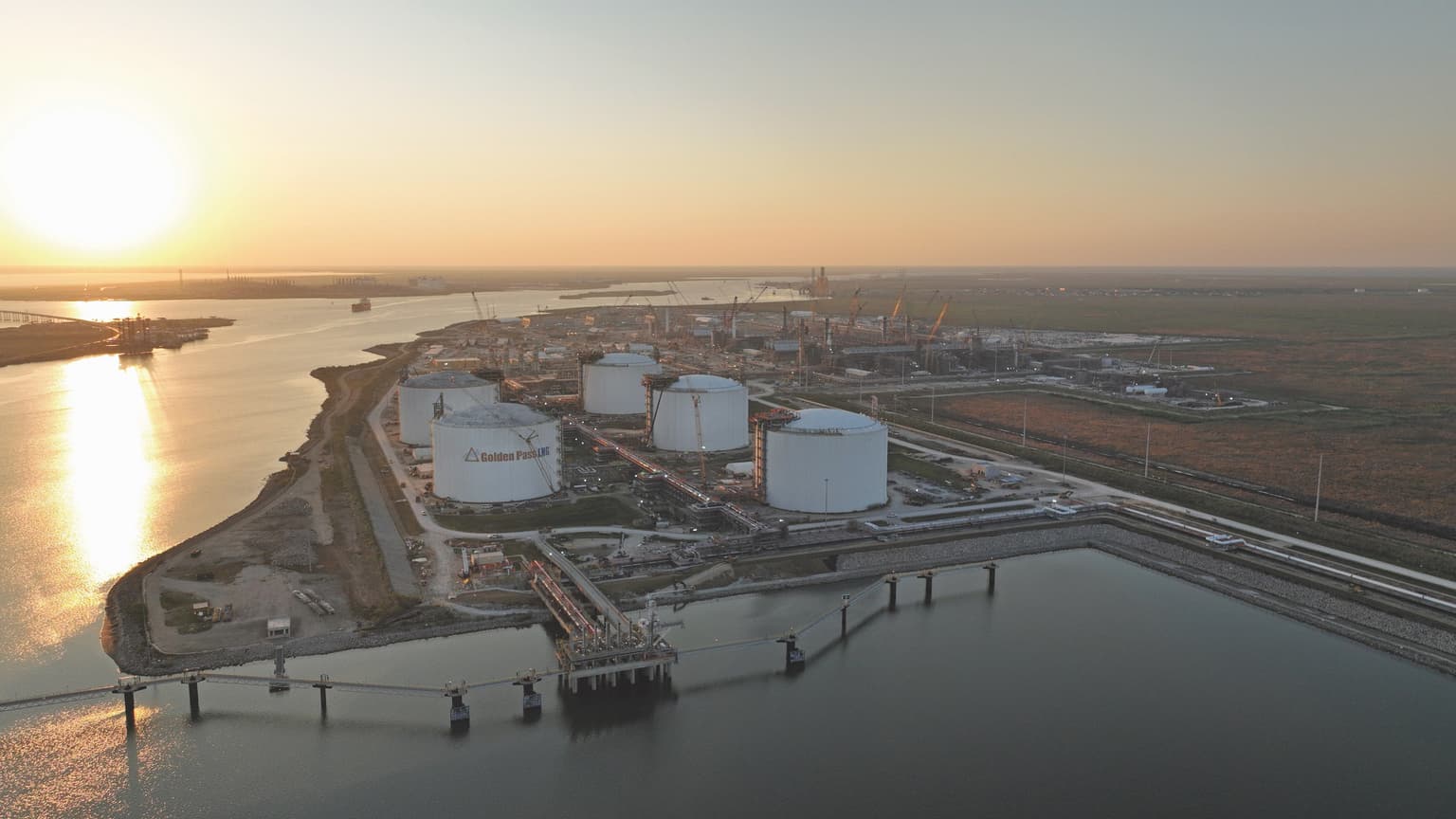
Source: Golden Pass LNG. Construction of the Golden Pass LNG export project - Train 1
Once fully completed, Golden Pass LNG will be capable of exporting about 18 million tonnes of LNG per year. The terminal includes three liquefaction units, five storage tanks with a capacity of 155 thousand cubic metres each, and two berths designed to accommodate even the largest LNG tankers. Construction and commissioning of the second and third units are continuing, with their start-ups planned in stages after operations at the first unit have stabilized. According to the EIA, the second unit is expected to begin operating in the second half of 2026 and the third in the first half of 2027.
Golden Pass CEO Alex Savva called the first export a defining moment for the project, its employees and the United States, emphasizing that the terminal is now beginning to supply reliable US LNG to the global market. ExxonMobil also expects global LNG demand to grow by approximately 3% a year through 2050, driven primarily by demand in Europe and Asia.
Translation disclaimer
This article is a machine translation of the Czech original and has not yet been fully reviewed. In case of any doubt, please refer to the Czech version.
Sdílejte článek prostřednictvím:
You might also like
10 October 2026, 07:02

9 October 2026, 13:47