1 October 2026, 06:12
Loading...
US LNG exports jumped 23%, but Europe gained almost nothing extra from them

Jakub Malý
1 October 2026, 06:12
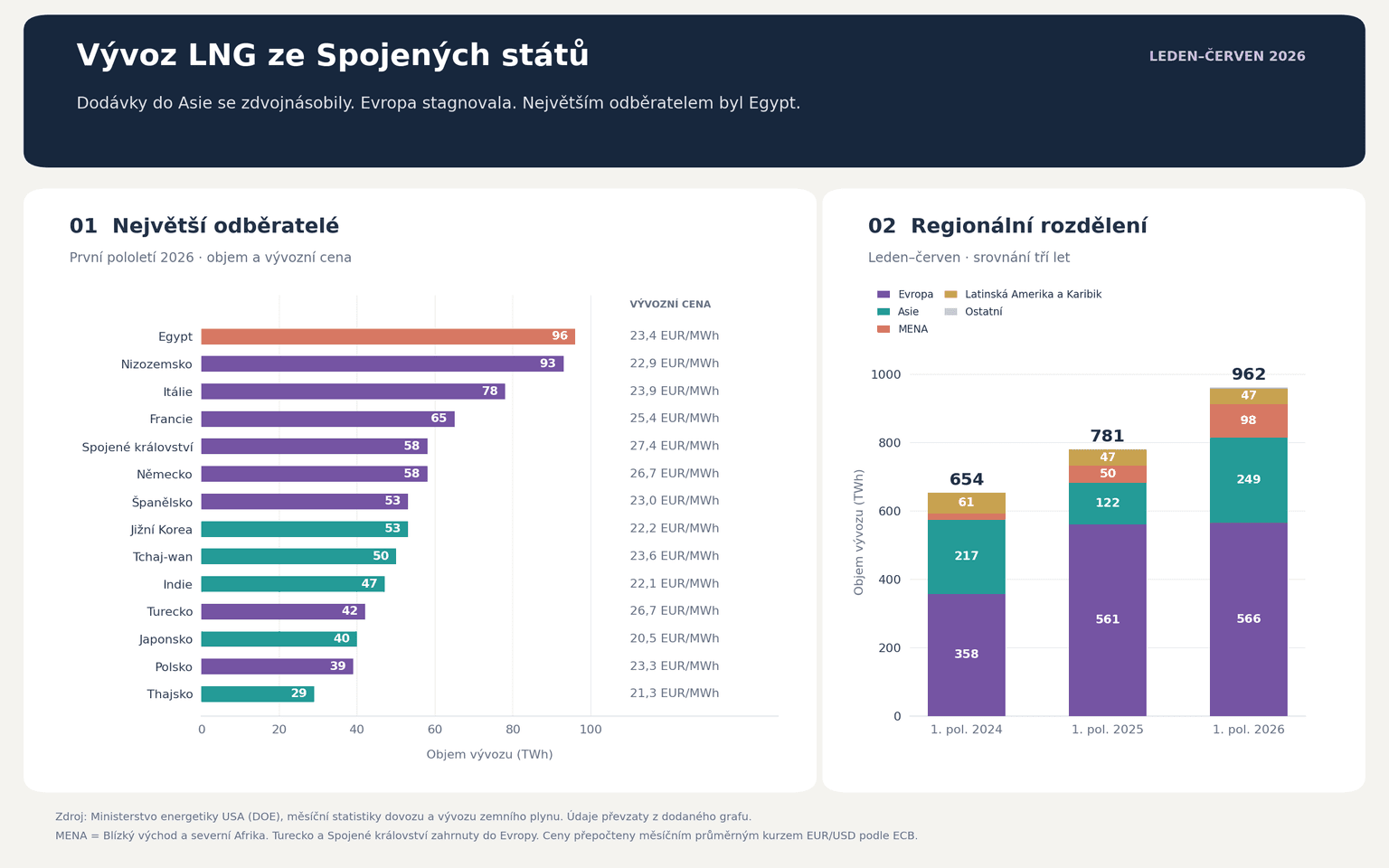
The United States exported approximately 962 TWh of liquefied natural gas (LNG) in the first half of 2026, up 23% year on year. The value of exports reached approximately EUR 23 billion. New liquefaction capacity helped meet increased demand for supplies to Asia in particular, while volumes headed to Europe remained almost unchanged.
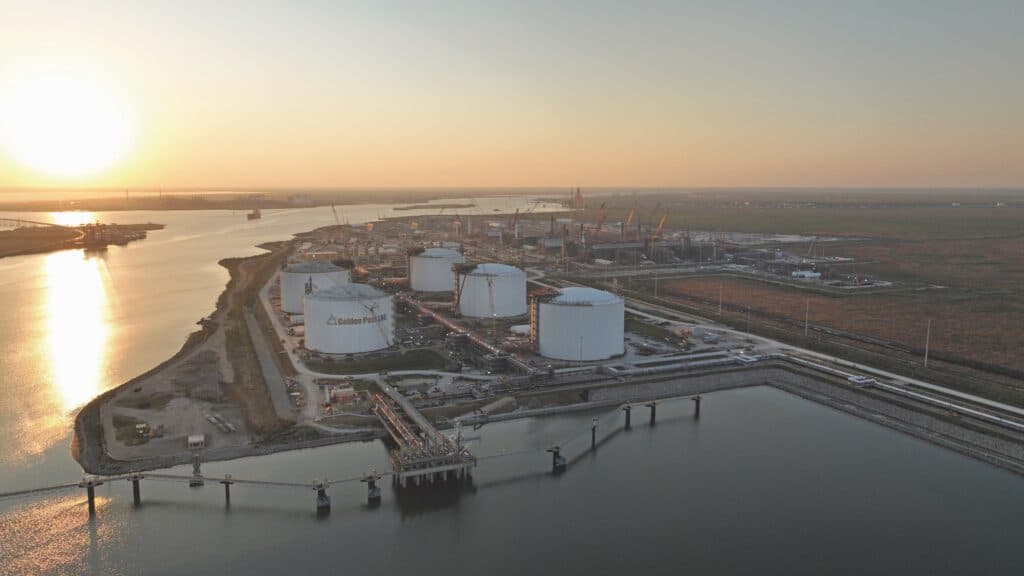
According to the US Energy Information Administration (EIA), LNG exports averaged 17.4 billion cubic feet per day in the first six months of this year. In energy terms, this is equivalent to approximately 5.3 TWh per day, or a total of 962 TWh for the half-year. Growth was driven mainly by the start-up of the Plaquemines terminal and the expansion of Corpus Christi. The new Golden Pass terminal also began exporting in April.
New capacity, however, explains only part of the increase. The EIA notes that the disruption to shipping through the Strait of Hormuz in March affected approximately one-fifth of global LNG supplies, primarily from Qatar. Asian buyers therefore sought replacement cargoes, boosting their interest in US gas.
US LNG deliveries to Asia increased from approximately 122 to 249 TWh, more than doubling. Exports to Europe, by contrast, reached approximately 566 TWh, compared with 561 TWh a year earlier. Europe thus remained the largest market for US LNG, but other regions absorbed most of the additional supply. Among individual countries, Egypt was the largest buyer, at approximately 96 TWh, followed by the Netherlands at 93 TWh.
Author's own analysis using AI
Price rose in dollars but fell in euros
The volume-weighted export price was approximately EUR 23.90/MWh in the first half of the year, compared with EUR 24.79/MWh in the same period of 2025. In dollar terms, however, it moved in the opposite direction, rising from USD 7.92 to USD 8.19 per million British thermal units (MMBtu). The difference is explained by the euro's appreciation against the dollar, which more than offset the increase in the dollar price when converted.
The value of exports nevertheless rose from approximately EUR 19.4 billion to EUR 23 billion, thanks to higher delivery volumes. This figure is an estimate of the gross value of exported gas, calculated as the product of export volumes and reported prices. It does not represent exporters' profits.
The FOB export price—that is, the price when LNG is loaded onto a ship at a US port—is also not the price of gas delivered to a European customer. Shipping, regasification and transportation through the European gas transmission network must be added. The final purchase price is also affected by contractual terms and hedging.
Similarly, the difference between the export price and the price of gas at the US Henry Hub trading hub cannot be described as a net margin. It also includes costs and contractual payments related to liquefaction. The low price of US natural gas therefore does not, by itself, mean that European buyers can purchase LNG on similar terms.
What the trend means for Czechia
For the Czech Republic, the direct link to the LNG market is the Dutch Eemshaven terminal, where ČEZ has reserved capacity of three billion cubic metres per year. In 2025, 28 ships carrying gas destined for Czechia arrived there, delivering a total of 2.48 billion cubic metres. ČEZ also arranged the entire transport chain from a US liquefaction terminal independently for the first time.
The first-half results show that the expansion of US capacity is increasing gas availability on the global market, but does not automatically bring higher supplies or lower prices to Europe. For Czech industry, heating plants and planned gas-fired power plants, access to import infrastructure must therefore be matched by the procurement of the commodity itself. When assessing future gas costs, it is important to monitor not only the construction of new terminals but also trends in Asian demand and the reliability of other global suppliers.
Translation disclaimer
This article is a machine translation of the Czech original and has not yet been fully reviewed. In case of any doubt, please refer to the Czech version.
Sdílejte článek prostřednictvím:
You might also like


30 September 2026, 13:45

30 September 2026, 12:31
30 September 2026, 12:13