4 October 2026, 21:07
Loading...
Danish Fayard to repair the last Russian LNG tankers this summer
Vojtěch Kříž
7 June 2026, 08:13
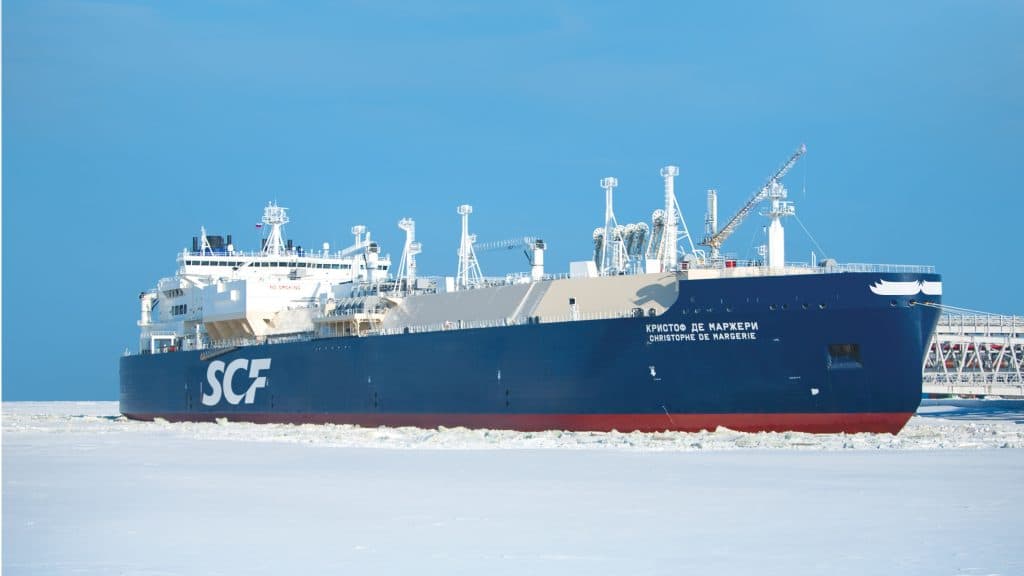
The Danish port of Fayard continues to repair and service LNG tankers carrying Russian gas from the Yamal field. It is the last European port still offering such services to these types of tankers. This is happening despite opposition from the Danish government and relatively shortly before a ban on providing services to vessels linked to Russia comes into force.
Specifically, according to an analysis by the NGO Urgewald, the port is expected to help repair six of the fleet of fifteen to twenty icebreakers of this type this summer. Last year, the Danish port serviced five of these tankers.
These are Arc7-class LNG tankers. They are a special type of tanker adapted to the Arctic environment. Russian gas giant Novatek developed them together with Finnish company Aker Arctic, and they were built by South Korean company DSME (now Hanwha Ocean).
The only other operator of shipyards in Europe with facilities advanced enough to service these vessels is Dutch company Damen. However, it stopped servicing these tankers last year. It should be noted, though, that the company is under investigation by Dutch prosecutors over alleged violations of EU sanctions against Russia and a history of corruption.
According to the Financial Times, Fayard said:
“We support EU energy policy and sanctions against Russia. The Commission has decided that LNG from Yamal will be needed until 2027, and therefore we service ships that arrive at European ports and bring LNG to Europe. In doing so, we maintain maritime safety and support the EU.”
The EU has significantly reduced its imports of Russian gas during the more than four years of war. In addition, the aforementioned ban on imports of Russian gas is due to take effect next year.
While deliveries via pipelines such as Brotherhood, Nord Stream and TurkStream have plunged compared with pre-war years (TurkStream is the only one still delivering any gas to the EU, and according to Russian state media, deliveries even increased slightly this year), LNG imports—specifically LNG from the Yamal LNG project—rose 15% year on year in the first quarter of this year. This is probably related to the disruption of some gas supplies from the Persian Gulf due to problems in the Strait of Hormuz.
Sanctions, icebreakers and the shadow fleet
The fleet of these 30 to 35 vessels is controlled by several multinational companies and conglomerates. Fifteen of them serve the Yamal field. Some are based in Russia or China, but their owners also include Greek company Dynagas. Since the start of the war in Ukraine, several of these vessels have been transferred to unknown companies, probably shell companies based in Dubai. Some of them are likely part of the so-called shadow fleet, which helps circumvent some sanctions.
According to Bloomberg, there is evidence of LNG tankers that are probably part of this fleet. Some analysts also say that a sale by Western companies cannot be ruled out once the full ban on Russian gas takes effect next year. There would probably be buyers in Asia or Russia. The same applies to other stakes in Russian projects. TotalEnergies, for example, sold its stake in Arctic LNG 2, which is also a Russian LNG project.
The shadow fleet is a phenomenon best known from the oil market, where Russia and Iran have been using it for some time. The natural gas market has not entirely escaped this trend either. Sales of oil and gas remain a key source of revenue for Russia, which is also one of the main reasons extensive sanctions were imposed on Moscow. Russia is therefore benefiting from the current rise in energy prices, but it also has to contend with a long-term decline in gas deliveries to Europe. It is therefore possible that Russia will increasingly turn to the shadow fleet to export this commodity, even after European shipyards and ports cease providing all services.
Translation disclaimer
This article is a machine translation of the Czech original and has not yet been fully reviewed. In case of any doubt, please refer to the Czech version.
Sdílejte článek prostřednictvím:
You might also like
3 October 2026, 13:01
3 October 2026, 07:43
2 October 2026, 21:55