European gas prices little changed despite Middle East tensions


The price of natural gas on the European market edged down this morning, falling below 39 euros per megawatt-hour (MWh), before beginning to rise slightly in the afternoon. Even so, it remains around the levels seen since spring. The escalation of tensions in the Middle East, an important source of gas and oil, has so far had little impact on prices in Europe, analysts say, mainly because the market is well supplied by Norway and Russia. Moreover, gas in Europe is already more than four times as expensive as gas on the US market, according to data from Statista.
Shortly before 15:00 CEST, gas for the European market with delivery next month was trading at nearly 38.90 euros (CZK 985) per MWh at the Title Transfer Facility (TTF), a virtual trading hub in the Netherlands. The wholesale price was therefore up by about half a percent from the previous day. Over the past year, the price has ranged from approximately 27 to 58 euros per megawatt-hour. This year’s high was close to 43 euros per MWh, where the price stood in August. The TTF price is the benchmark for prices in Europe.
„The market saw a significant fluctuation mainly at the end of August, when Ukraine captured the Sudzha pumping station in the Kursk region and maintenance on Norwegian gas infrastructure was also at its peak,“ Jiří Tyleček, an analyst at XTB, told the Czech News Agency.
Sudzha is on Russian territory, near the border with Ukraine.
Gas is currently flowing from Norway to the European market at a stable rate of around 225 million cubic metres per day. Russia’s state-owned Gazprom is supplying more than 42 million cubic metres per day via Ukraine, with flows also remaining stable. Gazprom used to supply more gas, but exports to the EU through Ukrainian territory have fallen by about a third since May 2022, after Ukraine blocked transit through the Sokhranovka metering station. Kyiv said at the time that fighting was taking place in the area, although Gazprom claimed there was no reason to interrupt transit.
Gas inventories also help keep prices on the European market stable. EU countries are continuing to fill their storage facilities, which are currently more than 94 percent full on average, according to data from Gas Infrastructure Europe (GIE). The fall in the price of emissions allowances is also beneficial, particularly for some industrial sectors. They currently trade at around 63 euros per tonne in the EU, compared with a temporary high of more than 100 euros per tonne last year.
„Prices in the coming weeks will depend significantly on the start of the winter season. Below-average temperatures would bring higher-than-expected demand and push prices up,“ Tyleček said.
„Another important factor in the coming months will be the halt to gas flows from Russia and their potential replacement with supplies from Azerbaijan. If gas were to reach Central Europe only from the west, we would have to expect higher prices in this region,“ he added.
Tensions in the Middle East have been rising since last October, when members of the Palestinian terrorist group Hamas killed around 1,200 people in southern Israel and abducted others to Palestinian territory as hostages. In recent weeks, the Israeli army has also been fighting the militant Shiite group Hezbollah in Lebanon, which is backed by Iran. Tel Aviv has threatened retaliation for Tuesday’s Iranian attack, in which around 200 missiles were launched towards Israel.
Analysts say the future direction of gas prices will depend mainly on whether the ongoing fighting in the Middle East disrupts production and exports of commodities from the region. That could affect gas prices on the global market and, in turn, prices in Europe. Some analysts believe that the price of gas on the US market, for example, could even double by the end of this year. Gas is currently trading on the US market at around USD 2.90 per million British thermal units (mmBTu), equivalent to about nine euros (CZK 228) per megawatt-hour.
The situation in the Middle East has already affected oil prices. North Sea Brent, considered an indicator of global oil price trends, is currently trading at around USD 75 a barrel, compared with less than USD 70 in September. However, a barrel of Brent also cost more than USD 90 in the spring. The Middle East’s key oil suppliers to the global market are Saudi Arabia, Iraq, the United Arab Emirates and Kuwait. Qatar, Iran and Oman are the main gas suppliers.
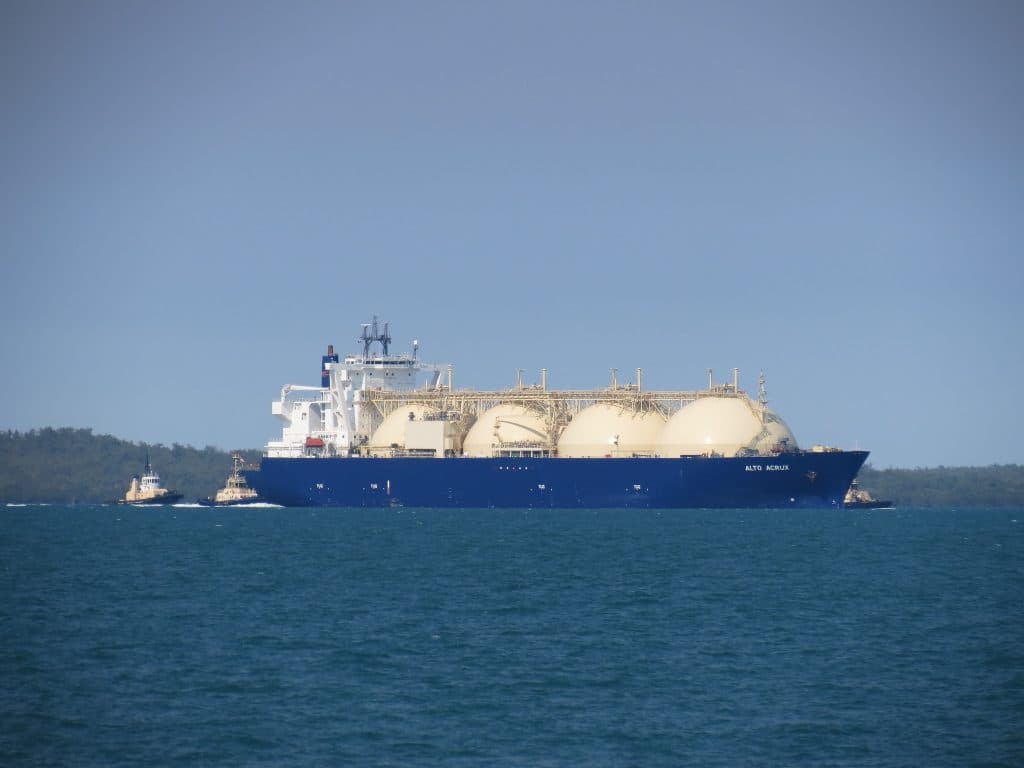
At the beginning of August, the price of natural gas on the US market fell as low as USD 1.90/mmBTu, equivalent to about six euros per MWh. This meant that gas on the European market was then more than six times as expensive as gas on the US market. A significant factor is that, following Russia’s invasion of Ukraine in February 2022, the EU began rejecting Russian commodities and replacing them with imports from other countries. Imports of liquefied natural gas (LNG) from the United States to the EU, for example, have risen sharply, according to data from the US Energy Information Administration (EIA).
Wholesale gas prices began rising more significantly in autumn 2021, before the war in Ukraine. Some economists link this to the European Green Deal, under which the European Union set out a timetable for a rapid shift away from fossil fuels. In summer 2022, after the war in Ukraine had begun, the TTF gas price briefly exceeded 300 euros per megawatt-hour.
Translation disclaimer
This article is a machine translation of the Czech original and has not yet been fully reviewed. In case of any doubt, please refer to the Czech version.