
28 October 2026, 15:10
Loading...
G7 countries call for further cuts to Russian gas imports

Eduard Majling
9 May 2024, 06:57
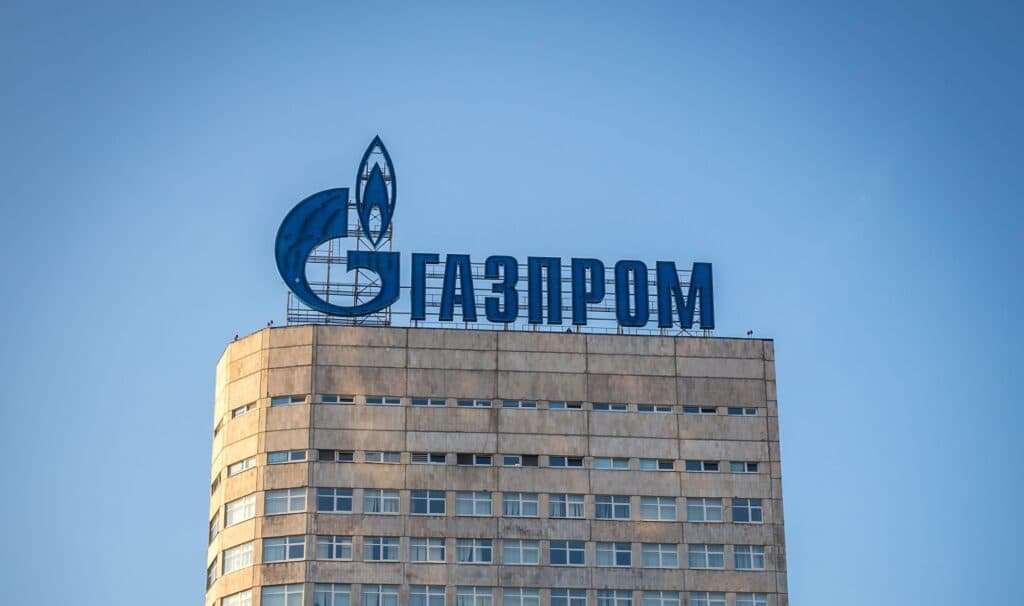
G7 countries are calling for further cuts to imports of natural gas from Russia. In Europe, Russian gas flows through pipelines now amount to a fraction of their former volumes, but LNG supplies remain strong. No major restrictions on Russian gas imports, unlike those imposed on coal and oil, have yet been introduced in Europe.
Imports of energy commodities from Russia have been widely debated in recent years for various reasons. Revenues from sales of oil, natural gas, coal and other commodities are a significant source of income for the Russian state budget. The EU and other countries outside Europe have imposed various restrictions or bans on coal and oil.
Gas supplies through pipelines to Europe, however, began to decline as early as 2021 and then fell sharply in 2022. A number of European companies are suing Russia’s Gazprom in international arbitration, either over its failure to deliver the agreed volumes of natural gas or its failure to pay fees for contracted transport capacity.
"We see that limiting Russian revenues from sales of energy commodities is an essential part of our support for Ukraine, and we are seeking to end our substantial dependence on Russian gas and move away from its imports as quickly as possible," the group of countries said in a joint statement, according to Montel.
The G7 countries are thus calling for further cuts to Russian gas imports, according to Montel. They say these imports can be partly replaced by liquefied natural gas (LNG) supplies from other countries and investment in energy infrastructure. In view of the exceptional circumstances, investment in gas infrastructure may therefore receive public funding as a temporary measure.
"Geopolitics is once again a key factor shaping the energy strategies of G7 countries, and geopolitical developments and energy shocks could return in various forms and affect market fundamentals. So far, the EU has been exceptionally lucky with winter weather. That is why there should be no room for complacency in strategic energy security measures," said Francesco Sassi, an analyst at the RIE think tank.
The restrictions on supplies from Russia in 2022 drove natural gas prices on European markets to record highs. The situation has since stabilised relatively in both last year and this year, and prices have moved closer to pre-crisis levels. Lower exports have also affected the financial results of Russian gas giant Gazprom, which posted a loss last year for the first time in 20 years.
"Gas prices have now returned to pre-invasion levels, although they are still much higher than in the US, while our dependence on Russian gas, both pipeline supplies and LNG, has fallen from 50% to less than 15%," Matteo Villa, an analyst at the ISPI think tank, told Montel.
Further cuts to imports from Russia next year?
A further possible decline in gas supplies from Russia to Europe is on the horizon at the turn of the year. The current transit agreement between Russia and Ukraine expires at the end of this year, and it is still unclear what will happen next.
Ukraine denied earlier this year that it was willing to negotiate an extension of the agreement with Russia. Representatives of the European Union, which was one of the key parties in negotiating the current five-year agreement, are similarly not pushing for an extension. It is therefore still unclear whether Russian gas will continue flowing through Ukraine next year.
Translation disclaimer
This article is a machine translation of the Czech original and has not yet been fully reviewed. In case of any doubt, please refer to the Czech version.
Sdílejte článek prostřednictvím:
You might also like

28 October 2026, 13:08

28 October 2026, 11:10

28 October 2026, 09:08
