
28 October 2026, 15:10
Loading...
Germany's strategy for new power plant construction is delayed, companies voice concerns

David Vobořil
13 May 2024, 11:14
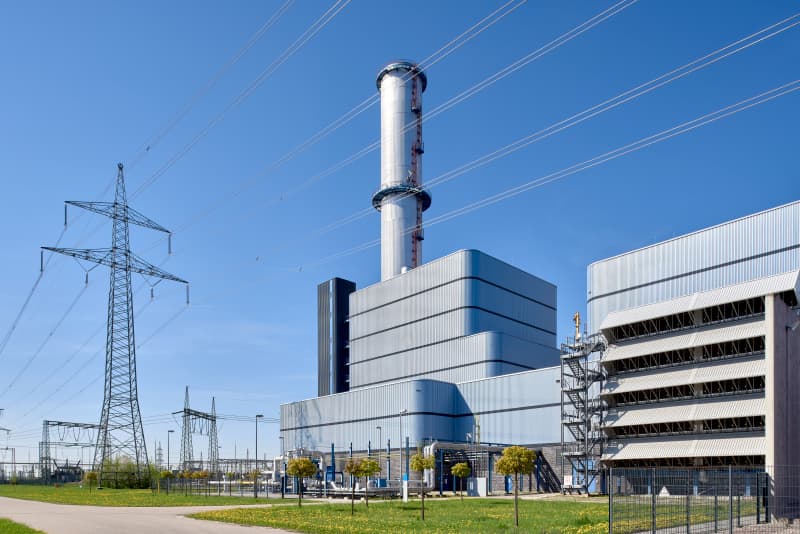
Representatives of the German energy industry have expressed doubts about whether the government’s planned power plant strategy will be drawn up soon enough for auctions to take place in 2024. The strategy is intended to support investment in new hydrogen-ready gas-fired power plants, which are to replace decommissioned coal-fired power plants and ensure sufficient capacity in the south and west of the country.
Companies wishing to participate in tenders for new power plants need to know the details of the auctions well in advance so they can prepare their bids, said Ingbert Liebing, head of the local association of energy companies, VKU.
“It is unclear whether the auctions will take place at all this year,” Liebing said.
Kerstin Andreae, head of the energy industry lobby group BDEW, told Handelsblatt that companies are eagerly awaiting details so they can start planning the construction of power generation capacity. This capacity is needed as part of the transition to an energy system based on renewable energy.
“Questions about financing must be answered quickly, as must questions concerning state support and the location of power plants,” Andreae said.
The Ministry of Economic Affairs said meanwhile that discussions on the strategy are taking place within the government and with the European Commission. The first auctions for power plants with a total capacity of 10 GW are due to take place in the second half of 2024.
“At this point, we cannot comment specifically on the auction schedule,” a ministry spokesperson said.
Power plants are lacking in southern and western Germany
TransnetBW, one of Germany’s transmission system operators, has urged the government to ensure that new backup power plants provide capacity in line with the needs of the grid. The power plant strategy should therefore primarily address the current uneven distribution of generation sources. At present, northern and eastern Germany have more generation capacity than demand.
Since electricity from these sources often cannot be transmitted to industrial areas in the south and west of the country, their output frequently has to be curtailed to prevent grid overload. Conventional power plants near these areas must then be brought online to meet demand in the south and west. These measures, known as redispatch, cost Germany billions of euros a year.
Redispatch is when generators at a different location are brought online instead of the conventional generators originally scheduled to supply electricity to the grid, in order to prevent grid components from becoming overloaded. These measures are costly because the original generators must be compensated for being unable to supply electricity to the grid, while payment must also be made for the electricity produced by the generators brought online in their place.
“To attract enough bidders and maintain security of energy supply, the auction design must focus on the regional distribution [of new power plants] and the diversity of participants,” Liebing argued.
As coal-fired power plants are gradually decommissioned in the country, Germany will have to replace them to ensure security of electricity supply. TransnetBW has proposed that the state could guarantee operators of new gas-fired power plants the expected revenue from redispatch, which would probably be generated anyway. This guarantee would be provided for a limited period, for example, the first five years after a power plant is commissioned.
“This would secure cash flows and enable investors to obtain better terms for their investments. At the same time, it would make construction in the south and west more likely, where power plants contribute to security of supply and grid stability,” TransnetBW said.
The question of state support
The German government presented the key points of its plans in February, but the full power plant strategy has not yet been submitted. The government is negotiating state support with the European Commission. For several years, the Commission has been urging Germany to consider dividing its single bidding zone—both to reduce the curtailment of renewable energy generation and to better account for bottlenecks in the transmission system.
The southern and western federal states, home to many of the country’s largest industrial companies, strongly oppose this move, fearing it will lead to higher electricity prices in those regions.
Translation disclaimer
This article is a machine translation of the Czech original and has not yet been fully reviewed. In case of any doubt, please refer to the Czech version.
Sdílejte článek prostřednictvím:
You might also like

28 October 2026, 13:08

28 October 2026, 11:10

28 October 2026, 09:08
