6 October 2026, 06:14
Loading...
LNG transport through Hormuz is rising. So is dependence on US LNG

Martin Voříšek
6 October 2026, 06:14
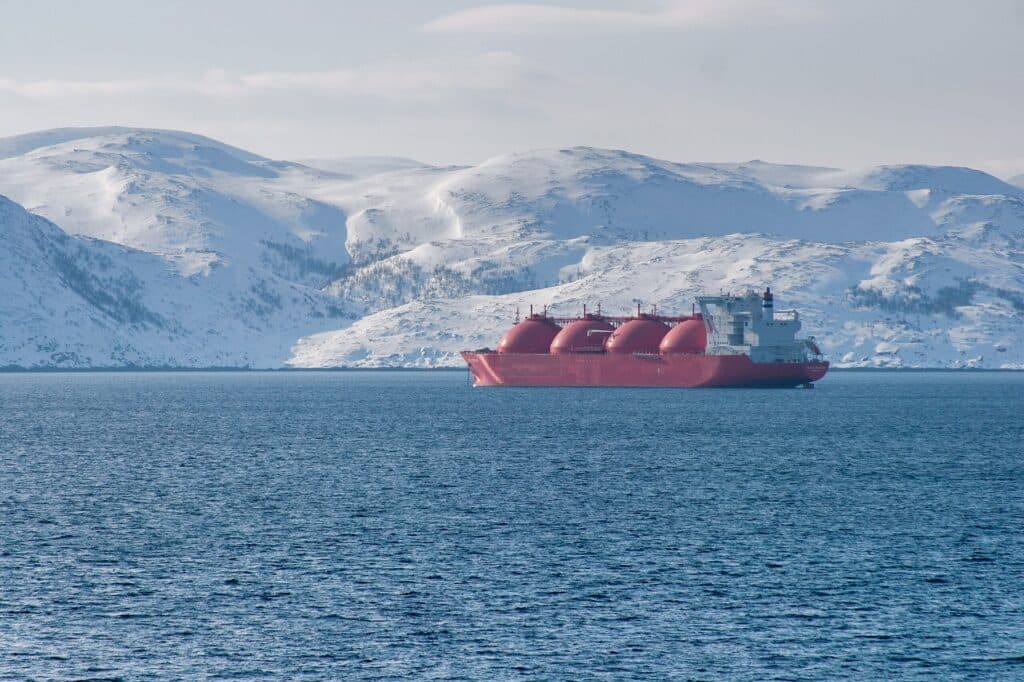
The European market has seen another increase in LNG tanker traffic through the Strait of Hormuz, but supply volumes are still nowhere near a return to normal levels from before the Hormuz crisis. US LNG is becoming increasingly important, with its growing share helping to offset the loss of supplies from the Persian Gulf, but also bringing new risks.
A total of 21 tankers carrying liquefied natural gas passed through the Strait of Hormuz in September, the most since the start of the war with Iran. That is still only 25 percent of the volume delivered before the conflict. Before the war, around three LNG carriers passed through the strait each day, and the route accounted for roughly one-fifth of global supplies of the commodity.
Four more ships carrying Qatari LNG passed through the strait over the weekend. They were spotted outside the strait after last being recorded on the other side between 18 and 27 September. As Reuters points out, some tankers switch off their automatic identification systems, making it harder to monitor traffic and estimate the actual flows of energy commodities through the Strait of Hormuz.
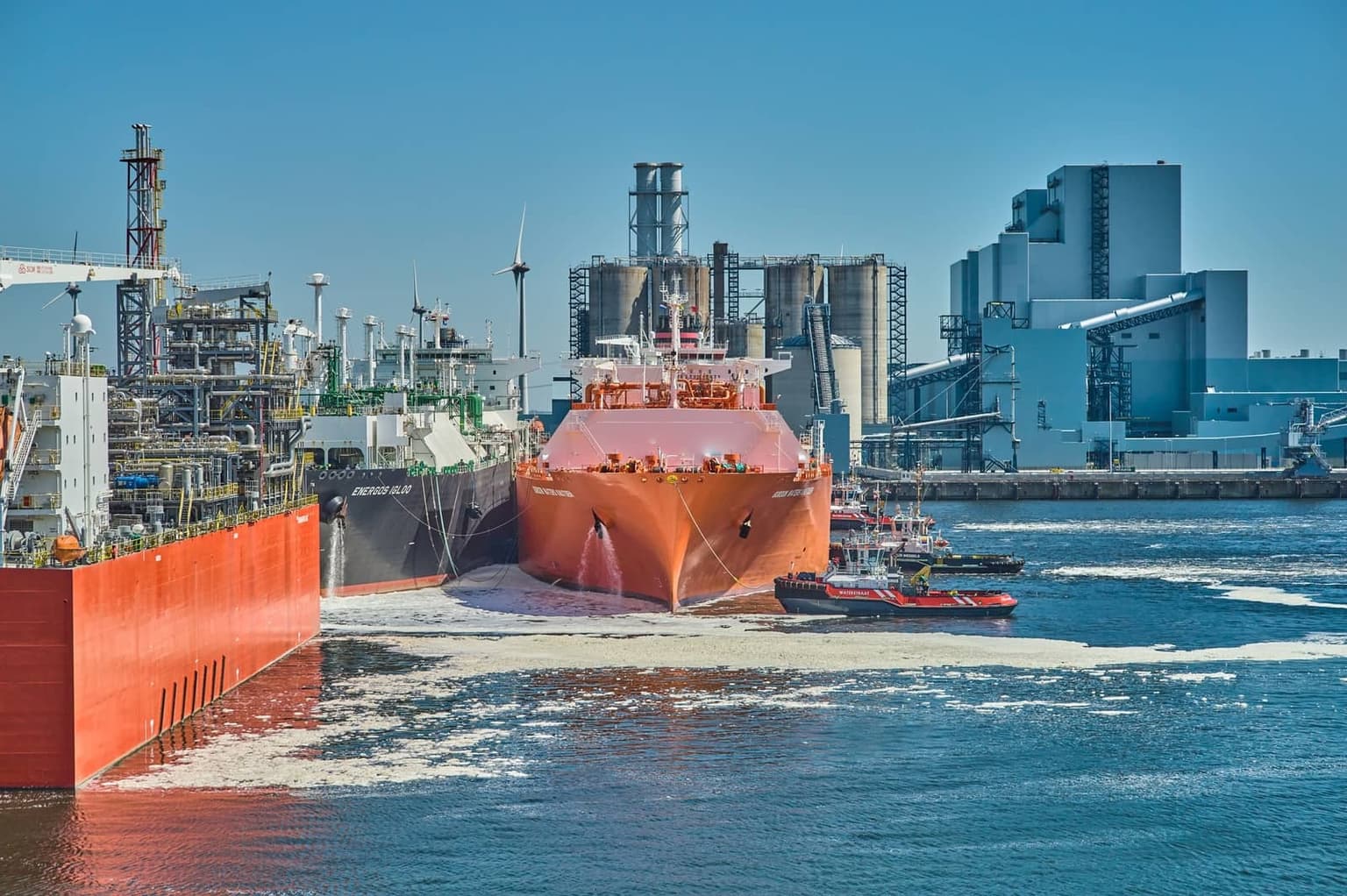
LNG terminal in Eemshaven. Source: ČEZ
Although supplies from Qatar remain at only a quarter of their previous level even after the increase, this is a significant rise. LNG transport through the Strait of Hormuz had been completely halted for a long time. This is illustrated by the fact that the first tanker carrying Qatari LNG to pass through the Strait of Hormuz after the conflict began did so only on 10 May, more than two months after the war started at the end of February.
US LNG is replacing gas missing from Europe
The United States accounted for around a third of global LNG exports in September. Last year, the figure was 25 percent, while in 2022 it was around 20 percent. According to Bloomberg, US dominance has naturally increased after the conflict in the Strait of Hormuz blocked some supplies from Qatar. The expected doubling of US LNG exports by the end of this decade is set to reinforce this trend further.
According to statistics cited by Reuters, US exports rose to 10,9 million tonnes in September from 10,7 million in August. Europe took 5,91 million tonnes of the total, or 54 percent, while “only” 2,84 million tonnes went to Asia.
The European benchmark TTF contract averaged around 77,4 EUR per MWh in September, slightly above the Asian benchmark JKM. The higher European price may have helped redirect some US supplies to Europe, where they were worth more at the time.
Energostat data also suggest that European LNG imports are gradually recovering. In September this year, for example, they reached 107,9 TWh, compared with 117,3 TWh in the same month a year earlier.
Looking at the year as a whole also shows that LNG supplies to the European Union have fallen, but not as dramatically as might be expected. Imports totalled 1 041,9 TWh in the first nine months of 2026, 38,3 TWh (3,5 %) less than in the same period of 2025, when they reached 1 080,2 TWh.
Dependence could simply shift to the US
Shifting supplies from the Persian Gulf to US LNG terminals reduces the immediate impact of the conflict around the Strait of Hormuz, but not the market’s vulnerability. Bloomberg, for example, highlights climate risks. If a hurricane on the Gulf Coast were to take major export terminals offline, it could trigger a significant price shock in Europe and Asia.
Concentrating supplies in the United States also creates political risks. A dominant position can be used as a tool of influence, as has already been demonstrated by the EU-US deal on import tariffs.
Europe will therefore continue to try to replenish its gas storage facilities so that they are as full as possible before winter. As of 4 October 2026, EU storage facilities were 72,65 percent full, compared with 82,75 percent on the same day a year earlier.
Between 2015 and 2025, storage levels fell by an average of around 51 percentage points between the beginning of October and the end of March. If the same average decline were repeated this year, storage facilities would end the winter at around 22 percent of their current level of 72,65 percent. Gas prices over the winter will therefore depend on how severe the winter turns out to be and how much gas needs to be withdrawn from storage. Lower storage levels before winter naturally make markets more sensitive to further supply disruptions and intensify competition for LNG on the global market.
For the Czech market, the effects will be felt primarily through European prices and the availability of gas in the region. This is a consequence of the global integration of the LNG market. When buyers in Europe compete with Asia for liquefied natural gas, that competition usually affects the prices faced by domestic traders and consumers.
Translation disclaimer
This article is a machine translation of the Czech original and has not yet been fully reviewed. In case of any doubt, please refer to the Czech version.
Sdílejte článek prostřednictvím:
You might also like
5 October 2026, 16:20
5 October 2026, 15:34
5 October 2026, 13:26