
23 October 2026, 14:38
Loading...
New LNG projects in Europe threatened by low utilisation of existing facilities
Veronika Jurcová
27 July 2024, 08:30
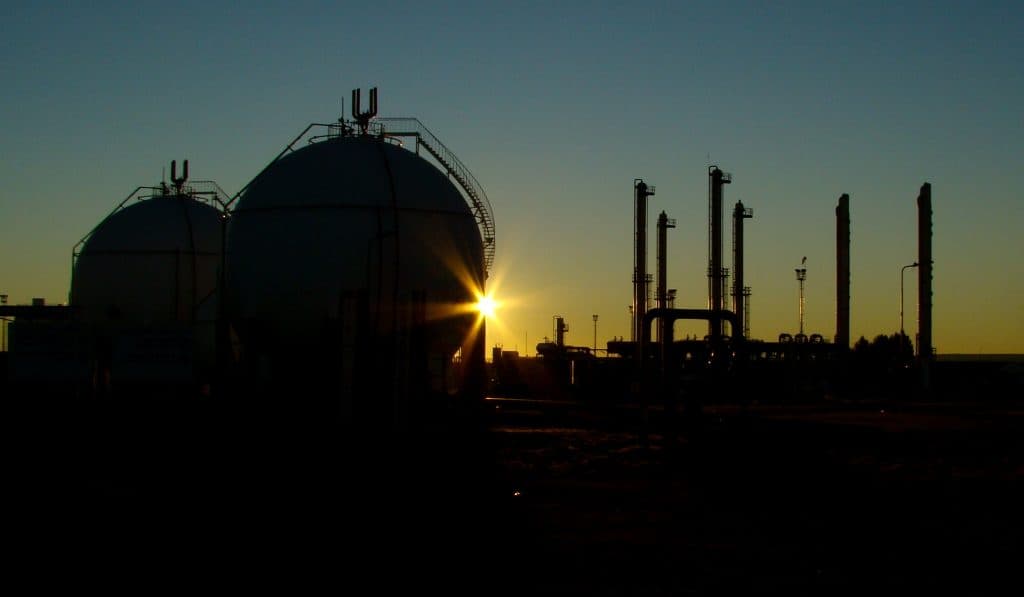
Europe currently has 42 new LNG terminals planned to start operating in 2025. However, these projects are threatened by the currently low utilisation rate of existing regasification facilities, which stands at just 46%, according to an analysis by Platts Commodity Insights.
European regasification projects are set to increase the continent's capacity by 121 million tonnes of LNG per year by the end of the decade. Of the 42 projects planned to start operating in 2025, 11 are already under construction. However, with LNG demand falling and utilisation rates at existing terminals below 50%, questions are emerging about the potential for overinvestment.
Increasing LNG imports to Europe
The strategic importance of LNG in Europe became apparent after Russia's invasion of Ukraine in 2022 and the subsequent energy crisis. European countries began seeking alternative import routes to ensure the region's energy security.
The Czech Republic also secured LNG supplies during this period. Energy company ČEZ secured gas supplies in 2023 at the terminal in Eemshaven in the Netherlands, which began operating in mid-September 2022. At the time, it was the first liquefied natural gas terminal to come online in Europe since the start of the war in Ukraine. The capacity lease will end in 2027 and is expected to be replaced by a terminal in Stade, near Hamburg, which is already under construction. From 2027, the Czech Republic, in cooperation with the ČEZ Group, will have a long-term lease on annual capacity there of two billion cubic metres of gas, equivalent to about a quarter of domestic annual consumption.
After the outbreak of the war in Ukraine, concerns emerged about insufficient regasification capacity, leading to a significant gap between LNG and natural gas prices. According to Platts Commodity Insights, the price difference between LNG and gas at the Dutch TTF hub reached a record USD 29.55/MMBtu on 3 October 2022. Prices have since fallen, largely because Europe has increased its regasification capacity.
Nevertheless, Russian gas imports to Europe currently stand at approximately 30 million cubic metres per day. However, this volume is expected to fall significantly towards the end of 2024, when the transit agreement between Russia and Ukraine expires; Ukraine does not intend to renew it. Even after Russian imports decline, the current pace of LNG project development could outstrip the growth in demand in Europe.
Terminal utilisation
Despite continued investment in LNG projects, existing regasification facilities have historically been underused. The average utilisation rate for 2024 so far is 46%, and has not exceeded 70% since April 2023, according to Commodity Insights data.
The main reason is that Europe has experienced two mild winters which, together with additional Norwegian supplies and renewable power generation, have constrained LNG demand. In addition, most of Europe's regasification capacity is located in countries with low utilisation rates, such as Spain and the United Kingdom.
LNG imports to Europe fell by 20% year on year in the first half of 2024, to 54.9 million tonnes from 68.5 million tonnes in 2023, according to Commodity Insights data.
LNG demand is expected to grow in 2025 and 2026. Commodity Insights analysts forecast average demand of 11.3 million tonnes in the first quarter of 2025, up from just under 10 million tonnes in 2024. They expect industrial demand to increase and coal use to phase out gradually.
However, according to traders, the price decline driven by developments in the global market and the increase in Europe's regasification capacity does not cover the cost of regasification. As a result, gas stocks remain high and traders continue to favour pipeline gas. This is leading to lower utilisation rates at LNG terminals across Europe.
The construction of additional terminals is therefore more of a strategic insurance policy than a commercially attractive decision.
Translation disclaimer
This article is a machine translation of the Czech original and has not yet been fully reviewed. In case of any doubt, please refer to the Czech version.
Sdílejte článek prostřednictvím:
You might also like


23 October 2026, 11:01


23 October 2026, 06:34