
23 October 2026, 14:38
Loading...
Bulgaria's Kozloduy nuclear power plant extends contract for new units

Jiří Puchnar
30 October 2024, 06:45
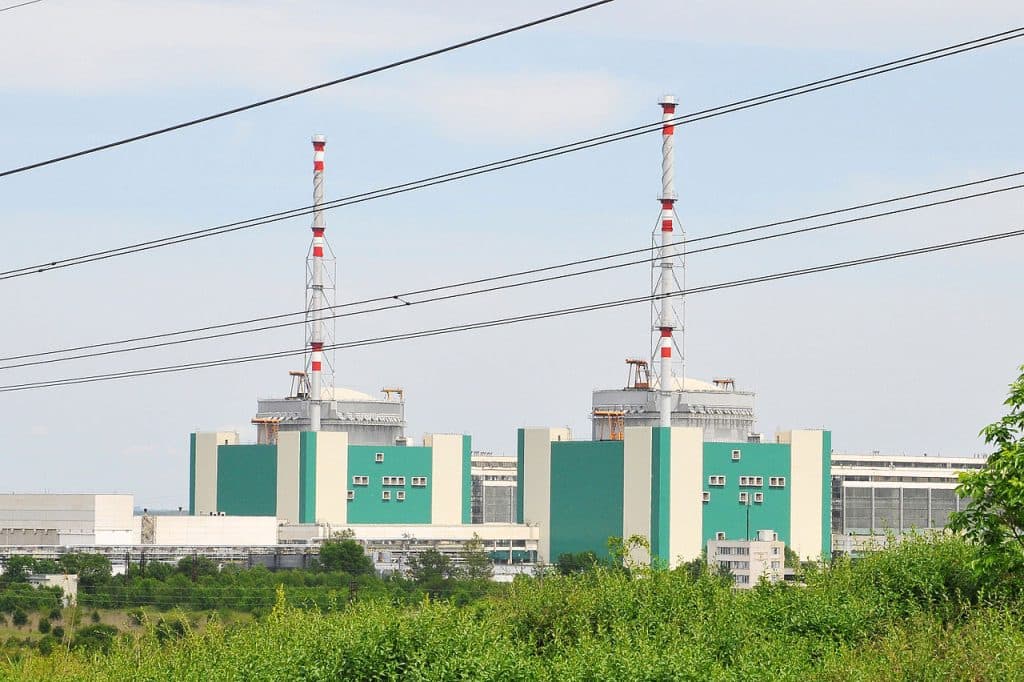
Westinghouse has announced that it has signed an extension to the Front-End Engineering and Design (FEED) contract for two new AP1000 reactors at Bulgaria's Kozloduy nuclear power plant. The original contract with Westinghouse was signed last June to assess the readiness of Bulgarian industry and infrastructure for the construction of two new reactor units.
The next stage, before the construction contract itself is signed, will be an engineering services contract and the launch of the design, licensing, training, project management and planning process.
A strategic project for Bulgaria and the region
Dan Lipman, president of Westinghouse Energy Systems, said that Westinghouse is committed to further strengthening and leveraging Bulgaria's supply chain in delivering this key project—the construction of new units at Kozloduy NPP—as well as other European projects. "We value our close cooperation with Kozloduy-Newbuild and look forward to further important steps to strengthen Bulgaria's energy security."
According to the Bulgarian News Agency (BTA), Bulgarian Energy Minister Vladimir Malinov said the agreement was "another important step for Bulgaria and the region in delivering the strategic project to build new nuclear reactors".
In February 2024, Hyundai E&C was shortlisted to build and commission Westinghouse's new units. In September, Minister Malinov said he expected an engineering contract between Kozloduy NPP-Newbuild and the Westinghouse-Hyundai E&C consortium to be signed in the coming months.
History and future of Kozloduy NPP
Kozloduy units 1-4 were VVER-440 V-230 reactors (the same type as those at Jaslovské Bohunice V1 NPP), which the European Commission classified as not suitable for refurbishment. Bulgaria agreed to shut them down during negotiations to join the European Union in 2007.
Units 5 and 6 are VVER-1000 reactors that were connected to the grid in 1987 and 1991. Both units have undergone modernisation and lifetime extension programmes, which have allowed their operating lives to be extended from 30 to 60 years. The two operating reactors now account for approximately one-third of the country's electricity generation.
The current project aims to bring the new unit—Kozloduy 7—online by 2035, and the second unit—Kozloduy 8—by 2037. The two new units will have a combined installed capacity of 2300 MWe, exceeding the 1760 MWe installed capacity of the four closed VVER-440 V-230 units. The Bulgarian government has also said it is planning further steps that will be needed by 2050 to replace existing units 5 and 6.
Translation disclaimer
This article is a machine translation of the Czech original and has not yet been fully reviewed. In case of any doubt, please refer to the Czech version.
Sdílejte článek prostřednictvím:
You might also like


23 October 2026, 11:01


23 October 2026, 06:34