23 October 2026, 14:38
Loading...
Czechia selects contracting model for Dukovany completion, has three options

Martin Voříšek
12 March 2020, 10:58
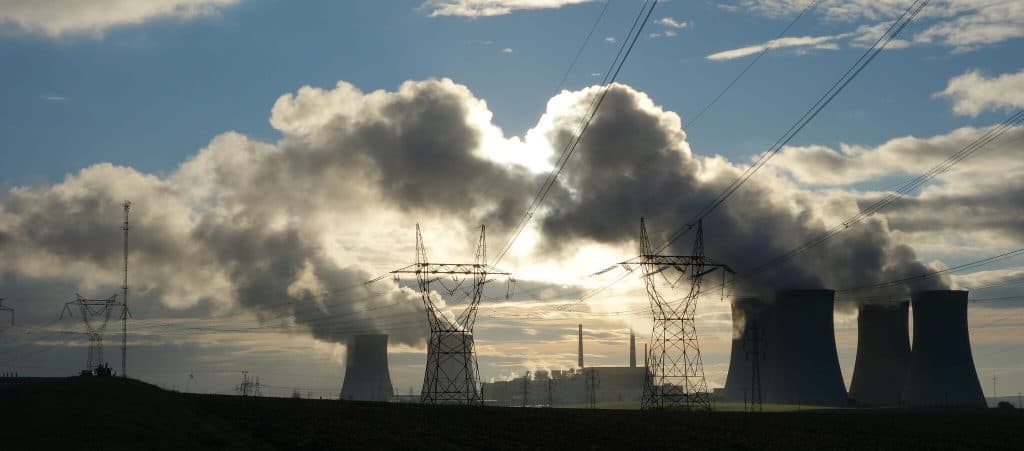
In the coming weeks and months, the Czech Republic will select a contracting model for the construction of a nuclear unit at Dukovany, as announced at a press conference following a meeting of the Standing Committee for the Construction of Nuclear Sources by ČEZ CEO Daniel Beneš. This is one of the key decisions, yet it is far from clear which direction the Czech Republic will take.
Previous articles on the completion of Finland's Olkiluoto 3 nuclear power plant and Slovakia's Mochovce plant show that the decision on the contracting model is one of the fundamental decisions that can substantially determine a project's success. According to the CEO of ČEZ, the Czech Republic is currently considering three different models.
“One option is turnkey delivery, the second is delivery by one main contractor, which would supply us with the nuclear island and coordinate everything else within the plant fence, and the third theoretical option is that there would be several contracts coordinated by the investor. The final decision on which contracting model we choose will be made by the end of March next year, based on consultations with all bidders,” said Daniel Beneš, chairman of the board of ČEZ.
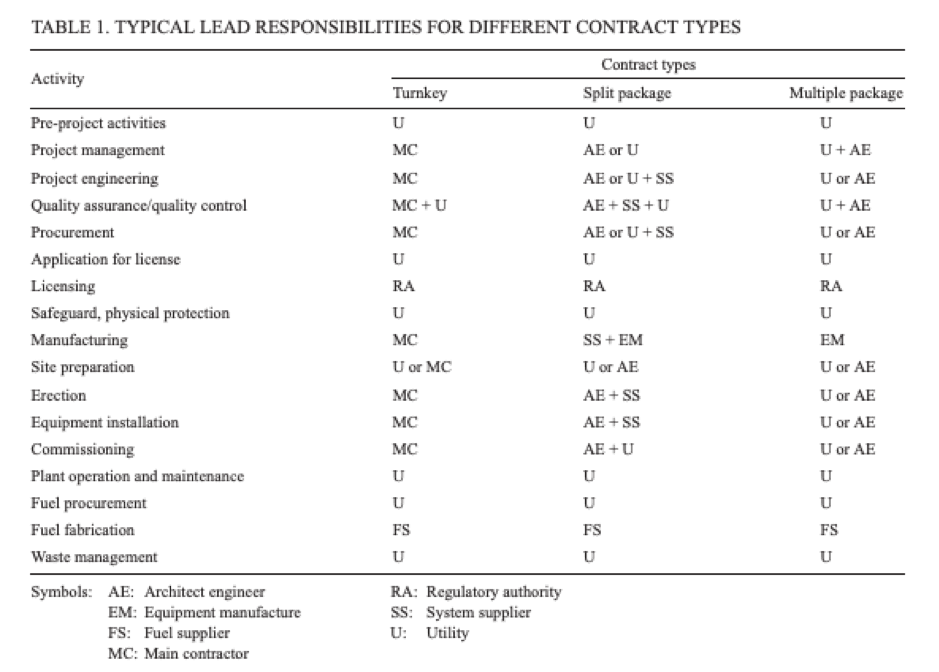
According to the IAEA, contracting models can be divided into three basic groups: the EPC model (or turnkey contracting model), split package (a model typically involving a smaller number of packages divided by the investor), and multiple package (a model typically involving construction being divided into up to 150 subcontracts). The outlines of these three basic models can also be seen in Daniel Beneš's response.
In addition to ČEZ and the state, as its majority shareholder, seeking to ensure construction stays within the planned budget and schedule, the state also wants Czech suppliers to be involved in the project, the country's energy self-sufficiency to be secured, Czech suppliers to be involved in other projects, and, last but not least, employment in the Czech Republic to be supported.
ČEZ, on the other hand, is in a different position: 20 years have passed since the completion of Temelín, and it can therefore be assumed that the expertise among its employees is no longer at the level it was during Temelín's construction. ČEZ should therefore focus only on key matters, so that its involvement matches its capacity and experience. However, in view of other construction projects in Europe (see Olkiluoto), it will want to ensure sufficient control over the individual construction phases and the selection of subcontractors, also taking into account the future maintenance of the new unit.
“We are working to consolidate engineering capacities within the ČEZ Group, which includes Škoda Praha and ÚJV Řež. These will be concentrated in ÚJV Řež in preparation for the new nuclear source, and Škoda Praha will therefore be sold to our subsidiary ÚJV Řež, in which ČEZ holds a majority stake. ÚJV Řež should provide key engineering support to the parent company ČEZ and, by extension, to Elektrárny Dukovany II in the construction of the new nuclear unit,” Ladislav Kříž of ČEZ said regarding preparations for the nuclear unit's construction.
The motivation for ČEZ is understandable: following experience with nuclear plant completion projects in Europe, it is becoming increasingly clear that the nuclear industry has above all lost much-needed knowledge and experience in completing nuclear power plants. While expertise is being rebuilt, this is a lengthy process. Nevertheless, the completion of a nuclear power plant in the Czech Republic could already draw on the latest construction projects in Europe.
“We experienced similar problems during the recent comprehensive refurbishment of eight power plant units at Tušimice and Prunéřov. The first units were accompanied by considerable complications; both we and the suppliers first had to learn how to carry out the modernisation. The final unit then proceeded almost smoothly—we gained experience, improved processes, removed bottlenecks and learned from mistakes.... And this has always applied to nuclear units as well. For example, EDF says that thanks to experience from the construction of Hinkley Point C, it can reduce the construction costs of a possible additional unit in Britain by up to 20 %,” adds Ladislav Kříž of ČEZ.
Ongoing projects at Olkiluoto and Mochovce
At the same time, the Olkiluoto project showed that a purely EPC contract may not be suitable. The Areva-Siemens consortium in some cases selected inexperienced suppliers and often chose solely on the basis of the price of their delivery. TVO's ability to participate in supplier selection was insufficient, and this was one reason why the project ran into difficulties and is now delayed by more than 10 years.
In the case of Mochovce, by contrast, the excessive complexity of the contract and the investor's limited experience in managing such a large project became apparent. Indeed, the investor in the new Mochovce nuclear plant units also drew criticism from the Slovak nuclear regulator. Its head repeatedly criticised project management and the management of supplies at the construction site. However, Slovenské elektrárne did not take on an easy task: the entire completion project was divided into more than 100 separate packages, placing high demands on project management.
The contracting models for Olkiluoto and Mochovce are, however, two extremes in terms of the investor's control over construction and the allocation of tasks and risks (the EPC contracting model is characterised by significantly lower investor involvement in construction, while involvement is greatest in the multiple package model). This also gave rise to the problems experienced by both projects. The option therefore arises of taking a “middle path”. According to the IAEA, the split package contracting model represents such a middle path.
The split package model worldwide
The split package model is characterised by dividing the entire investment into only a limited number of packages—around 15—which are tendered directly by the investor. These are usually larger components, such as the nuclear island, conventional island, instrumentation and control system, or parts of these contracts. The aim is to divide the contract into a number of packages that is manageable for the investor, given its capabilities. Coordination between individual packages can be carried out by the investor itself, or a contract can be tendered for this activity as well.
Publicly available sources provide information on the construction of unit 6 at the Kashiwazaki-Kariwa nuclear power plant and unit 1 at Shin-Wolsung, which were carried out using the split-package model.
Kashiwazaki-Kariwa unit 6 is a 1356 MW nuclear unit and was the first plant with an ABWR reactor. Construction began on 3 November 1992 and commercial operation began on 7 November 1996. TEPCO used the split package model for its construction. Although it was a new reactor and more than 20 design changes were made during construction, the IAEA highlighted that the plant was completed on time and within budget.
Shin-Wolsung 1 has a 997 MW pressurised water reactor. Construction, for which the split package model was used, began in November 2007 and commercial operation commenced on 31 July 2012.
However, both of the above-mentioned plants were built in non-European environments, where regulatory conditions differ. Moreover, neither involved a Generation III+ reactor.
The priorities of both the state and ČEZ regarding the completion project are not entirely suited to a typical EPC contract without investor involvement. If ČEZ and the state want to ensure greater control over construction and have a say in the selection and oversight of suppliers, they should set up the contracting model and contract in a way that allows them to co-decide on the selection of subcontractors.
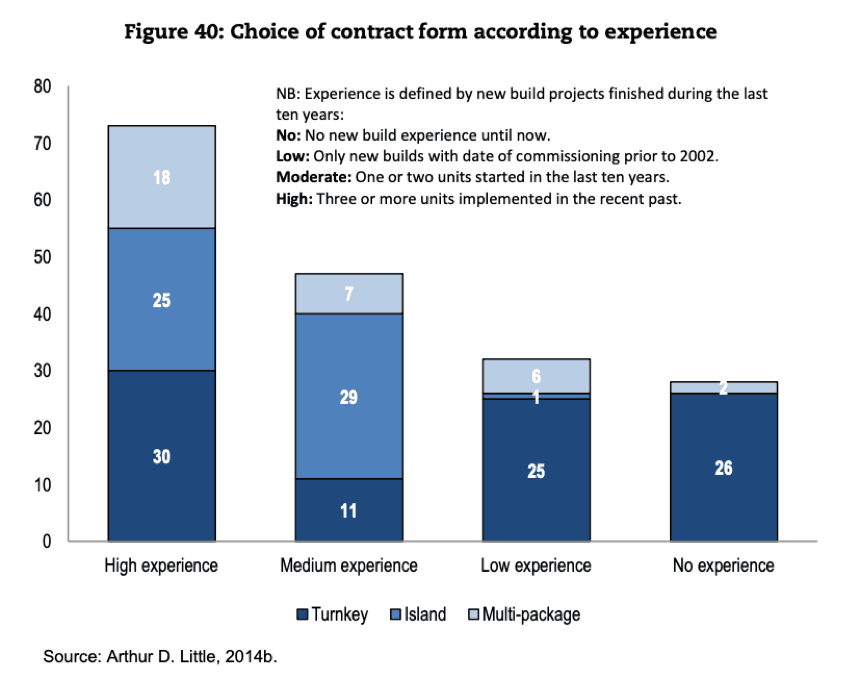
Given that ČEZ is not a complete newcomer to the construction of large investment projects, it can be assumed that it may prefer the split package model. ČEZ built eight coal-fired units and two combined-cycle gas power plants using the split package approach, including one in Turkey. Given the similarities between the non-nuclear part of a nuclear plant and other conventional power plants—namely the aforementioned coal-fired and combined-cycle gas plants—it can be assumed that ČEZ should have the construction of these parts under control and should be involved in it.
Dividing the contract for construction of the nuclear unit into several components would place it under greater control by ČEZ, offering greater scope to include local subcontractors and suppliers that it also wishes to use for maintenance during commercial operation.
Likewise, given ČEZ's staffing capacity and experience, the multiple package model is unlikely to be suitable. As the case of Slovakia's Mochovce shows, this model is highly demanding in terms of the control and management of supplies.
Translation disclaimer
This article is a machine translation of the Czech original and has not yet been fully reviewed. In case of any doubt, please refer to the Czech version.
The article continues for subscribers
Premium content
The rest of this article is available to premium subscribers only. Get access to all premium articles on oEnergetice.cz.
Best value: annual subscription
Monthly option 4 € / month
3.25 €/ month
You might also like
23 October 2026, 11:01
23 October 2026, 06:34