
14 September 2026, 11:30
Loading...
From Hinkley Point C to SMRs: How the British government took on the role of building new nuclear

Martin Voříšek
14 September 2026, 06:15
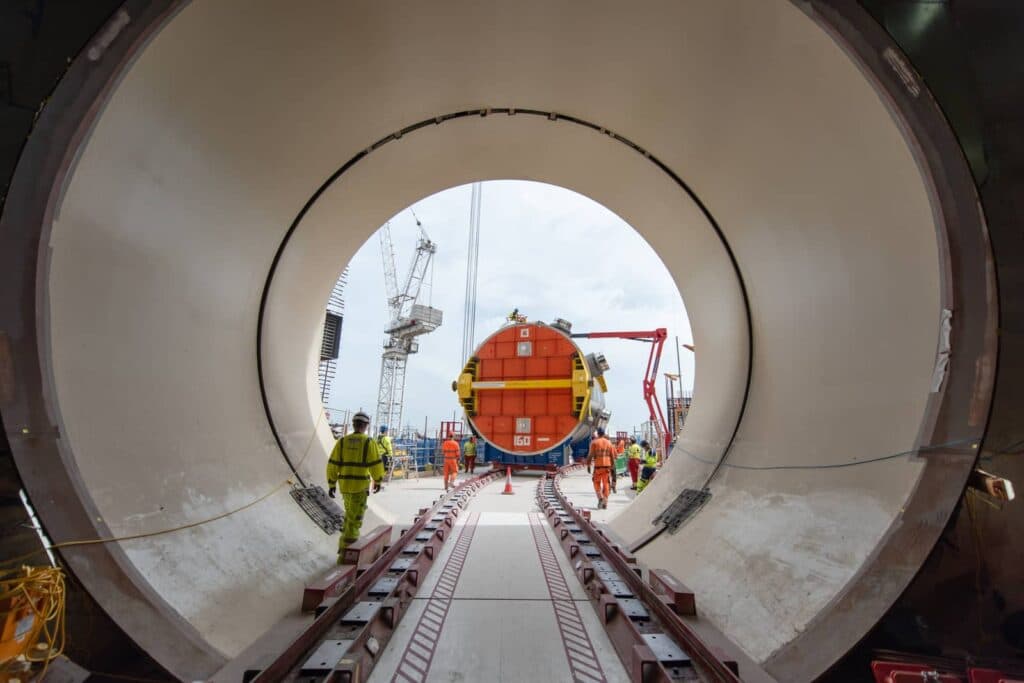
The British model for financing new nuclear capacity has undergone a fundamental transformation over the past decade. From a long-term price guarantee in the form of a contract for difference for Hinkley Point C, it has progressed through state equity participation in nuclear projects and consumer payments during the construction of new units at Sizewell C, to the fully state-led development of small modular reactors at Wylfa.
The United Kingdom is undoubtedly one of Europe’s pro-nuclear countries. And when it comes to new nuclear projects, it is among the most active of all. The project furthest along in construction is the Hinkley Point C nuclear power plant. Another major project for which an investment decision has been taken is Sizewell C.
The United Kingdom is also continuing to actively pursue the construction of small modular reactors. It only recently selected Rolls-Royce as the main supplier of small modular units at Wylfa.
As in other countries planning to complete nuclear units, the United Kingdom is also addressing the role of the state in projects and support for operators of new units. The United Kingdom has undergone a remarkable evolution, which has now culminated in fully state-built small modular reactors.
Hinkley Point C: A private investor project with a generous price guarantee
Hinkley Point C was conceived as a project in which investors finance construction, while the state provides certainty of future revenues through a 35-year contract for difference. The agreed strike price was GBP 92.50/MWh in 2012 prices, and was to fall to GBP 89.50/MWh if EDF also took a final investment decision for Sizewell C. This eventually happened. After accounting for inflation, the current strike price for Hinkley Point C is GBP 130.79/MWh, or approximately EUR 152/MWh.
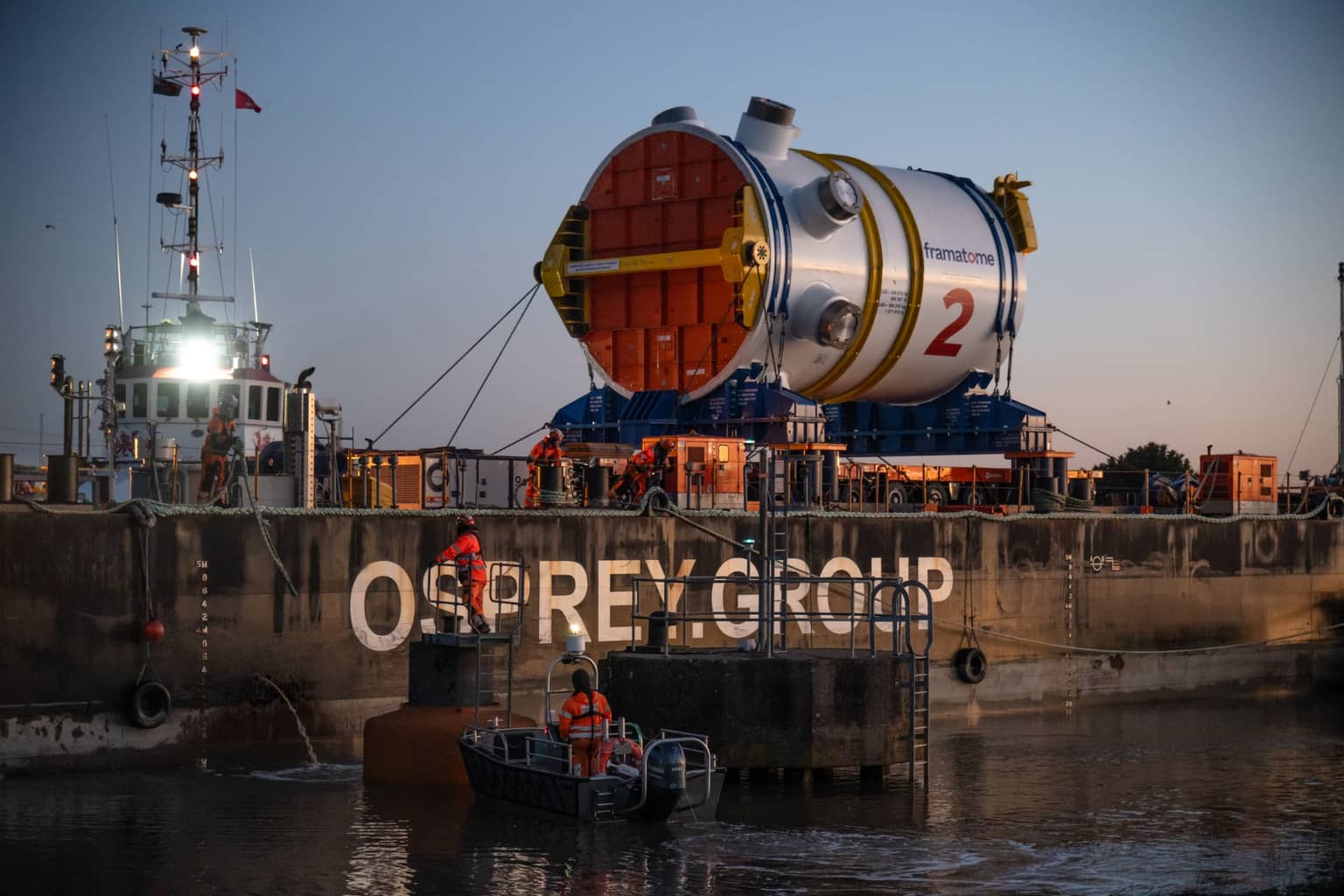
Reactor pressure vessel for Hinkley Point C in transit. It weighs 500 tonnes and is 13 metres long. Source: EDF Energy
The support model was intended to solve the fundamental problem of large nuclear projects: uncertainty over future prices, high investment costs and long construction times. Thanks to the contract for difference, Hinkley Point C will thus receive support in the form of a fixed electricity price at a certain level. However, it will only receive this after generation begins, meaning that the risk of construction cost overruns and delays formally remained primarily with EDF (construction extensions and cost overruns are not reflected in the strike price).
At the time, this approach was presented as a way to keep construction off the British state’s balance sheet while ensuring predictable investment returns for the new plant. However, the National Audit Office (NAO) already warned in 2017 that consumers were committing to pay long-term support even though the costs of alternative low-carbon technologies could change significantly in future.
The British experiment has meanwhile encountered the reality of constructing European nuclear reactors. EDF now expects generation from the first Hinkley Point C unit to begin only in 2030 and estimates the cost of completing the project at GBP 35 billion in 2015 prices (equivalent to approximately GBP 50 billion, or EUR 58 billion, in today’s prices for 3.2 GW of capacity).
Wylfa as a wake-up call for the British government
The first major warning that the model established for Hinkley Point C was not entirely suitable for investors came with the Wylfa Newydd power plant project.
In 2019, the British government negotiated with Hitachi on the project and offered generous support. Even more generous than for Hinkley Point C. The British government was prepared to take a one-third stake in the project, provide all construction financing and offer a contract for difference with a strike price of GBP 75/MWh.
Even this combination was not enough. Hitachi suspended the project, arguing that it continued to represent too great a burden, including because of insufficient expected returns.
Wylfa was not the only unsuccessful case. The private Moorside project, which was to have been one of Britain’s other major nuclear ventures, also stalled after Toshiba ran into financial difficulties. The original expectation that Hinkley Point C would pave the way for a series of similarly financed projects therefore did not materialise.
Sizewell C shifted part of the risk to consumers
The British government subsequently changed its approach to supporting the construction of nuclear units. As the Hinkley Point C project showed, a large part of total costs consists of financing costs, which in the case of Hinkley Point C account for up to two-thirds of the total price. The support model therefore had to change. It was no longer just about guaranteeing the price of electricity after the plant entered operation. The aim was to reduce the cost of capital during construction and protect investors from the risk of project cost overruns or delays.
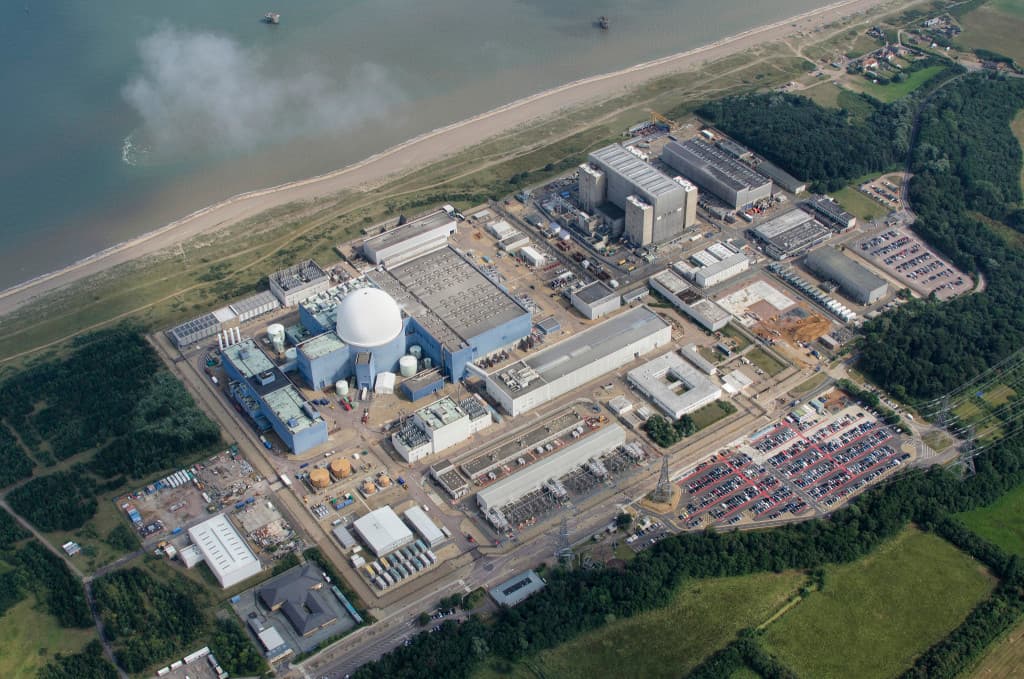
Sizewell nuclear power plant, United Kingdom. Author: John Fielding / Flickr
The government ultimately opted for the Regulated Asset Base model, a model proven among operators of energy network infrastructure (in Czechia, a similar model is used to regulate the prices of electricity and gas distribution and electricity transmission). This mechanism allows a selected nuclear project to receive revenues already during preparation, construction and commissioning, rather than only after it enters operation and begins selling electricity.
Funds for construction are collected from customers through charges levied on suppliers. A new charge will appear on their electricity supply bills before any electricity from the project is delivered to the grid. The aim is to reduce financing costs that the plant owner would otherwise incur if it borrowed funds during construction and only began repaying them many years later, after the power plant was commissioned. RAB therefore does not eliminate financing risks and costs altogether, but spreads them among investors, the state and consumers.
The first project with this support model is Sizewell C, for which the British government took a final investment decision in July 2025. The state acquired a 44.9% stake in the project and became its largest shareholder alongside EDF, Centrica, La Caisse and Amber Infrastructure.
Consumer payments are no longer merely a possibility on paper. Ofgem set Sizewell C’s allowed revenues for the first charging period, from 4 November 2025 to 31 March 2027, at GBP 1.443 billion. Consumers are therefore already contributing to these revenues through their bills.
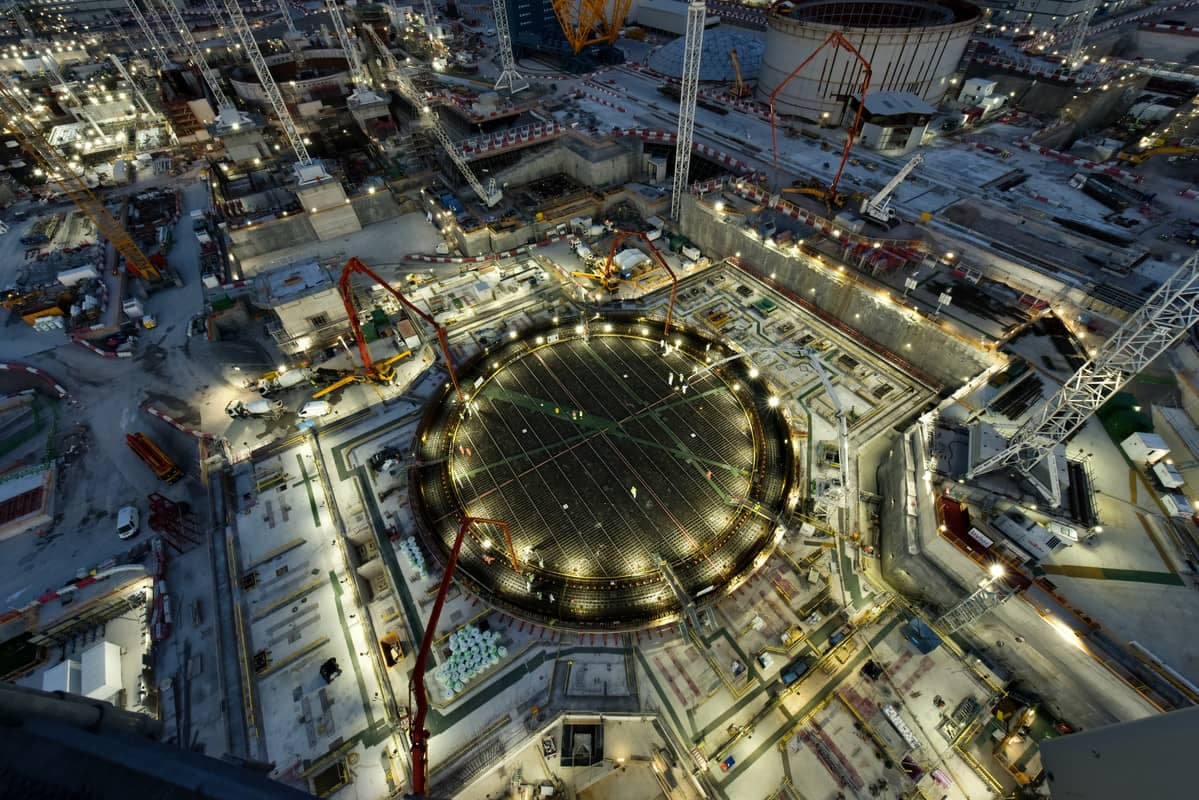
Construction of the Hinkley Point C nuclear power plant. Source: EDF Energy
The British government says the impact on the average household bill during construction should be around one pound a month. From investors’ perspective, however, another effect is more important: regular income during construction significantly reduces financing costs, which proved to be one of the largest sources of overall cost escalation at Hinkley Point C.
The Regulated Asset Base model was also considered for the new units at Dukovany. According to a letter from the European Commission, Czech authorities ultimately did not use it because of concerns about the model’s impact on competition.
At Wylfa, the state not only supports the project but is also a direct investor
The British government has gone even further with small modular reactors. The leading role has been assumed by the wholly state-owned company Great British Energy – Nuclear, tasked with delivering the British nuclear programme. On its official website, it states that it is starting with small modular reactors, indicating that it may also deliver the construction of large units in the future.
Great British Energy – Nuclear has already taken its first steps. In November 2025, it selected Wylfa as the site for Britain’s first SMR project. In April 2026, it subsequently signed a contract with Rolls-Royce SMR, which began work on a site-specific design and permit preparation ahead of a future investment decision. For now, plans refer to capacity of at least 1.4 GWe and three small modular reactors. The government has already earmarked GBP 2.6 billion for the programme.
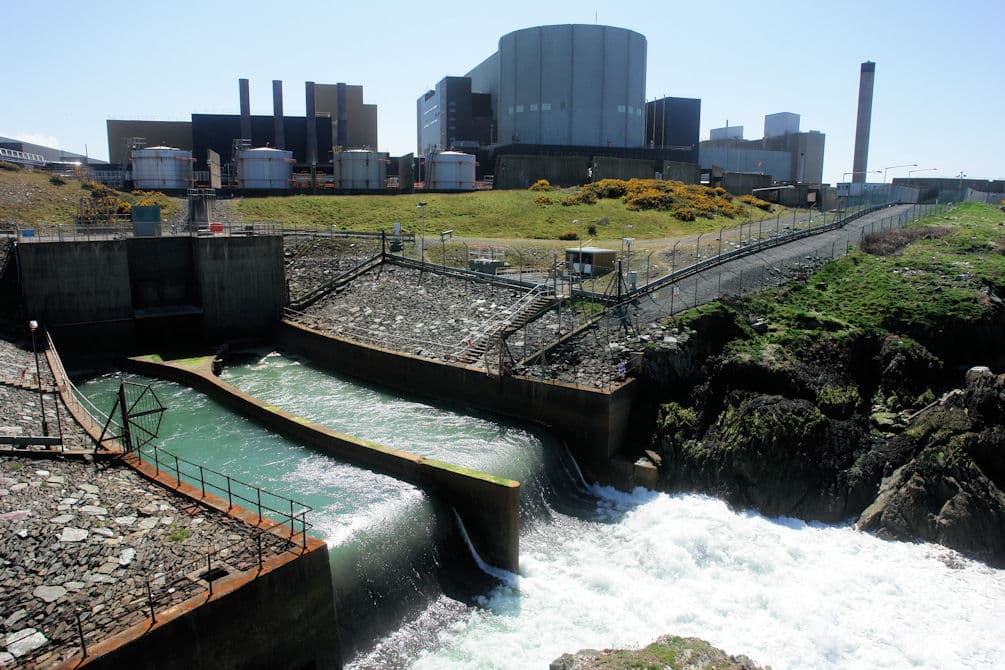
Cooling-water outfall into the sea at Wylfa nuclear power plant on the island of Anglesey. The site is set to host Britain’s first project with Rolls-Royce SMRs in the future. Source: Talsarnau Times, Wikimedia Commons, CC BY-SA 3.0
The evolution of British support over time clearly shows how expectations around the construction of new nuclear units have changed. A contract for difference alone may not be sufficient for a large nuclear project if the investor bears the full uncertainty of lengthy construction.
The development of SMRs is also relevant for Czechia. A British government plan from 2024 explicitly mentioned cooperation with Czechia in the field of small modular reactors and the link between Rolls-Royce SMR and ČEZ. Rolls-Royce SMR now says that, alongside the first three British units, it envisages up to six additional units in Czechia.
Translation disclaimer
This article is a machine translation of the Czech original and has not yet been fully reviewed. In case of any doubt, please refer to the Czech version.
Sdílejte článek prostřednictvím:
You might also like
13 September 2026, 20:45

13 September 2026, 08:47
12 September 2026, 12:58