
7 November 2026, 13:37
Loading...
Kazatomprom will not increase uranium production this year; outlook for next year also uncertain

Eduard Majling
9 February 2024, 12:11
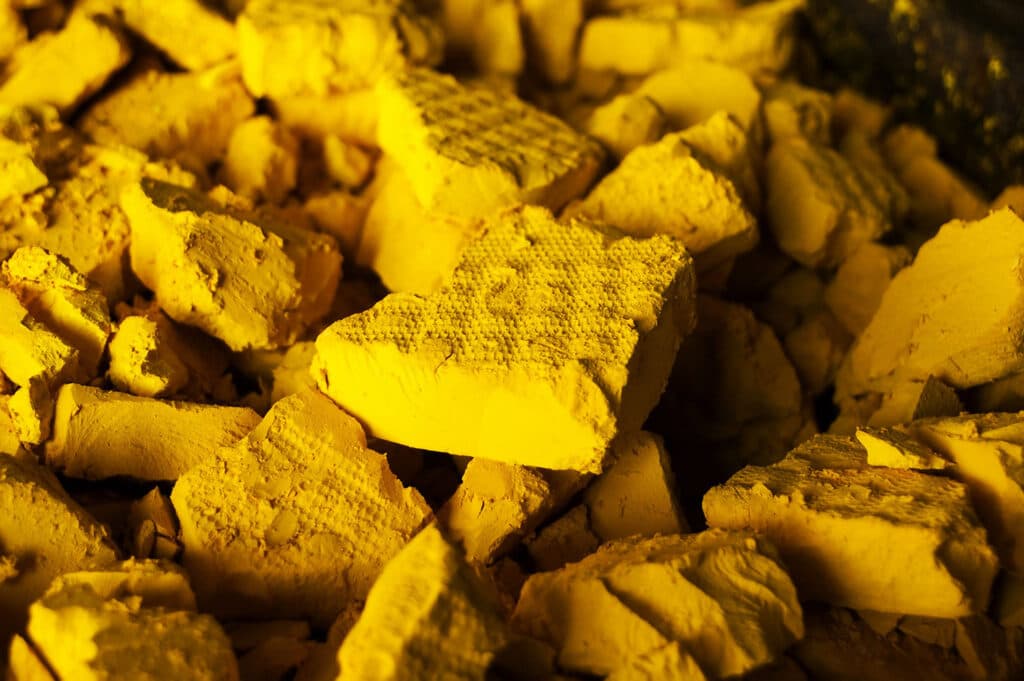
Kazakh state-controlled uranium producer Kazatomprom said in early February that it plans to produce at 80% of the permitted maximum this year. The company had previously expected to increase production to 90% of its quota this year, but problematic sulfuric acid supplies could threaten its plan to reach 100% next year as well. Kazatomprom is currently the world’s largest uranium producer, accounting for around half of production in Kazakhstan and a fifth of the global market.
Kazatomprom said in early February that it produced more than 21 thousand tonnes of uranium last year, or just under 80% of the permitted maximum under its subsoil use contracts. This volume includes all production from the mines, some of which the company shares with other producers. Overall, Kazatomprom accounts for roughly half of that total, based on its stakes in various joint ventures. For this year, the company expects production of 21 to 22.5 thousand tonnes, according to S&P Global.
"In line with our market-oriented strategy, our intention to return to 100% of production volumes under subsoil use contracts in 2025 is driven primarily by our strong contract portfolio and an already growing sales portfolio, compared with the conservative production scenario for 2023-2024,"Kazatomprom Chief Commercial Officer Dastan Kosherbayev said last year.
In addition to delays in developing new deposits, a key factor limiting Kazatomprom’s production capacity is the supply of sulfuric acid. Sulfuric acid is commonly used in so-called in-situ mining, in which uranium is extracted through underground leaching. The company says, however, that the local market has faced a shortage of sulfuric acid in recent years, partly due to increased demand for fertilizer production.
Uncertain outlook for returning to 100% production
Company representatives also said that if sulfuric acid supply problems persist and delays in opening new deposits are not resolved, next year’s plan could also be at risk. The company is expected to announce any changes to its 2025 plans when it publishes its financial results in the first half of this year. Kazatomprom says a rapid return to production at 100% of the agreed maximum is under threat.
"Regional markets are also facing shortages due to growing demand from the agricultural sector and a combination of factors such as supply chain disruptions and geopolitical uncertainty," the company said of the difficult situation with sulfuric acid supplies.
Kazatomprom continues to expect strong demand for uranium, driven in part by the construction of new units and the extension of existing plants’ operating lives. Along with limited production, stable demand is expected to put upward pressure on uranium prices, which reached new records last year. Spot uranium prices climbed to 90 dollars per pound of U3O8 in December and have already exceeded 100 dollars per pound this year.
Translation disclaimer
This article is a machine translation of the Czech original and has not yet been fully reviewed. In case of any doubt, please refer to the Czech version.
Sdílejte článek prostřednictvím:
You might also like


6 November 2026, 14:13

6 November 2026, 10:25