
23 October 2026, 14:38
Loading...
Meta, which owns Facebook, seeks up to 4 GW of nuclear capacity in the US

Jiří Salavec
9 December 2024, 17:11
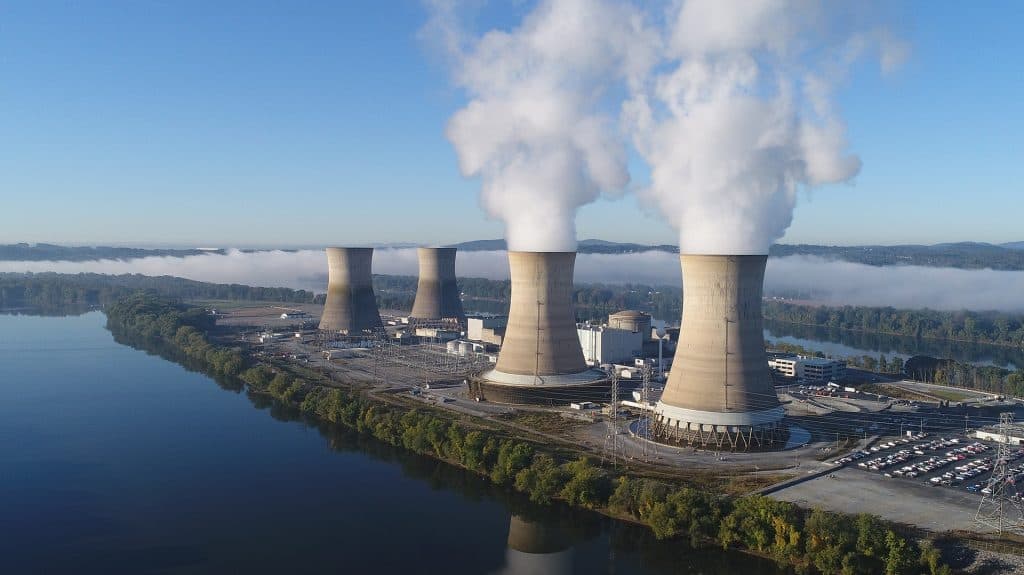
US company Meta has published a request for proposals to develop nuclear power in the US. The company aims to secure low-emission and sustainable electricity sources for its data centers and the development of artificial intelligence (AI). In total, Meta is seeking partners for up to 4 GW of nuclear capacity. It expects the facilities could begin operating in the early 2030s.
Meta, which owns the Facebook social network among other businesses, announced last week that it would publish a request for proposals to develop and build nuclear facilities. As part of its AI innovation and sustainability goals, Meta is seeking developers of new nuclear power sources with a capacity of 1000-4000 MW to generate electricity for its data centers.
"Advancing the technologies that will shape the future of how people connect—including the next wave of AI innovation—requires expanding the electric grid and adding new sources of reliable, clean and renewable energy. As new innovations bring significant technological advances across sectors and support economic growth, we believe nuclear energy can help provide baseload power," Meta said on its blog.
The company is targeting partnerships with developers capable of accelerating the availability of new nuclear facilities. In particular, it expects modular solutions, whose costs can be reduced through serial production. Meta says that, given the time required to build nuclear power sources, it is offering investors a contractual framework to support their long-term development.
Support for carbon-free energy
Global software companies have recently begun actively supporting nuclear energy in addition to renewables. Their statements most often cite growing demand for AI computing capacity as the reason. Meta will thus join companies such as Microsoft, Google and Amazon in focusing on nuclear energy.
"Compared with renewable energy projects such as solar and wind power, which we continue to invest in, nuclear projects are more capital-intensive, take longer to develop, are subject to more regulatory requirements and have longer expected operating lives. These differences mean we need to get involved in such projects earlier in their development cycle and consider their operational capabilities when designing the contract," Meta added.
Total electricity consumption by AI-focused data centers is expected to grow at a double-digit rate at least in the coming years. For global companies, meeting emissions targetsmay become increasingly challenging.
Translation disclaimer
This article is a machine translation of the Czech original and has not yet been fully reviewed. In case of any doubt, please refer to the Czech version.
Sdílejte článek prostřednictvím:
You might also like


23 October 2026, 11:01


23 October 2026, 06:34