
23 October 2026, 14:38
Loading...
New Indian-type nuclear reactor at Rajasthan plant reaches criticality

Jiří Salavec
30 September 2024, 07:04
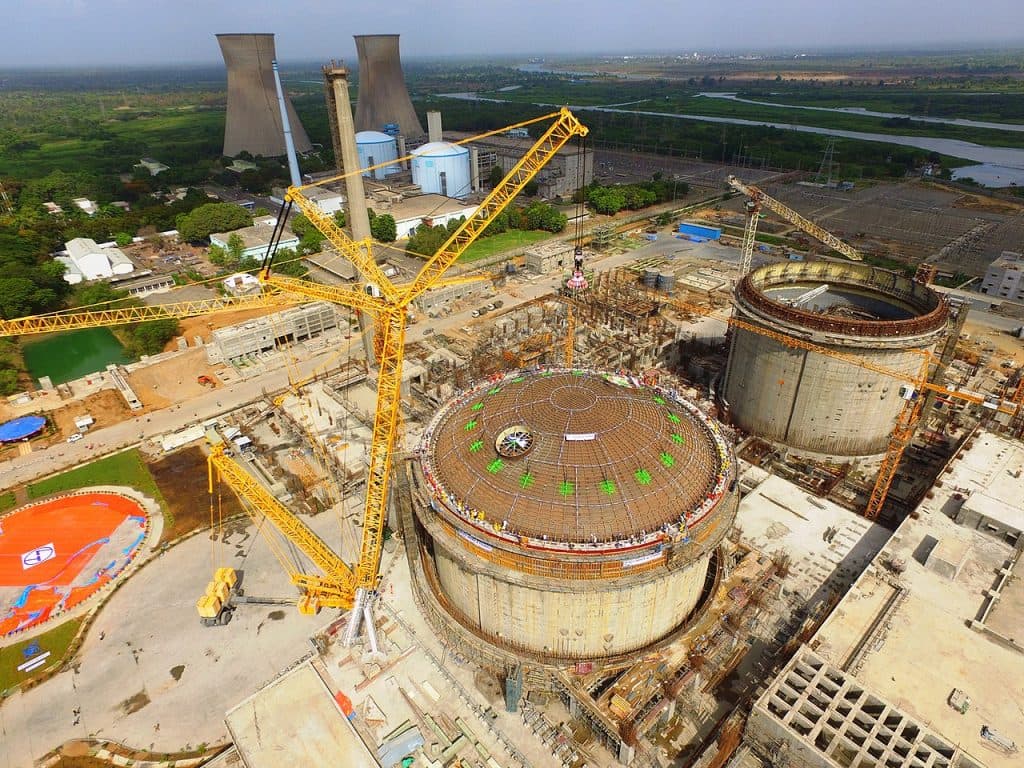
The reactor at unit 7 of India’s Rajasthan nuclear power plant has successfully reached criticality. This is an important milestone in commissioning the 700 MWe IPHWR-700 unit, which uses a homegrown heavy-water reactor. India began construction of the unit in 2011, and it still has a series of operational tests to complete before entering commercial operation. The country currently has 5 more nuclear units of the same type at various stages of construction, with another 8 in the planning stage.
India’s Nuclear Power Corporation of India Limited (NPCIL) announced a major milestone in the construction of unit 7 at the Rajasthan nuclear power plant. Following authorization from the nuclear regulator, its engineers brought the unit’s heavy-water reactor to criticality for the first time. Rajasthan 7 uses the homegrown IPWR-700 (Indian Pressurized Heavy Water Reactor) design and has an electrical output of 700 MW.
“Reaching first criticality on the project timeline marks the completion of the construction phase and the transition to the operational phase. A series of tests will now be conducted before the unit is connected to the grid. We will then gradually increase its output to full power,” NPCIL said in a press release.
India began construction of a pair of units at the Rajasthan plant in 2011, as units 7 and 8. At the time, the first of the plant’s pair of CANDU reactors from the 1960s had already been shut down, while the second is still in operation. The plant also has four IPWR-220 units, which are based on the Canadian CANDU reactor design. The plant’s total capacity is currently 1080 MW. Once the two new units are complete, its installed capacity will rise to 2480 MW.
16 IPWR-700 reactors at various stages of construction
India has operated two IPWR-700 units at the Kakrapar plant (units 3 and 4) since 2021 and 2023, respectively. In addition to Rajasthan, two more pairs of units are under construction at the Gorakhpur (units 1 and 2) and Kaiga (units 5 and 6) plants. India plans to complete all units under construction by 2032.
In addition to the units under construction, the country plans 8 more homegrown reactors at the Mahi Banswra (4 units), Chutka (2 units) and Gorakhpur (2 units) plants. India is also betting on foreign technology and has 4 Russian VVER reactors under construction at the Kudankulam plant.
“NPCIL currently operates 24 reactors with a total capacity of 8 180 MW and has eight units with a capacity of 6800 MW under construction. In addition, another 10 reactors with a total capacity of 7000 MW are in the pre-project phase. They are expected to be completed in stages by 2031-2032,” NPCIL said in a press release.
Translation disclaimer
This article is a machine translation of the Czech original and has not yet been fully reviewed. In case of any doubt, please refer to the Czech version.
Sdílejte článek prostřednictvím:
You might also like


23 October 2026, 11:01


23 October 2026, 06:34