Nuclear contracts worldwide: Korean, French and others’ hopes remain alive
The world of nuclear power entirely in the hands of the Chinese and Russians – that is the impression observers must have today when following news on nuclear energy. When it comes to building nuclear power plants abroad, Russia’s Rosatom has the biggest and clearest plans. The Chinese, meanwhile, are building the most nuclear reactors in their own country, and their companies, like Rosatom, are gradually embarking on overseas expansion.
All other potential competitors face considerable problems in their domestic markets, which will affect their chances of winning tenders in foreign markets one way or another. Nevertheless, it would be a mistake to write off the other global players prematurely – whether they are the Koreans, Japanese or French. Even the current biggest outsider, US-based Westinghouse, which is undergoing bankruptcy proceedings in the United States, may still hope that its technology will succeed globally.
It is precisely the lack of opportunities in domestic markets that may encourage major suppliers of nuclear technology to pursue foreign contracts all the more vigorously. Although, on the other hand, it will not be easy for them at all…
From the Czech perspective, this means that even in the case of the planned tender to build new nuclear reactors at Dukovany or Temelín, there is no reason to rule out in advance any of the bidders from the six countries mentioned above (Russia, China, South Korea, France, Japan and the US). It is naturally in the Czech interest for competition to be as strong as possible.
Weakened domestic markets
Let us begin, however, with the problems potential rivals to the Chinese and Russians face in their domestic markets. Perhaps the most curious case is that of the Koreans – more precisely, Kepco and its subsidiary Korea Hydro & Nuclear Power (KHNP). The Koreans have earned a solid reputation thanks to the construction of a nuclear power plant in the United Arab Emirates which, unlike competing projects, has so far avoided major delays and cost overruns.
The rise of the Koreans was so conspicuous that many in the Czech Republic began to regard KHNP as the leading favourite for the Dukovany tender. But this year’s South Korean presidential election was won by Moon Jae-in, who decided to pursue a nuclear exit in an almost German-style fashion. The current situation is that the Koreans are not planning to begin construction of any further nuclear reactor on home soil.
South Korean nuclear energy expert Roh Dongseok points out that companies building new reactors must constantly revise and modernise their designs and expand their know-how. That is difficult without a domestic market, and this also applies to companies from other countries. Domestic subcontractors focusing on a limited number of individual components for power plants also run into trouble.
Japanese, French, Americans
Japanese companies felt the loss of their domestic market after the Fukushima accident, when the Land of the Rising Sun temporarily shut down all its reactors. Now some of them are generating electricity again, but the construction of new units still appears to be utopian. Toshiba (still Westinghouse’s parent company for now) has most likely already dropped out of the race, but other renowned Japanese companies, Hitachi and Mitsubishi, have ambitions in global markets. The latter is also bidding in the Czech tender through its joint venture with the French, Atmea.
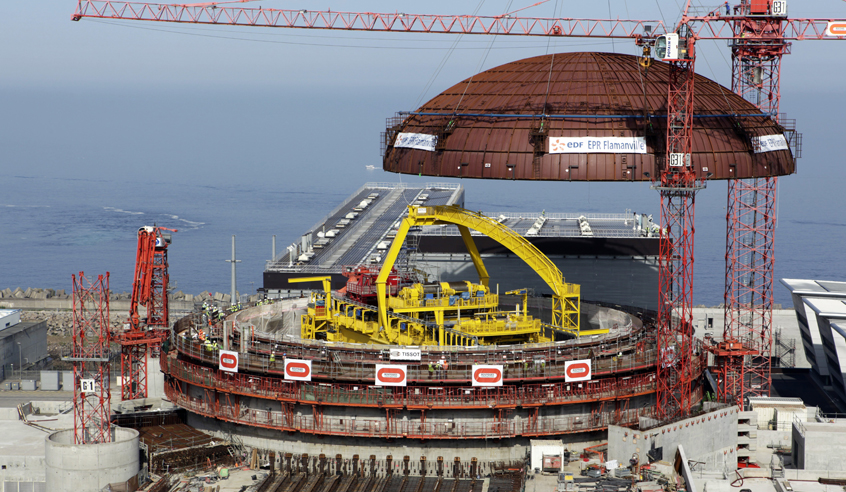
French company EDF, which is taking over Areva’s nuclear business, is facing major difficulties in the construction of the Flamanville nuclear power plant, including significant delays and cost overruns. France also intends to reduce the share of nuclear energy, and although it is far from Germany’s stance on nuclear power, further construction in the country of the Gallic rooster is not much in sight.
In the United States, they have even halted the already advanced construction of two units in South Carolina, for which Westinghouse was to supply reactors. The US situation is specific: given the shale extraction revolution there, nuclear power cannot compete with cheap gas. Apart from two reactors in Georgia, no other projects are planned in the US.
Hope in the United Kingdom
Without opportunities in foreign markets, a number of major nuclear reactor suppliers might as well pack it in. But such opportunities exist and, if they can seize them, companies such as Kepco/KHNP, Mitsubishi, Hitachi, EDF and even Westinghouse have a chance to stay in the game. Although, as in any competition, not all of them can succeed.
Supporters of nuclear energy and the further development of the nuclear industry in France are placing great hopes on the Hinkley Point project in the UK. EDF has joined forces with the Chinese here, but intends to supply its own EPR reactors. There has been much fuss around Hinkley Point, especially over debate about how much it will ultimately cost. But so far, everything suggests that it will go ahead.
The United Kingdom offers great hope not only to the French. The British themselves have no company capable of building reactors, so they are allocating individual new nuclear power plant projects among various major global players.
Japanese state support
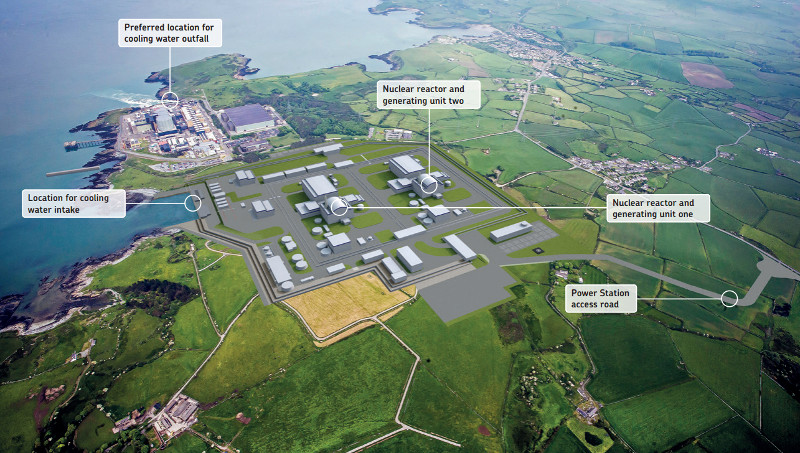
They include the aforementioned Japanese company Hitachi, which, together with another US company, GE, and unlike most competitors, focuses on boiling water reactors. This was also why the Czech government did not approach the Japanese firm in relation to Dukovany or Temelín – it adhered to the established notion that new reactors must be pressurised water reactors. In Britain, however, Hitachi will build new units at the Wylfa Newydd plant and has important support from the Japanese government. It promises that the Japanese state insurer NEXI – the equivalent of Czech export credit insurer EGAP – will insure bank loans for the construction on an unprecedented scale.
NEXI could insure the loans up to 100%, which is unprecedented – especially for a project in an advanced market such as the UK. Japanese state-owned banks are also expected to participate in the project. British government representatives are moreover considering whether they too could provide funding for the further development of nuclear energy. Government circles in both Tokyo and London apparently now share the conviction that while nuclear power plant construction projects are complicated and capital-intensive, they still pay off in the long term and bring benefits thanks to stable electricity supplies.
Hitachi Europe vice-president David Powell says that the United Kingdom is the best place to build a nuclear power plant because no political opposition to them is forming there. On the other hand, anti-nuclear activists are also very vocal in Britain.
Koreans versus Chinese
On British soil, a direct contest between the Koreans and Chinese may also be looming – over another nuclear power plant at Moorside, which Toshiba was to build using reactors from its subsidiary Westinghouse. Toshiba is trying to pull out of the project, and South Korea’s Kepco is expected to take it over. But the Chinese are also in the running… The question is whether the Koreans or Chinese, as new investors, would use Westinghouse’s AP 1000 reactors as planned, or rather supply their own reactors. The first option would be quicker, because obtaining a British licence for Korean – and indeed Chinese – reactors will take many more years. Nevertheless, the opportunity to deploy their own technology will certainly appeal to the new investors.
Britain’s approach to nuclear energy resembles India’s in many respects, except that India offers a much larger market. In potential terms – with regard to new nuclear power plant construction – India could become the second-largest market after China. Indians are also developing their own heavy-water reactors, originally developed by Canada, but at the same time have traditionally offered opportunities to other suppliers – Russians, Americans and French. Rosatom now has an opportunity – perhaps also because of Westinghouse’s problems – to gain a stronger foothold in the world’s second-most populous country, but the US company is not without a chance either.
Turkey has also decided not to put all its eggs in one basket – the most advanced project is the nascent construction of a new nuclear power plant led by Rosatom. Further plants, however, should be built by French-Japanese Atmea and US-based Westinghouse with financial support from the Chinese.
Saudi and South African courtship
Tenders are being prepared in two major markets whose line-up of bidders will resemble the Czech tender. These are Saudi Arabia, a newcomer to nuclear power, and South Africa – countries that, besides India, can offer foreign suppliers the largest contracts.
Saudi Arabia intends to build nuclear reactors by 2032 with a total installed capacity of 17,6 gigawatts, while South Africa is planning power plants with capacity of up to 9,6 gigawatts in the coming decades. Potential bidders in both countries are expected to include Rosatom, Kepco, EDF and Chinese company CGN. Media reports have also mentioned Japanese participation in the case of Saudi Arabia and Westinghouse’s participation in the case of South Africa. (It is unclear whether the Saudis do not intend to approach Westinghouse through its still-parent company Toshiba.)
There is also talk of another tender in the country just beyond the Czech border – Poland, which likewise intends to embark on nuclear power. The line-up of bidders there is expected to be similar, with KHNP representing the Koreans as in the Czech Republic, while Rosatom will probably be absent.
China’s and Russia’s weak spots
The chances of companies facing problems in their domestic markets are also increased by another significant factor. The Chinese and Russians are not welcomed everywhere with open arms. This was clearly demonstrated recently during the search for a new owner for US-based Westinghouse. Donald Trump’s administration has made it clear that neither the Chinese nor the Russians are an option from a security or political perspective. The ideal buyer for both the Americans and the selling Japanese would have been the Koreans, but they apparently feared excessive risk. Westinghouse may therefore end up being acquired by private equity funds, which also makes the company’s future difficult to predict in any way.
The fact is that the Chinese can hardly count on the Indian market – their major Asian rival. Chinese companies have high hopes for the United Kingdom, but London faces a difficult decision over whether to open the gates to them. Prime Minister Theresa May’s government has already indicated once that it will be cautious – when it sought guarantees from the French that they would not hand over their stake in the Hinkley Point plant to the Chinese.
The Poles have previously spoken out against Rosatom’s participation in the planned tender, and the Russians are not being considered in Britain either. South Africa saw major disputes over Rosatom’s activities, with critics accusing the government of having effectively promised the Russians a contract to build new reactors earlier. Whether that was the case or not, a South African court rejected the legality of such an agreement. The Russians are now in the position of one of the bidders.
The author is a consultant and energy projects specialist at HATcom agency.
Translation disclaimer
This article is a machine translation of the Czech original and has not yet been fully reviewed. In case of any doubt, please refer to the Czech version.