
23 October 2026, 14:38
Loading...
Russia's floating nuclear power plant generates its first TWh of electricity

Jiří Salavec
6 February 2025, 06:26

The Akademik Lomonosov, the first commercially operated floating nuclear power plant, is approaching the fifth anniversary of its launch. In that time, its two 35 MW units have generated 1 TWh of electricity. The operator has already replaced the nuclear fuel in both reactors of the 21,000-tonne floating plant, keeping the units in operation for more than three years.
Russia's energy company Rosatom announced that its first floating nuclear power plant, the Akademik Lomonosov, has reached an important milestone. During its operation in Russia's Chukotka region, it has generated 1 TWh of electricity. The plant has two KLT-40S reactors, with a total electrical capacity of 70 MWe and a thermal capacity of 150 MWt.
"The past year has been a milestone for the floating plant. The first fuel campaign was successfully completed in Arctic conditions, a challenge we overcame. I attribute this success primarily to effective planning and the coordinated work of the plant's staff," says Natalia Tarasova, deputy director for personnel at the floating plant.
The 144-metre-long and 30-metre-wide floating plant, with a displacement of 21,000 tonnes, was built for Russia's Rosatom. Construction took place in St Petersburg between 2008 and 2018, and the plant was completed in Murmansk in 2019. It then made a journey of almost 5,000 kilometres to its destination.
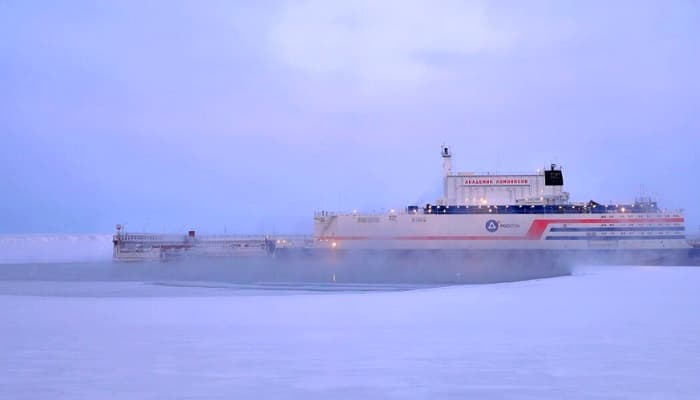
The Akademik Lomonosov floating power plant in Chukotka. Source: Rosatom
5 years in operation
The Akademik Lomonosov floating plant began generating electricity at the end of 2019, and Rosatom officially brought it into commercial operation in May 2020. This year, the world's northernmost nuclear power plant will celebrate its fifth anniversary in operation. The plant now accounts for around 60% of electricity generation in Chukotka's energy hub.
"Unconventional approaches to work have been an essential part of the floating plant project from the outset. The professionalism and strong potential of the employees, together with everyone's efforts, teamwork and cooperation, have led to impressive results," adds Natalia Tarasova.
The plant's two reactors underwent their first nuclear fuel replacements over the past two years. A total of 121 fuel assemblies can power a unit for 3 to 3.5 years.
Rosatom is considering deploying similar plants in the Middle East, North Africa and Southeast Asia. The new generation is expected to have an electrical capacity of 100 MW or more and a service life of at least 60 years.
Translation disclaimer
This article is a machine translation of the Czech original and has not yet been fully reviewed. In case of any doubt, please refer to the Czech version.
Sdílejte článek prostřednictvím:
You might also like


23 October 2026, 11:01


23 October 2026, 06:34