US launches pilot program to fast-track advanced reactor testing

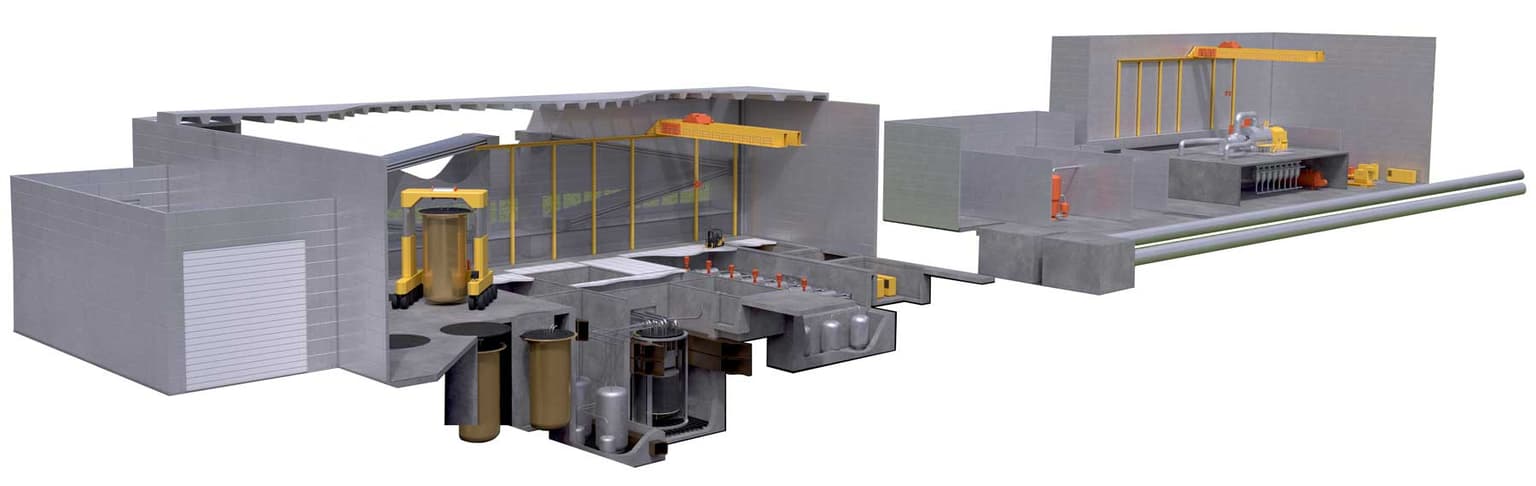
The US Department of Energy (DOE) has announced the preliminary selection of 11 advanced reactor projects to participate in the Nuclear Reactor Pilot Program. The goal is for at least three of them to achieve reactor criticality in less than a year.
The program, announced in June, is designed to speed up the testing of new reactors approved by the department at sites outside national laboratories. It stems from the presidential order Reforming Nuclear Reactor Testing at the Department of Energy, signed by Donald Trump in May. Its main goal is to “build, commission and achieve criticality in at least three test reactors using the DOE authorization process by July 4, 2026”.
Selected companies and projects
The companies selected include both startups and established firms pursuing a range of nuclear technologies:
- Aalo Atomics Inc – Aalo-1, a mass-produced, sodium-cooled micro-modular reactor with a capacity of 10 MWe
- Antares Nuclear Inc – R1, a sodium-cooled reactor with a capacity of 500 kW
- Atomic Alchemy Inc (a subsidiary of Oklo) – VIPR, a light-water reactor for isotope production with a thermal capacity of 15 MWt
- Deep Fission Inc – Deep Fission Borehole Reactor-1, a 15 MWe pressurized water reactor located approximately 1.6 km underground in a 76 cm-diameter borehole
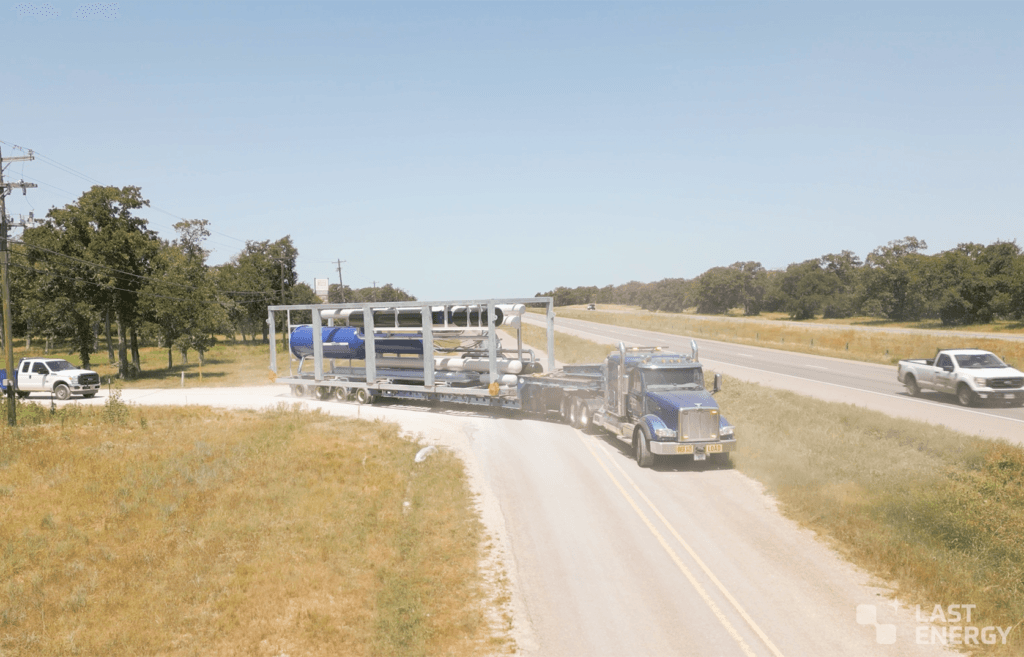
- Last Energy Inc – PWR-20, a pressurized water reactor with an installed capacity of 20 MWe
- Natura Resources LLC – LF-MSR, a 1 MWt molten salt-cooled research reactor
- Oklo Inc – Aurora, a supercritical, carbon dioxide-cooled fast reactor
- Radiant Industries Inc – Kaleidos, a mobile, high-temperature gas-cooled micro-modular reactor with a capacity of 1 MWe
- Terrestrial Energy Inc – Integral Molten Salt Reactor (IMSR)
- Valar Atomics Inc – high-temperature gas-cooled reactor
Program conditions
Each company will fund its own project, covering everything from design and manufacturing to construction, operation and decommissioning. However, a DOE authorization under the Atomic Energy Act opens access to private capital and speeds the path to a future commercial license.
Deputy Energy Secretary James Danly called the program a “call to action”, with the selected companies aiming to safely achieve reactor criticality by Independence Day 2026.
Terrestrial Energy and Oklo: ambitions to move quickly
Terrestrial Energy said its TETRA project had been selected for the program. The aim is to complete key tests needed to obtain a license to build and operate commercial IMSR reactors in the US. According to CEO Simon Irish, the move will accelerate preparations for the technology’s serial deployment and strengthen US competitiveness in the energy sector.
Oklo was selected for three projects, including VIPR. Co-founder and CEO Jacob DeWitte described the DOE’s decision as “opening the door to new ideas and designs that can be delivered faster and more efficiently”.
Speeding up permitting processes
According to Aalo Atomics CEO Matt Loszak, the projects are not receiving direct funding, but will have access to a special “concierge team” tasked with minimizing administrative delays. Processes that previously took weeks or months are expected to be reduced to days.
“This shifts the pressure onto companies to deliver tangible results. The biggest obstacle now is the time needed to complete engineering, construction and testing work,” Loszak said, adding that after analyzing its approach, Aalo concluded that even such an ambitious timeline is achievable with DOE support.
Translation disclaimer
This article is a machine translation of the Czech original and has not yet been fully reviewed. In case of any doubt, please refer to the Czech version.




