Westinghouse unveils its breakthrough AP300 small modular reactor

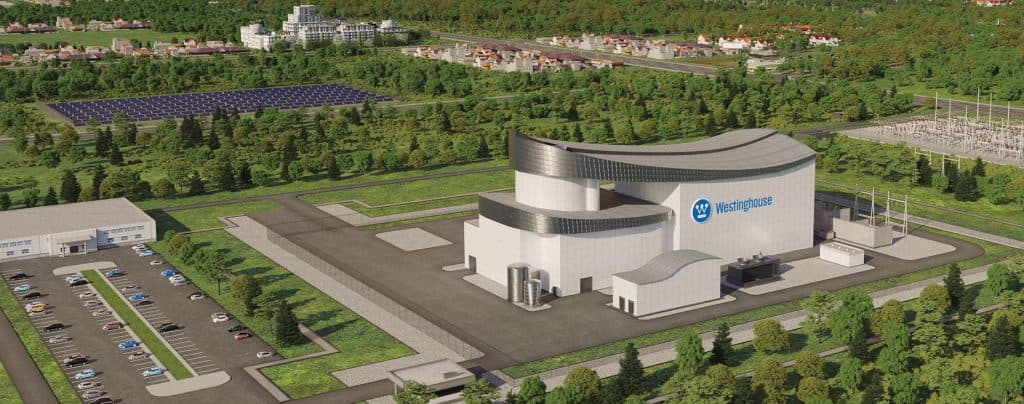
Westinghouse has unveiled its small modular reactor, the AP300, with an 80-year design life. The reactor is based on the AP1000, a large nuclear unit already in operation, and uses all of its supporting systems. The company plans to complete the licensing process by 2027, with construction of the first unit of this type expected to begin by the end of the decade.
Last week, the American company Westinghouse unveiled its AP300 small modular reactor (SMR), describing it as a breakthrough. The design of the 300 MW reactor is based on the larger conventional AP1000 reactor. Westinghouse particularly highlights the use of systems and experience from technology already in commercial operation.
“The AP300 is the only available small modular reactor based on proven, operating and advanced reactor technology,” said Patrick Fragman, president and chief executive of Westinghouse.
The reactor is expected to use the same control and instrumentation systems, passive safety systems and proven fuel system. According to Westinghouse, eliminating the need for backup power and cooling, along with the modular design, reduces the space required and capital costs.
According to the chief executive’s remarks at a press conference, the AP300 should fit within a quarter of a football pitch. The target price for the AP300 reactor is expected to be around $1 billion (approximately CZK 21.2 billion).
The company has nominated Dr. Rita Baranwal to lead the AP300 project. She currently serves as chief technology officer. Baranwal is a former deputy assistant secretary for nuclear energy and director of the Gateway for Accelerated Innovation in Nuclear initiative.
Fast licensing and a lifespan of 80+ years
The company plans an 80-year lifespan for the AP300 reactor, the same as for its parent design, the AP1000. Westinghouse expects that approval of the AP1000 reactor in the US, the UK and China, as well as compliance with European standards, will make it easier to obtain a licence for the smaller reactor. The licensing process is expected to be completed by 2027, and construction of the first reactor of this type is also expected to begin by the end of the 2030s. The expected construction time for the reactor is 3 years.
“The launch of the AP300 expands Westinghouse’s technology portfolio, enabling us to fully meet the needs of our customers around the world, with clear visibility on delivery schedules and economics,” Fragman added.
China currently has four operating AP1000 reactors at the Sanmen and Haiyang power plants. Two more are in the final stages of commissioning at the Vogtle plant in the US.
Translation disclaimer
This article is a machine translation of the Czech original and has not yet been fully reviewed. In case of any doubt, please refer to the Czech version.




