23 October 2026, 14:38
Loading...
Are Czech scientists speaking out enough about climate change?
Vladimír Wagner
20 May 2019, 11:25
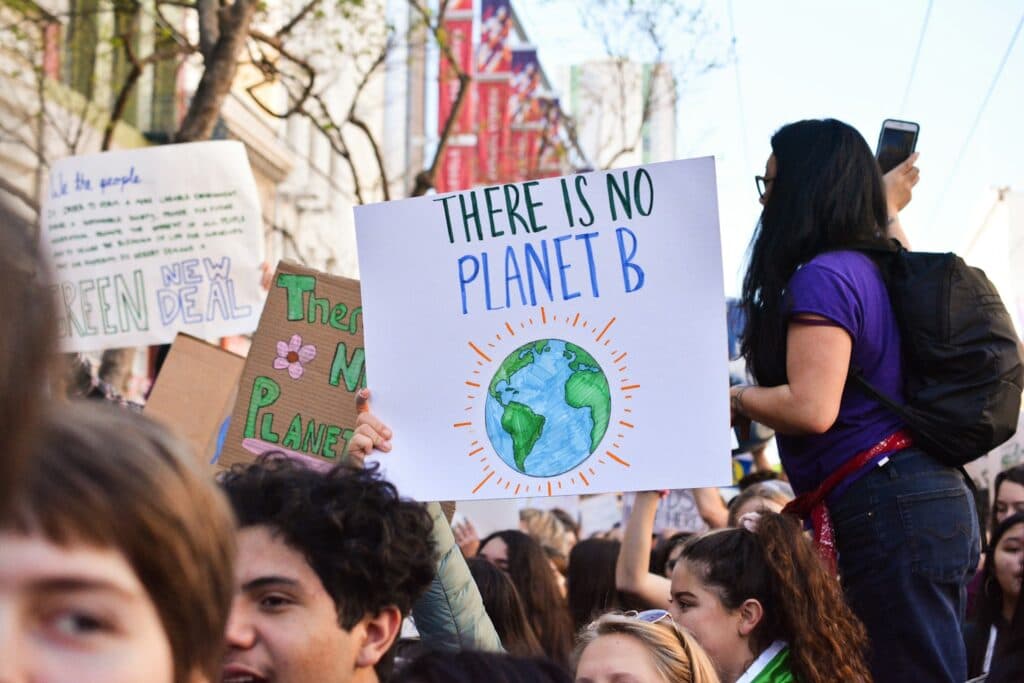
Recently, young activists have been increasingly heard making their demands thanks to climate strikes. In connection with this movement, views have also emerged that it is not only politicians, whom Greta Thunberg and her followers primarily address, but also scientists who are failing through their hesitation and inaction. Let us take a closer look at whether these criticisms are justified.
An example of such criticism is a recent article by Veronika Bednářová in Reflex: “Sixteen-year-old activist Greta Thunberg”. It focuses not only on Greta Thunberg herself, but above all on the impacts of the movement she initiated. In addition to expressing great admiration for Greta herself, the author concludes that, unlike Greta and her followers, those failing are “the scientific community, academics, university professors, specialists in ecology and global issues, who, instead of overwhelming the political representatives of their countries with specific local facts and clear demands, merely nod their heads in cautious agreement, more or less remain silent and wait to see what specific solutions will emerge from the girl and other schoolchildren striking around the world. With her simple slogan, ‘Do something’, the sixteen-year-old child has created ideal ground for a broader public debate and held up a mirror to environmental efforts to date.”
However, like Veronika Bednářová, other authors in this case fail to take one important fact into account. Emotional and spectacular actions by activists presenting simple slogans receive incomparably greater attention and have a greater impact than rational recommendations by scientists based on scientific facts, which generally cannot be simple and unambiguous. Very often, the issue being assessed is complicated, our knowledge is incomplete and subject to a number of uncertainties, and there may be several possible solutions. Each has its advantages, disadvantages and risks. This applies in abundance to the issue of climate change, human influence on it, and options for reducing its impacts by cutting emissions or increasing resilience to them. Scientific statements and recommendations are therefore less audible, less unequivocal and not as simple as activists’ often ideologically driven and highly simplified declarations. Especially when these are delivered with extreme forcefulness and urgency.
That the slogans and reasoning on which Greta Thunberg and the climate strike movement base their campaign are also far removed from the reality described by scientists of the IPCC climate panel is also emphasised by climatologist Ladislav Metelka. An intensive campaign conducted perhaps with good intentions, but without being grounded in real scientific facts, can lead to completely opposite results. The outcome of environmental organisations’ campaign demonstrates this as well. Their campaign to cut emissions is predominantly based on anti-nuclear activism. They have awarded a number of the Ropák anti-awards for supporting the use of nuclear energy to generate electricity in Czechia, and at the climate conference in Paris these activist groups gave the Pinocchio anti-award to French company EDF precisely for its use of nuclear energy.
However, the result of comparing carbon dioxide emissions in France, which despite calls from environmental organisations uses a combination of nuclear and renewable sources, and Germany, where environmental organisations have succeeded in pushing through their vision of an energy strategy, is more than clear. This can be documented very clearly in a chart of carbon dioxide emissions per unit of electricity generated. It shows power-sector emissions for the whole of last year, 2018. Each point represents one hour of electricity generation in the given country. Its position on the x-axis shows the number of MWh generated in that hour, and thus also the average output in that hour. The y-axis shows the amount of carbon dioxide emitted per unit of electricity generated.
The chart clearly shows that France always has emissions many times lower than Germany. The two countries’ carbon dioxide output is clearly separated. Even when France’s emissions were at their worst, it produced many times less than Germany when its emissions were at their best, namely when there was plenty of wind and sunshine. It should also be recalled that Germany still generates more than 10 % of its electricity from nuclear units. France already has a minimal number of coal-fired power plants and wants to shut them down completely in 2022; by 2050, it wants to be carbon-neutral. Germany hopes to close its coal units by 2038. However, even after that it will continue to use fossil fuels very intensively in the form of natural gas-fired power plants. Although burning gas produces half as much carbon dioxide as coal, once greenhouse-gas emissions from its extraction and transport are included, it is not much of a victory from this perspective. The energy strategy promoted by environmental organisations has therefore failed completely in terms of reducing greenhouse-gas emissions. Angela Merkel also clearly acknowledged this recently, when she declared that Germany could achieve carbon neutrality in 2050 only if it succeeds in deploying carbon dioxide capture and storage technologies (CCS technologies). It is worth recalling that these technologies are not yet available and are highly problematic from both environmental and economic perspectives. Like France, Sweden also has low emissions thanks to its mix of nuclear and renewable sources. By contrast, Italy and Poland have no nuclear power and, like Germany, high greenhouse-gas emissions.
This is precisely why it is very important for student activists to take an interest in the issue and know what they are actually advocating. Given the importance of this topic, it needs to be presented to the general public in a serious and sufficiently expert manner, albeit in an appropriately accessible form. This is why, together with a number of colleagues, we prepared a sufficiently comprehensive yet comprehensible overview of issues connected with possible climate change, its impacts and available measures to increase Czechia’s resilience to it. Under the leadership of Václav Cílek and Alexandr Ač, we wrote the book The age of imbalance (climate change, security and paths to national resilience). Given the highly diverse composition of the author team, it is clear that even within the scientific community there is no unified view on a number of questions, and that there are often, in principle, several possible paths. The book is a good starting point for gaining an overview of the basic knowledge and beginning to study and think about this complex issue. It will give readers a certain immunity to the primitive, simplified slogans that appear in activist campaigns and online discussions. The book was published by Academia and is now reaching bookshop shelves. Although it was completed at the turn of 2016 and 2017, its publication was delayed. This matters little, however, because at the present time of climate strikes this summary of climate-change issues is highly topical and needed.

This book, too, documents that experts are trying to put forward their proposals and discuss the issue with politicians and the public. And not only after the start of the climate strikes. I myself focus considerably on energy, which is truly important for addressing emissions reductions. It should be stressed that, for example, experts contributed their recommendations to the preparation of the currently valid update of the State Energy Policy within the second Pačes Commission. As part of this work, though with a broader team of authors, we prepared for the wider public an overview of Czech energy, “Prospects for Czech energy” from 2014, and the follow-up monograph “Czech energy at a crossroads” from 2018.
Not only the experience in Germany shows that, without nuclear power, emissions reductions are not very successful even with extreme financial and other efforts. We do not have a windy seacoast in Czechia, so we truly cannot achieve low-emission energy without nuclear power plants. Nuclear energy sources, like all other sources, have their advantages, drawbacks and risks. Probably the greatest risk in this case is an accident and its impacts. We saw this at Chernobyl in 1986 and Fukushima in 2011. A detailed analysis of the Fukushima accident, triggered by one of the largest earthquakes and tsunamis, is contained in the 2015 book “Fukushima and after”. Rational analysis and discussion of this risk are very important because it was one of the main reasons on which anti-nuclear activists built their successful anti-nuclear campaign in Germany.
Environmental organisations assessed the risks of carbon dioxide emissions and climate change as much lower than those of nuclear power. Germany is now showing where such a decision leads. At the same time, it is becoming clear where the need to build large numbers of wind turbines and vast areas of photovoltaic panels leads. It is also possible to assess the impacts of increased centralisation, which requires building long transmission lines to carry large volumes of electricity from large wind farms in the north to industrial enterprises and major cities in southern Germany. It is proving that gaining public acceptance for these negative impacts of Germany’s energy strategy may not be easy. This, too, is leading to a noticeable slowdown in the construction of renewable sources in Germany in recent years, and thus in the rate at which decommissioned nuclear sources are replaced and emissions reduced (see, for example, here and here).
I tried to explain to the organisers of the climate strike in Czechia that there can be different paths to low emissions and that each has its pros and cons, in a discussion programme in the Enviro Meetup series at Paralelní Polis (it can be viewed here). I described my impressions of this debate in an article, which was also part of a broader debate on climate strikes held on the environmental website Ekolist. The follow-up Enviro Meetup debate should take place on Thursday, 23 May. A climate-change panel as part of the March for Science, held on 4 May, was also a broader discussion between scientists and the public. A recording of it should also appear online in due course.
In the preceding lines, I have tried to document, through several events and initiatives in which I personally took part, that Czech scientists are trying to discuss problems surrounding climate change with politicians and the public and offer possible solutions. There are many similar events organised by other experts in other fields related to this topic. It is a complicated problem, and there are many uncertainties in our understanding of it. A number of different paths are available to address it, each with its positives and negatives. This is why the views of different scientists may also differ. It is therefore important for politicians and the public alike to think about the different options and try to form an informed view on the issue. The aforementioned Academia publication, “The age of imbalance (climate change, security and paths to national resilience)”, which is now being published, should help them do so.
Written for Ekolist, Osel, Neviditelný pes and oEnergetice.
Translation disclaimer
This article is a machine translation of the Czech original and has not yet been fully reviewed. In case of any doubt, please refer to the Czech version.
Sdílejte článek prostřednictvím:
You might also like

23 October 2026, 11:01

23 October 2026, 06:34