19 October 2026, 13:15
Loading...
Chernobyl and Ukrainian nuclear power in wartime
Vladimír Wagner
7 March 2026, 07:23
Forty years have now passed since the accident at Unit 4 of the Chernobyl Nuclear Power Plant. At the turn of the decade, a major breakthrough was made in dealing with the consequences of the accident and revitalising the affected areas. Further progress, however, was disrupted by the COVID-19 pandemic and Russia's invasion of Ukraine. Let us look at the current state of the plant's decommissioning and the revitalisation of the affected areas. It is also very important to follow developments in Ukrainian nuclear power under wartime conditions.
March 2026 marked fifteen years since the accident at the Fukushima I nuclear power plant, while April marked forty years since the Chernobyl Nuclear Power Plant accident. While the situation at Fukushima was covered in a recent overview article, we will now look at the situation in Chernobyl.
At the turn of the decade, a turning point was reached and intensive efforts began to revitalise the affected areas. This was made possible by the completion and commissioning of the new sarcophagus, the New Safe Confinement, which hermetically sealed the destroyed reactor together with the old sarcophagus. The European Union played a major role in both financing and delivering the sarcophagus, while the European Bank for Reconstruction and Development (EBRD) provided oversight. Construction of the structure itself began in 2016; due to radiation conditions, it was built some distance from the destroyed unit covered by the old sarcophagus. In November 2016, the completed enormous arch was moved on rails over the old sarcophagus. The internal equipment and its testing were completed at the turn of 2018 and 2019, and it was officially commissioned in July 2019. For those wishing to recall the situation at that time, here is a link to an overview article published for the thirtieth anniversary of the accident.
The installation of the hermetically sealed sarcophagus ensures that no unexpected release of radioactivity can occur. Reconstruction of the plant site and its surroundings could therefore begin. Several key directions for revitalising the exclusion zone were proposed. A national park was declared in 2016 across the largest part of the current exclusion zone, covering an area of roughly 2300 km2. Together with the affected part of the zone in Belarus, this is creating Europe's largest wilderness area. Part of the city of Pripyat and parts of the power plant are planned to become a memorial to one of the greatest technological disasters. Pristine nature and memorials to the accident could together contribute to tourism development. Part of the territory will return, as has already happened in Belarus, to agriculture, mainly the cultivation of industrial crops, and forestry. A smaller area in the vicinity of and within the destroyed power plant, covering roughly 320 km2, is intended for industrial zones. Further developments, however, were heavily affected by Russia's invasion and occupation of the Chernobyl Nuclear Power Plant. The occupation, its impacts and liberation are described in detail in an article from that time; the first year of the war is covered in part of the 2022 nuclear power review, and later developments in the 2023 review and the 2024 review.
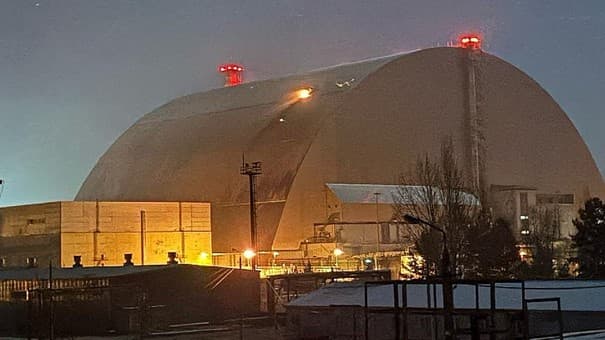
The new sarcophagus after the drone strike (source: IAEA)
Drone attack on the new sarcophagus
The most closely watched issue in recent years has certainly been the impact of wartime events, and in 2024 the drone attack on the new sarcophagus. On 14 February 2024, a Russian drone carrying a high-explosive warhead struck it. It breached the outer cladding, caused a fire and damaged the inner sealing insulation. Local safety and firefighting teams responded quickly and extinguished the open flames, but extinguishing hot spots continued for several days. On 17 February, renewed smouldering was found during a detailed inspection, and firefighters had to complete the extinguishing of hot spots at various points in the insulation over roughly three weeks. Eighty-four climbers from safety and firefighting teams took part in the immediate response.
The damaged location is at a height of 87 m; an area of roughly 15 m2 of the outer cladding was destroyed, while damage was found across approximately 200 m2 of its surface. Some 340 holes of varying sizes, between 30 and 50 cm, were gradually found in the outer wall. Part of the equipment and electrical cables were damaged, but fortunately the accident did not affect the structural elements of the load-bearing structure. The main crane system and the maintenance garage were also damaged. Heating and ventilation remained operational. Dosimetry and other monitoring systems are also functioning properly.
Fortunately, the internal equipment inside the sarcophagus was not breached. No radioactive releases were observed and the radiation situation around the plant did not change. As a result of the impact, the sarcophagus no longer meets its required parameters: it is now impossible to maintain the pressure conditions between the atmosphere and the negative pressure in the spaces between the sarcophagus's outer and inner walls. These ensured that, in the event of a breach, air would be drawn from outside inwards and no radioactivity could escape from inside the sarcophagus. Rainwater could enter the space between the inner and outer walls. The outer wall therefore had to be repaired at least provisionally at the affected point.
The damaged outer section was subsequently dismantled. By the end of October 2024, the hole in the outer shell had been sealed. Insulation on both the inner and outer walls will need to be restored. The airtightness of the outer wall must be reinstated. This will be highly demanding work under very difficult radiation conditions.
French companies Bouygues Travaux Publics and VINCI Construction Grands Projects are involved in preparing the sarcophagus reconstruction works. They were part of the Novarka consortium that designed the sarcophagus. All work is being consulted with the IAEA. Intensive work is thus under way, through broad international cooperation, to restore the sarcophagus's full functionality.
In July 2025, estimated necessary costs for repairing the sarcophagus stood at around EUR 100 million, with the EBRD again providing the financial backing for the required works.
Work to dismantle the old sarcophagus is still at an early stage. The permit for the operation of this facility and the deadline for its dismantling, which had been set for the end of 2023, were extended in December 2023 until 2029. The delay resulted from the COVID-19 pandemic, the war and the occupation. The first step is expected to be dismantling the structurally unstable parts of the sarcophagus. However, the state of the old sarcophagus must be examined in detail to determine what needs to be removed and what must be stabilised temporarily. Based on the data obtained, a project will be prepared to dismantle the unstable parts of the sarcophagus. The critical parts of the old sarcophagus are then expected to be dismantled by October 2029. Damage to the new sarcophagus and other problems could, however, significantly delay the work again.
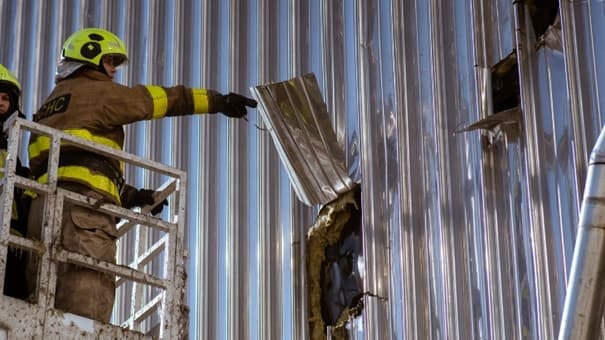
Inspection of the consequences of the drone strike on the new sarcophagus (source: ChNPP)
Decommissioning end-of-life reactors
The restoration of all necessary permits for work with radioactive materials was crucial for work at the site, and this was achieved by August 2022. November 2025 marked five years since the first batch of spent fuel from the shut-down reactors of the Chernobyl Nuclear Power Plant was placed in the new ISF-2 interim long-term dry storage facility. It was built at the plant site, and a special building and hot cells are used to prepare fuel assemblies for storage in the relevant containers. To date, a quarter of the spent fuel from the decommissioned plant has already been transferred there. Preparation and storage of the fuel assemblies were interrupted during the Russian occupation but are now continuing in line with the plan. The facility was delivered by US company Holtec. It is the most important project in the plant's decommissioning. The storage facility has capacity for 21,000 fuel assemblies from RBMK reactors and will hold fuel from Units 1 to 3. It will enable safe storage for at least one hundred years.
A very important facility for decommissioning work was commissioned in September 2025. It provides dosimetric inspection of materials collected during plant decommissioning. The facility is based on gamma spectrometry systems. Material that meets all dosimetric limits will be released for recycling. In October 2025, the first batch of carbon steel, weighing 20 tonnes and originating from dismantled plant equipment, underwent a very thorough inspection and could be sent for remelting and reuse. The facility will enable effective decontamination and sorting of materials from the dismantling of plant components, thereby reducing the volume of radioactive waste.
On 20 December 2024, the ICSRM (Industrial Complex for Solid Radioactive Waste Management), consisting of the SWRF (Solid Waste Retrieval Facility) and SWPP (Solid Waste Processing Plant), received its operating licence. This is a key facility where solid waste from the operation of the Chernobyl nuclear power plant, nuclear waste generated during decontamination of the plant site, and waste from the sarcophagus, where the old sarcophagus and destroyed unit will be dismantled, will be processed.
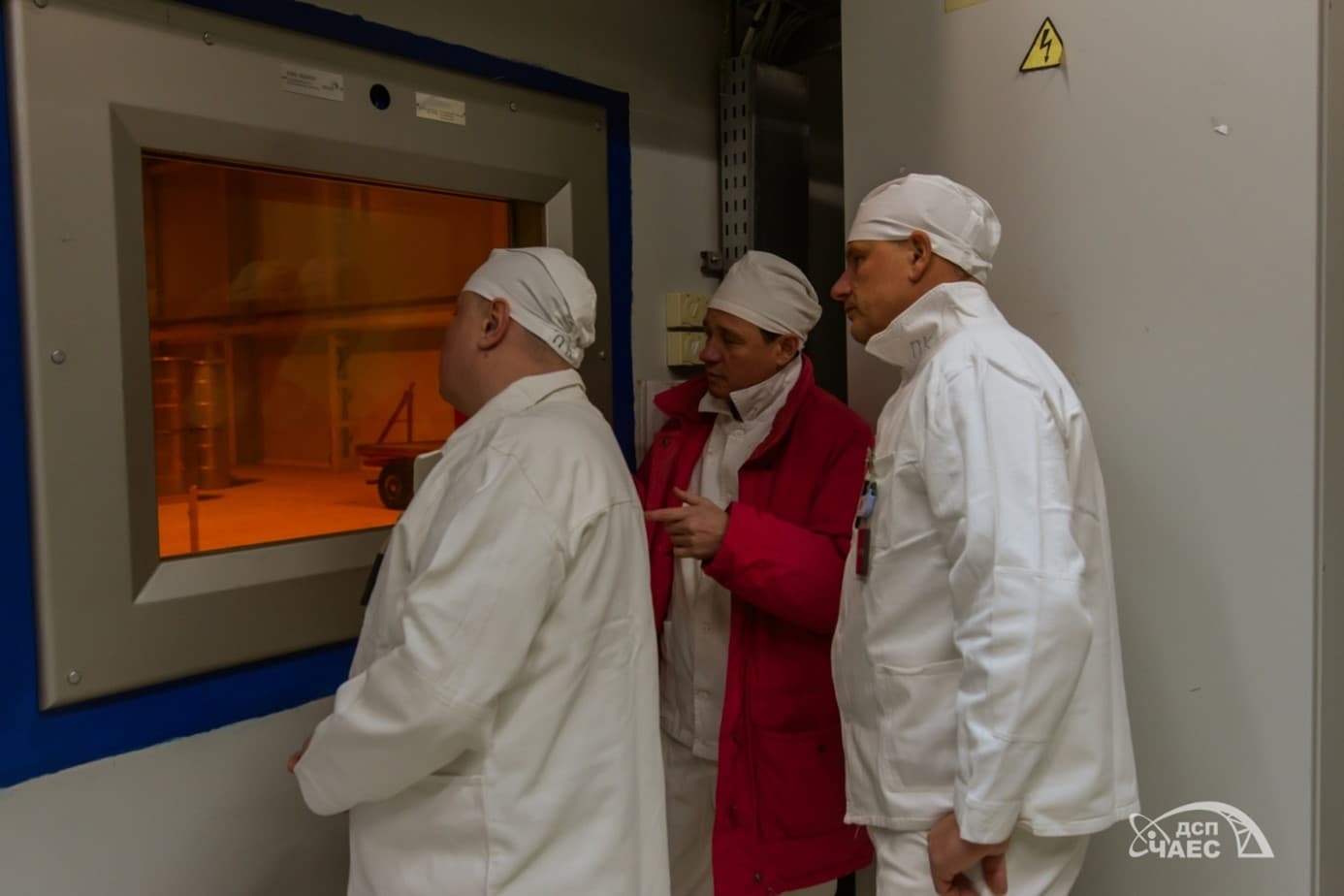
Solid radioactive waste processing complex at the Chernobyl Nuclear Power Plant (source: ChNPP)
New industrial sites in the power plant area
An important direction for using areas closest to the plant, as well as those somewhat further away, is industrial sites linked to nuclear technologies. In December 2023, the CSFSF (Centralized Spent Fuel Storage Facility) for spent fuel from Ukrainian nuclear power plants with VVER1000 and VVER440 reactors was officially commissioned. Its total capacity is 16,530 fuel assemblies, including 12,010 of the VVER1000 type and 4,520 of the VVER440 type. The contract to deliver the storage facility was signed with Holtec in 2005 and construction began in 2017. A railway line also had to be built to transport containers to the store. Commissioning of the facility was delayed by the war and occupation.
Holtec plans to build a factory for spent-fuel containers in Ukraine and to cooperate in the future on SMRs (small modular reactors). Construction of prototype small modular reactors in the Chernobyl exclusion zone has been considered for some time. Specific projects, however, were halted by the war.
Other completed projects include solar power plants. They can make use of the existing grid connection in the area. At present, another advantage is the lower likelihood of Russian missile and drone attacks on such installations in the Chernobyl area. A new photovoltaic power plant in the city of Chernobyl was completed and approved in spring 2025. It has a capacity of 0.76 MWp and complements the 1 MWp plant at the power plant site, which was commissioned in 2018.
The increasing intensity of decommissioning work, the expanding use of the site for industrial applications and tourism require a safe environment for staff and visitors. Environmental conditions must also be studied and addressed. In the second half of 2022, dogs living freely at the plant site and in the surrounding area were sterilised with the help of the US Clean Futures Fund, which supports local communities. The animals were also vaccinated and their health checked. This continues an initiative launched in 2017, when there were around 800 dogs at the site, aimed at limiting their population and improving their health. Some were also fitted with dosimeters, enabling mapping of their movements around the site and the doses received. Blood samples were taken from 302 dogs, making it possible to study their health, genetic relatedness and variability, as well as any effects of radiation. An inspection in June 2023 showed that not a single new puppy had been born.
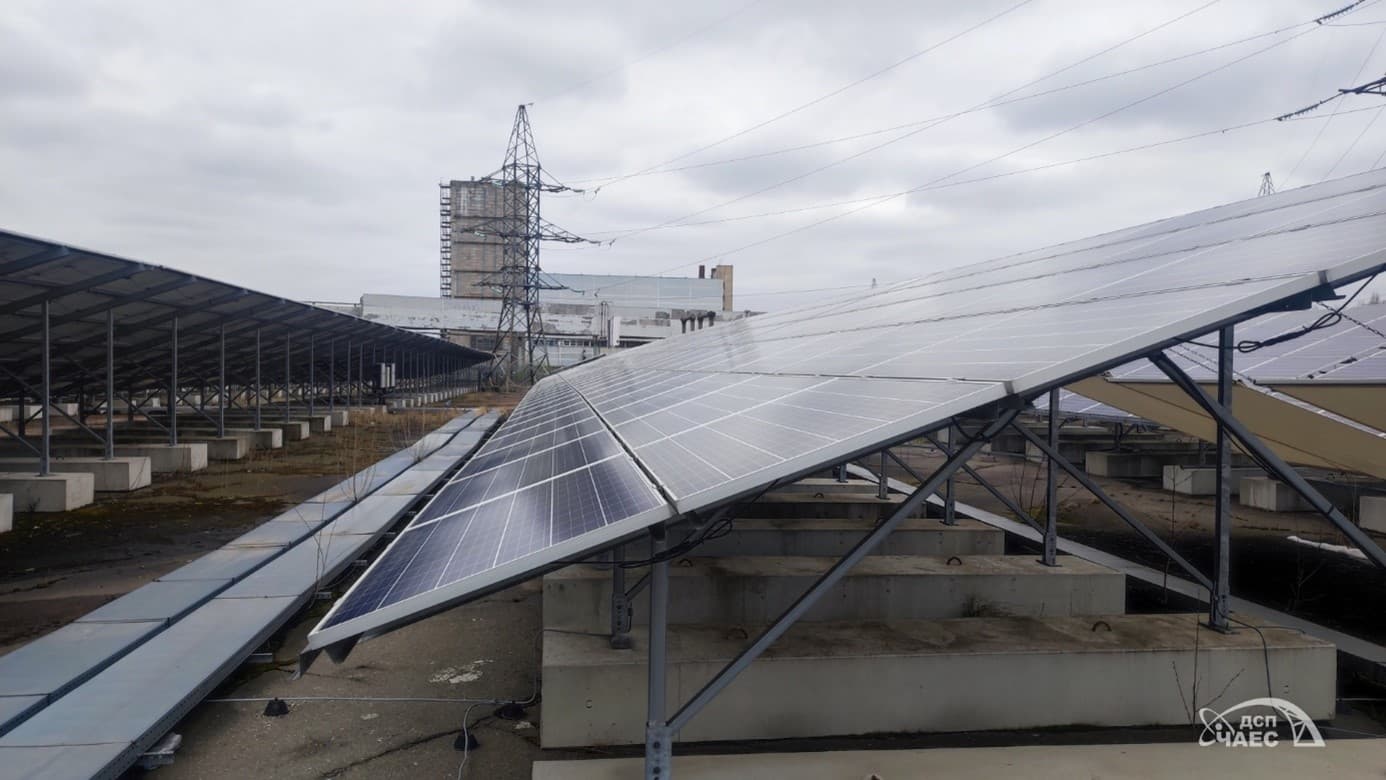
Photovoltaic power plant at the Chernobyl Nuclear Power Plant (source: ChNPP)
Tourism in the Chernobyl zone
In 2019, Ukrainian President Volodymyr Zelenskyy issued a decree supporting the development of the Chernobyl areas affected by the accident. One important point was opening the territory to tourism and developing this sector. The plan was to draw on the popularity of the Chernobyl series, which gained international recognition that year.
Access was opened to places that had previously been completely closed. Restrictions on photography and filming were lifted at a number of locations. Land and water tourist routes through extensive forests were being prepared. These efforts were dramatically disrupted by Russia's occupation and invasion. Efforts in this area are now being renewed, with a vision of development after the war ends.
As part of efforts to address the consequences of the occupation and develop the region, intensive work is under way on tourism infrastructure in the city of Slavutych, which is 45 km from the power plant and was built after the accident for plant employees. The museum, information centre and exhibitions dedicated to the accident and its aftermath should be expanded. Facilities are being prepared for excursions, tourist expeditions, various training and educational events, and scientific conferences devoted not only to environmental matters. It is clear that ending the war is crucial to the development of this area.
In this respect, the war has had dramatic impacts. Under different circumstances, cooperation with Belarus, which was even more heavily affected by the accident, could also have been used. It had, and still has, a strong interest in developing tourism, particularly in the Gomel region, which was affected most severely.
Studying dosimetric conditions is also very important in areas that are not directly within the exclusion zone but were also significantly affected. Agricultural and forestry use has been increasingly returning there in recent years. For example, a broader dosimetric survey of Zhytomyr region showed that conditions there allow farming and that the food produced is safe. Monitoring will continue alongside the restoration of activities in other areas.
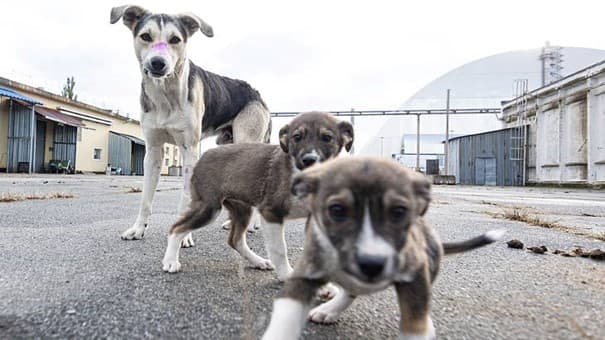
Sterilisation and vaccination of dogs in Chernobyl was carried out in the second half of 2022 (source: ChNPP)
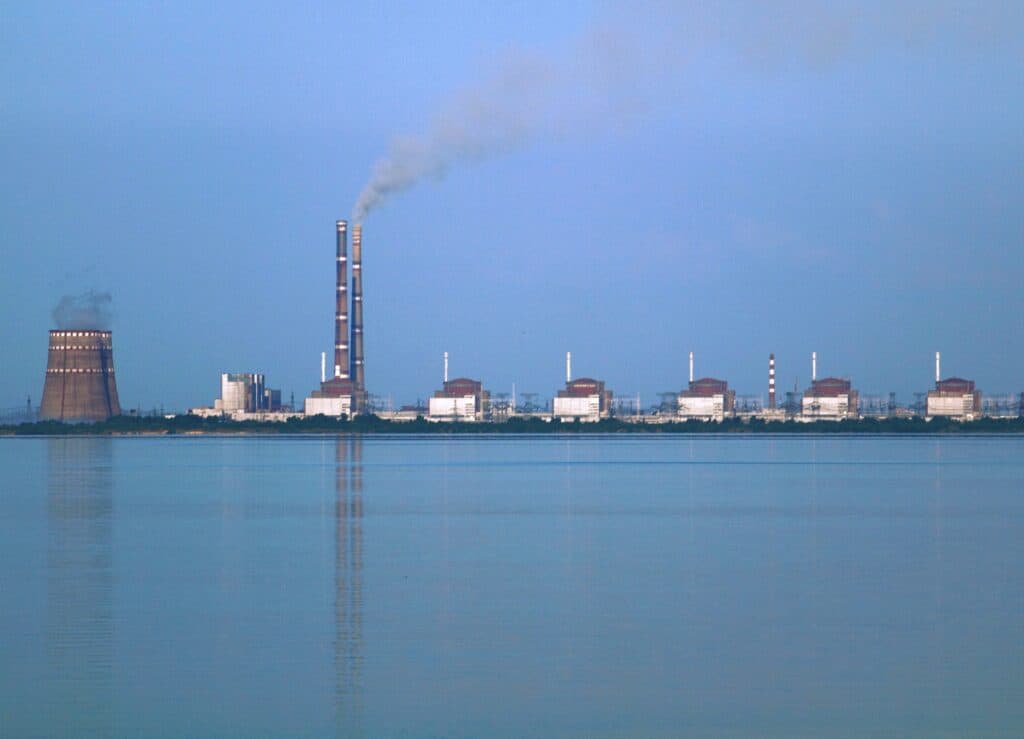
Zaporizhzhia Nuclear Power Plant
The Zaporizhzhia Nuclear Power Plant was occupied by the Russian military at the start of its invasion of Ukraine. On 30 September 2022, Vladimir Putin signed treaties annexing four Ukrainian regions, including Zaporizhzhia region. The Duma approved the annexation on 3-4 October. On 5 October, Vladimir Putin signed a decree implementing the transfer of the Zaporizhzhia Nuclear Power Plant into federal ownership. Rosatom and its Rosenergoatom division subsequently established the company "Operating Organisation of the Zaporizhzhia Nuclear Power Plant", which officially manages the plant. Plant employees who wished to remain had to accept Russian citizenship and become employees of the new organisation. A number of employees were replaced, while others were appointed by Rosatom. Hundreds of new employees had already been recruited during the first half of 2023. The workforce was stabilised in January 2024; at that time, the plant had roughly 4,500 employees in total, compared with the original 11,500. The transition to the rules of Russia's nuclear safety regulator, Rostechnadzor, also began. Full completion of this transition should take place before 2028.
In 2023, work began to extend by another ten years the operating licences of Units 1, 2 and 6. Unit 1 was licensed until 2025, Unit 2 until 2026, Units 3 and 4 until 2028, and Unit 5 until 2030. These units are reaching forty years of operation. Unit 6 completed its first thirty years of operation in 2025 and its licence also needed to be extended. Unit 1 received authorisation for another ten years of operation in December 2025 and Unit 2 in February 2026 from Russia's Rostechnadzor regulator (which is not recognised by the Ukrainian side or the international community); Unit 6 is expected to receive it in mid-2026. Extensions for Units 3 to 5 are also being prepared. The dry spent-fuel storage facility also received a licence extension from the Russian nuclear safety regulator, in this case for 25 years.
The units were maintained in cold shutdown, except for one or two that were in hot shutdown to supply steam to the site and the nearby city of Enerhodar. Individual reactors took turns in hot shutdown. A separate steam source was later installed, which in principle allows all units to remain in cold shutdown. All units are currently in cold shutdown (see the plant's Russian website).
A problem is the very limited number of external power sources: a 750 kV and a 330 kV line, only two instead of the original ten, while the lines also cross the front line. They are therefore very frequently disrupted and site power supply switches to diesel generators. In 2025, with intensified fighting in Ukraine and a focus on bombing the energy system, the number of outages affecting lines supplying the Zaporizhzhia plant rose dramatically. The longest one last year lasted as long as thirty days.
Since September 2022, rotating IAEA expert missions have been regularly present at the plant. At the beginning of 2025, IAEA experts began travelling via Russia instead of via Ukraine. The reason was the security of mission members, who thus do not have to cross the war line at a time of extremely intense fighting. The latest rotation of the IAEA mission took place on 6 February 2026.
After the destruction of the Kakhovka dam, the impacts of which are described in an earlier article, eleven new wells were drilled as water sources. The current arrangement can supply water at around 260–270 m3/hour and cool the shut-down plant. Before restart, however, the cooling issue will need to be fundamentally resolved.
The fate of the Zaporizhzhia Nuclear Power Plant is an important part of talks between Ukraine, Russia and the United States on ending the war and the future peaceful settlement of the occupied territories. There is full agreement that the reactors cannot be restarted before the war ends. The cooling situation must be resolved, the risk of losing external power sources eliminated, and the risks posed to the plant by military action addressed. Before the occupation, the plant operated on Westinghouse fuel, stocks of which are also held at the site. The question of what to do with it, as Rosatom plans to switch to Russian fuel, is also part of the negotiations.
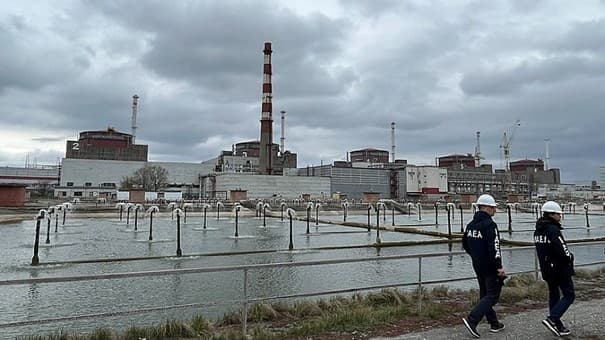
IAEA experts during their mission at the Zaporizhzhia Nuclear Power Plant in March 2023 (source: IAEA)
Ukrainian nuclear power
For a third winter season, Russia has been trying to destroy Ukraine's energy system. The situation at the turn of 2022 and 2023 was described in detail in an article from that time. Ukraine's electricity system even experienced a complete blackout then. During each subsequent winter, Russian attacks on Ukrainian electricity and heat-supply infrastructure became even more intense. Russia sought to achieve a blackout and cut off electricity and heat supplies to households and industry. This is an attempt by Russia to break Ukrainians' will to defend themselves through terror. Ukraine, however, has become increasingly resilient. On the one hand, its air defence is becoming more effective; at the same time, deployment of decentralised backup sources of electricity and heat is expanding, as is the resilience of the entire system.
The peak of Russia's campaign to destroy Ukraine's electricity and heating system is taking place this winter. Apart from nuclear power plants, virtually all sources of electricity and heat have been attacked. As a result, entire regions and parts of cities are left without electricity, heat and water. Supplies of mobile backup sources, spare parts and components for the electricity system from the European Union and Ukraine's other allies have been a major help. The situation has also been worsened by the current very cold winter. Nevertheless, it appears that Ukrainians will withstand the situation this time as well.
Although Russia does not directly attack nuclear power plants, the large number of attacking drones and missiles increases the risk of accidental drone strikes on nuclear power plant sites. At the same time, Russia is attempting to destroy transformers, substations and other elements of the electricity system in order to cause a blackout in Ukraine. There is therefore a high risk that nuclear power plants will lose their external power supplies.
This winter is specific because Ukraine can now respond symmetrically to Russian attacks on electricity and heat infrastructure, as it has the means to do so. Dramatic outages of electricity, heat and water are therefore being felt not only in occupied parts of Ukraine, but also in Belgorod and Belgorod region, as well as Bryansk, Kursk and Rostov regions. Drones are flying even deeper into Russian territory. This means they are also reaching the vicinity of Russian nuclear power plants. A typical example is the Kursk Nuclear Power Plant, which is very close to the Ukrainian border. These facilities are thus also being endangered by ongoing military activity.
Ukraine sees that nuclear energy is a crucial asset even in such challenging times and would therefore like to increase the capacity of its nuclear power plants. The simplest route is to complete two partially built VVER1000 units at the Khmelnytskyi Nuclear Power Plant. Four units began construction there. The first was completed in 1987, while work on the other three stopped in 1990. Work on Unit 2 resumed and it was completed in 2004. At the time work was halted, Unit 3 was 80% complete and Unit 4 was 25% complete.
Two Russian VVER1000 reactors were to be built at Bulgaria's planned Belene plant. A whole series of contracts for components had already been signed and implemented there, and the components have been stored in warehouses since their delivery in 2017. The project was formally and definitively cancelled in 2023.
Ukraine and Bulgaria began negotiating the purchase of these components to complete the two units at the Khmelnytskyi Nuclear Power Plant. US specialists and IAEA experts also joined the talks. The new units would use Westinghouse fuel. In February 2025, the Ukrainian parliament supported the project in a vote, and the president also signed the necessary authorisation for the negotiations. However, it remains a politically, technically and logistically demanding operation, and it is still unclear whether and when it will be implemented.
The advantages of the Khmelnytskyi plant are the advanced stage of construction of the units and its location in western Ukraine. This is also why construction of the plant's fifth and sixth units is being considered. They would be AP1000 reactors.
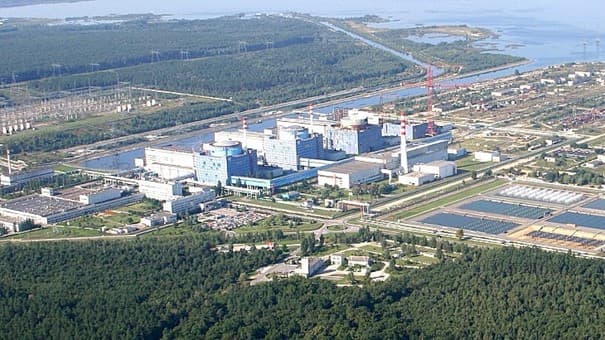
The Khmelnytskyi Nuclear Power Plant could be completed (source: Energoatom)
Conclusion
Despite the impact of the war, work on decommissioning the Chernobyl Nuclear Power Plant has been resumed. The transfer of spent fuel from the plant's first to third units into dry storage is proceeding successfully. Work on the destroyed unit was severely disrupted by the damage caused to the new sarcophagus by the impact of a Russian drone carrying explosives. Following the implementation of provisional protection against weather effects, reconstruction of the sarcophagus is now being prepared with the help of foreign partners led by the EBRD. However, work to dismantle the unstable parts of the old sarcophagus has been substantially delayed. Progress is nevertheless being made in completing facilities for managing radioactive waste generated during plant decommissioning.
Significant progress has been made in developing industrial sites in the exclusion zone. A dry storage facility for spent fuel from Ukrainian plants using VVER reactors is already in operation. Two photovoltaic power plants are also operating, with a combined capacity of almost 2 MWp.
Ukraine's energy sector is experiencing its most challenging wartime winter season. Its three nuclear power plants are helping it through this period, and thanks to them Ukraine will overcome the current critical period. This is also why it envisages developing nuclear power after the war ends.
That, however, remains out of sight for now. Moreover, the past year has seen a major escalation in military activity and Russian attacks on civilian targets and infrastructure, particularly energy infrastructure. The number of deaths, including civilian casualties, has also risen dramatically. Russia also continues to threaten the use of nuclear weapons. I described the resulting risks in the article "Nuclear energy and democracy".
Lecture comparing the Chernobyl series with reality for Café Nobel.
Lecture for Pátečníci on the thirtieth anniversary of Chernobyl.
Discussion on Chernobyl with Vědátor at the pub.
Lecture for Pátečníci on living in the shadow of nuclear weapons.
Discussion with Vědátor on the risk of nuclear weapons, accompanying the lecture for Pátečníci.
Lecture on the film Robert Oppenheimer and the film for Café Nobel.
Translation disclaimer
This article is a machine translation of the Czech original and has not yet been fully reviewed. In case of any doubt, please refer to the Czech version.
Sdílejte článek prostřednictvím:
Topics:Opinion
You might also like
19 October 2026, 13:05
19 October 2026, 11:33
19 October 2026, 10:37