
23 October 2026, 14:38
Loading...
Chernobyl anniversary in 2022
Vladimír Wagner
26 April 2022, 16:15
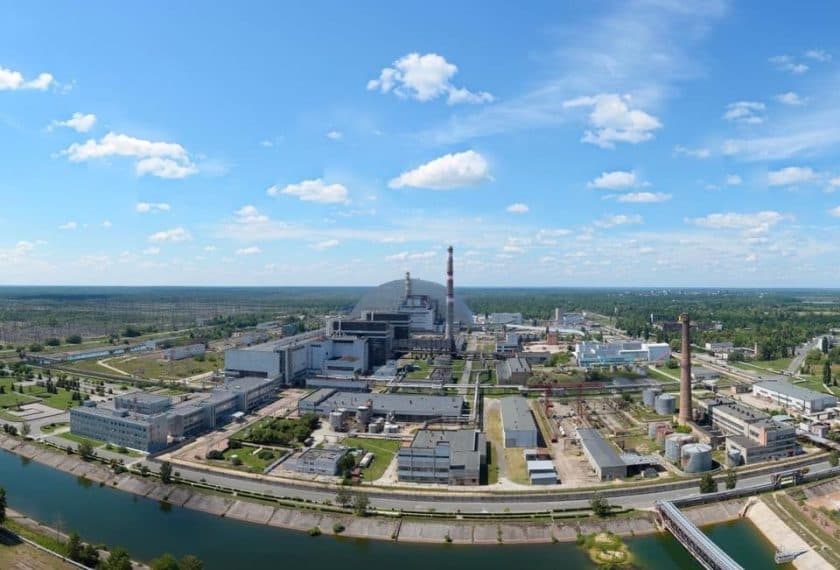
The events preceding this year’s anniversary of the Chernobyl Nuclear Power Plant accident were perhaps anticipated by no one. This makes it all the more useful to examine the current situation there and what developments can be expected in the future.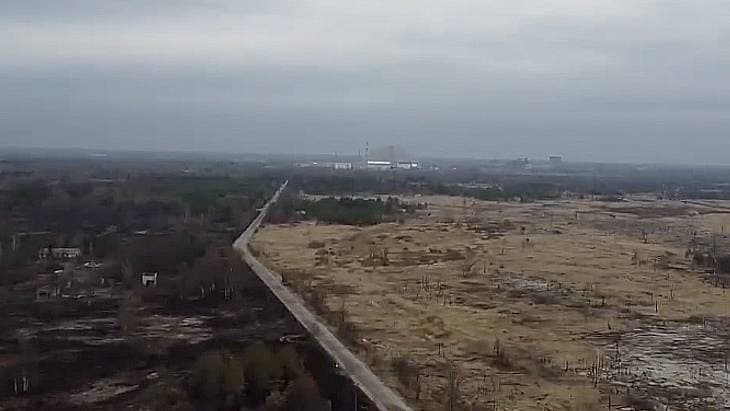

Last year, we marked the 35th anniversary of the Chernobyl accident with a detailed article. When, just two months ago, I was considering what to write for this year’s anniversary, I assumed I would emphasise that, after at least a partial easing of the coronavirus pandemic, it would finally be possible to take advantage of a new phase in revitalising the area and opening it to tourists. Never in my life would I have imagined what would happen on 24 February 2022. Russia’s invasion of Ukraine also affected the Chernobyl exclusion zone. This event has therefore become the main part of our article marking the anniversary of the Chernobyl nuclear accident. Interestingly, the first event connected with the approaching war took place in Chernobyl as early as the beginning of February 2022, when Ukraine’s National Guard, police and special forces practised defensive procedures in the event of hostile bombing and attacks on cities in the city of Pripyat, in response to the growing threat of invasion.
Occupation of the Chernobyl Nuclear Power Plant by the Russian army
At the outset, it must be stressed that the sole reason for occupying the Chernobyl zone was its location. Although speculation appeared, including among Czech journalists, that the Russians wanted to obtain some concealed knowledge or materials, no such motives existed. The site is under intensive international oversight, including by the International Atomic Energy Agency (IAEA), and the cleanup of the accident’s consequences is being carried out through international cooperation. There was therefore nothing there that Russia could not have learned easily without military operations.
The only reason for the occupation of the Chernobyl Nuclear Power Plant was its strategic location. It was one of the main routes along which Russian units advanced from Belarus to encircle and capture Kyiv. The Chernobyl Radiation and Ecological Biosphere Reserve and other affected areas lie in both Ukraine and Belarus. It is also north of Kyiv and relatively close to it. The main columns of equipment intended to encircle and occupy Kyiv were advancing from the north, from Belarus. To secure supplies and logistics for the Russian invasion force encircling Kyiv from the northwest, it also needed to occupy the area containing the Chernobyl Nuclear Power Plant. Had the Chernobyl Nuclear Power Plant been located in a place where there was no attack on another target, the Russian army would not have occupied it. Likewise, the occupation of the Zaporizhzhia Nuclear Power Plant was driven by Russia’s aim of occupying all of southern Ukraine and cutting it off from the sea.
To some extent, in my view, the manner and speed of its occupation were also determined by the symbolic significance of the Chernobyl Nuclear Power Plant. There were concerns about the highly negative symbolism should fighting occur there and damage any of the buildings, particularly the new sarcophagus. The Ukrainian plant workers and military guards at the site, who submitted to the Russian occupation of the facility, were also aware of this negative symbolism and their responsibility. Though certainly reluctantly.
Drone image of the area around the Chernobyl Nuclear Power Plant taken shortly after the Russian occupation forces left. It also shows trenches dug by Russian soldiers, including in heavily contaminated areas (source: Energoatom).
The course of the occupation
The site and the entire area were occupied on the first day of the invasion, and the 211 employees present directly at the plant became prisoners. They continued to look after the site and carry out some necessary work. However, the need to remain at their workplace continuously, the inability to be relieved and get genuine rest, as well as being held captive by the aggressor without contact with their families, understandably had a severe impact on their mental and physical condition. It should be noted that most employees live in the city of Slavutych, for which the shortest route from Chernobyl passes through Belarusian territory. At the same time, for most of the period it was impossible to travel from the plant to this city without passing through frontline areas. At the beginning of March, the Ukrainian authorities therefore informed the IAEA that they had no control over the area and could not meet their respective obligations to control radioactive materials at the Chernobyl site.
On 9 March, power lines were damaged and electricity supplies to the site were interrupted. The site thus had to rely on backup diesel generators. However, it should be recalled that, in the case of a nuclear power plant whose last unit was shut down more than twenty years ago, such an outage does not pose such a great danger. The short-lived radionuclides, which are the greatest source of activity and thus heat, have already decayed. Heat production from spent fuel in the ISF-1 interim storage pools is therefore limited, and there is no risk of water evaporating. Neither the damaged unit nor the new sarcophagus is threatened by a power outage lasting several days. Even so, this was naturally an unprecedented event, which only underscores the absurdity and criminality of the Russian invasion. The possibility of repairing the damaged lines naturally depended heavily on the course of the occupation and fighting in the area.
On 10 March, it was announced that the IAEA had lost contact with Chernobyl and its dosimetric monitoring network. It therefore had no data on the status of individual facilities or the radiation situation in the area.
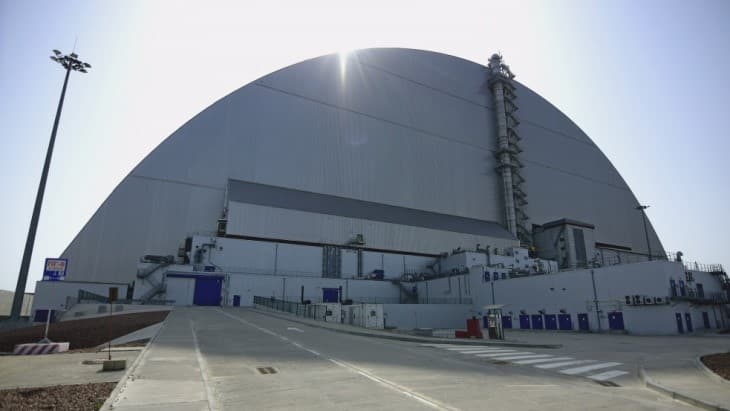
Following trial operation, the new sarcophagus received authorisation to handle radioactive materials, making it possible to proceed with dismantling the old sarcophagus and the damaged unit (source: Chernobyl Nuclear Power Plant).
It was only on 14 March, five days after the outage, that electricity supply to the site was restored. By mid-March, it was already practically almost impossible for workers to carry out any major work, and the risk of errors and problems was rising. On 20 March, at least a small personnel rotation was achieved. A total of 64 people were allowed to leave: 50 plant workers, 9 soldiers of Ukraine’s National Guard (8 women and one person with cancer), 1 emergency service worker and 4 “stalkers” who happened to be in the Chernobyl zone at the time. They were replaced by 46 volunteers from among the plant’s specialist staff.
The high risk arising from the limited ability to rotate personnel and the military occupation of the site was recognised by the entire international community. This was also why IAEA Director General Rafael Mariano Grossi visited Ukraine at the end of March 2022 and subsequently met Rosatom representatives in Kaliningrad.
The Chernobyl zone was then liberated on 31 March 2022, when Russian occupation forces left it hastily. During their stay, soldiers destroyed equipment in some laboratories and systems ensuring automated monitoring, which could therefore no longer send data. During their retreat, the Russian army took away almost 170 members of Ukraine’s National Guard and four plant employees. It is highly likely that the Russians intend to use them in prisoner exchanges. On 6 April, Ukraine’s National Guard took full control of the area. Once safe passage through the area had been secured, regular personnel rotations began. Initially, boats sailing on the Pripyat River were used to transport people between Slavutych and the plant because the road connection had been cut. However, the situation is improving rapidly in this area as well. Connections between the plant and the outside world are also being restored. On 14 April, the Chernobyl plant’s website resumed operation.
The question is what dose was received by Russian soldiers who not only moved around the contaminated zone but also built trenches and other fortifications there. There are several sites in the zone for storing heavily contaminated equipment used during the accident cleanup. These sites are fenced off and marked. They are now being modified and prepared for the far greater visitor numbers expected in these areas before the invasion. However, during their stay at the site, the soldiers did not follow the necessary radiation protection and contamination control procedures. It is therefore possible that the dose they received was not negligible.
The so-called Red Forest is very well known for its high activity. This is the area through which the radioactive cloud passed in the first hours after the accident, and the local pine forest was affected most severely. The affected trees took on a reddish hue. During the cleanup, the trees were felled and heavily contaminated material from the topsoil was placed in excavated pits and covered with a layer of less contaminated soil. Even so, this area is cordoned off and characterised by high radioactivity. Yet soldiers dug trenches in these places as well. Nevertheless, it is highly unlikely that the radiation dose they received would lead to radiation sickness and any rapid health effects. A sufficiently long time has passed since the accident. However, possible health effects over a longer timeframe cannot be ruled out.
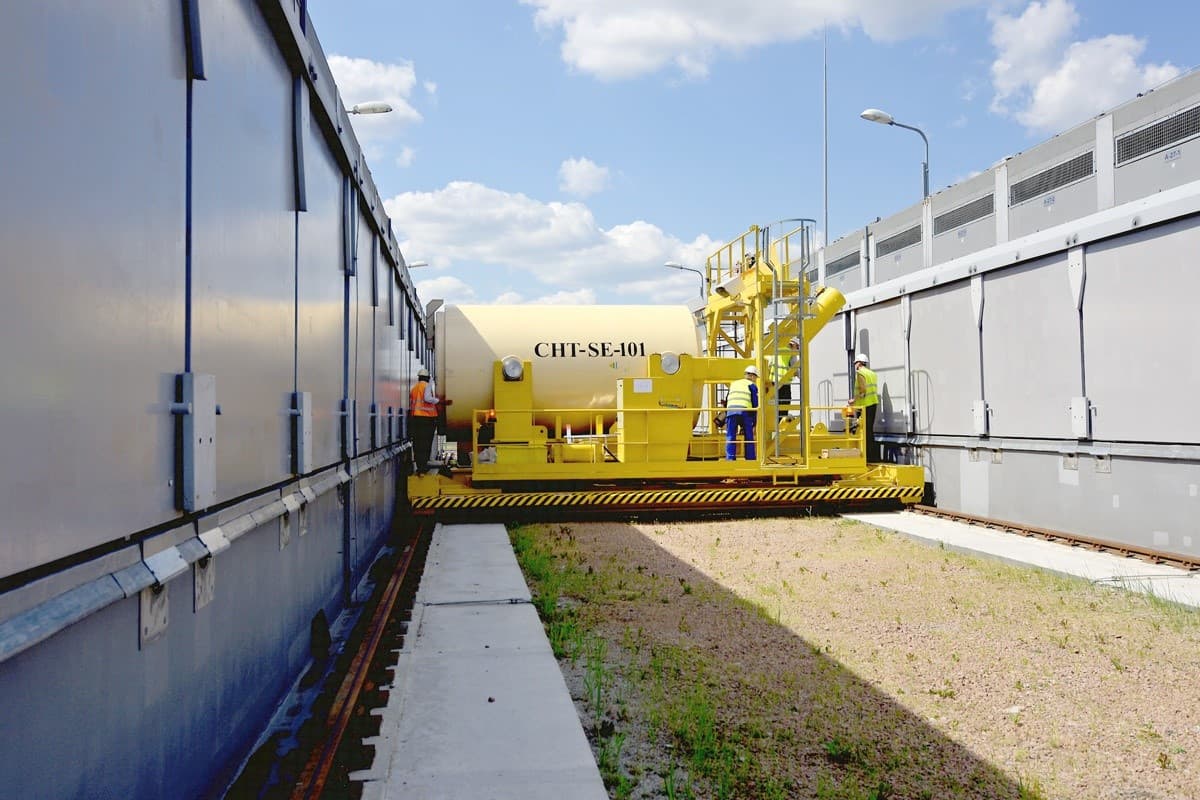
Placement of the first container with spent fuel from Chernobyl units into a concrete vault at the ISF-2 long-term dry storage facility under normal operating conditions (source: Chernobyl Nuclear Power Plant).
Significant progress towards addressing the consequences of the accident
Over the year since the previous anniversary, several highly significant steps have been taken. On 20 August 2021, the new sarcophagus facility received authorisation to handle radioactive materials that must be processed during the dismantling of the old sarcophagus and the destroyed fourth unit of the Chernobyl Nuclear Power Plant. This ended the trial operation of the new sarcophagus’s equipment and laboratories, and real work on dismantling the old sarcophagus and the damaged unit began. Let us recall that after the new sarcophagus was sealed, rainwater stopped entering the remains of the destroyed reactor. Places containing solidified melt from the remnants of the reactor core gradually began to dry out. This reduced the absorption of neutrons produced through spontaneous fission of uranium and transuranic elements, and monitoring detectors recorded increasing fluxes of these particles. However, this phenomenon poses no danger, although journalists in particular turned it into a sensation and a threat. I described the situation in more detail in an article from the middle of last year. Stabilisation had already occurred before the invasion, and the rise in neutron flux had stopped.
An important step in this direction was also approval for operation of the ICSRM (Industrial Complex for the Solid Radioactive Waste), which will process radioactive waste accumulated during the dismantling of the damaged unit. Hot tests of this facility were carried out in autumn 2021. The liquid radioactive waste processing plant has been operating since 2019, although it only received its final licence for standard operation in May 2021.
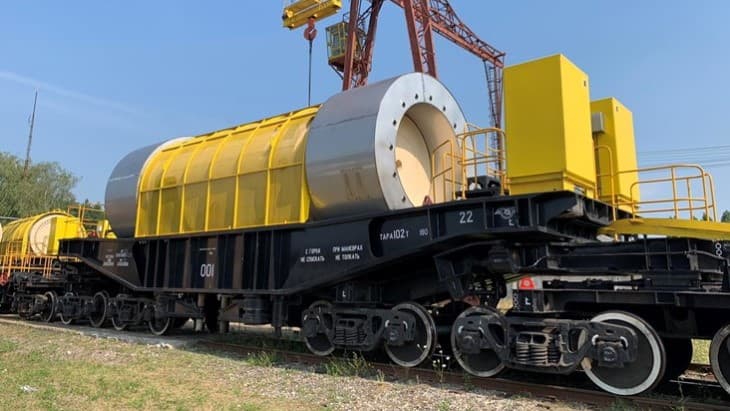
Testing the loading of spent-fuel containers intended for rail transport during preparations at the Rivne plant in November 2021 (source: Holtec).
A very important event was the placement of the first container with spent fuel from the undamaged Chernobyl Nuclear Power Plant units into a concrete vault at the ISF-2 dry storage facility under normal operating conditions, which took place on 29 July 2021. The granting of authorisation for normal operation was already mentioned in the aforementioned review from last year. The transfer, processing and insertion of fuel assemblies into special containers confirmed the facility’s full readiness. This essentially marked the transition from commissioning to normal operation of the facility. The testing of the storage facility and the start of its commissioning were reported at the end of 2020. All fuel assemblies are still in the ISF-1 wet pool storage facility and should gradually be transferred to the ISF-2 dry storage facility over ten years.
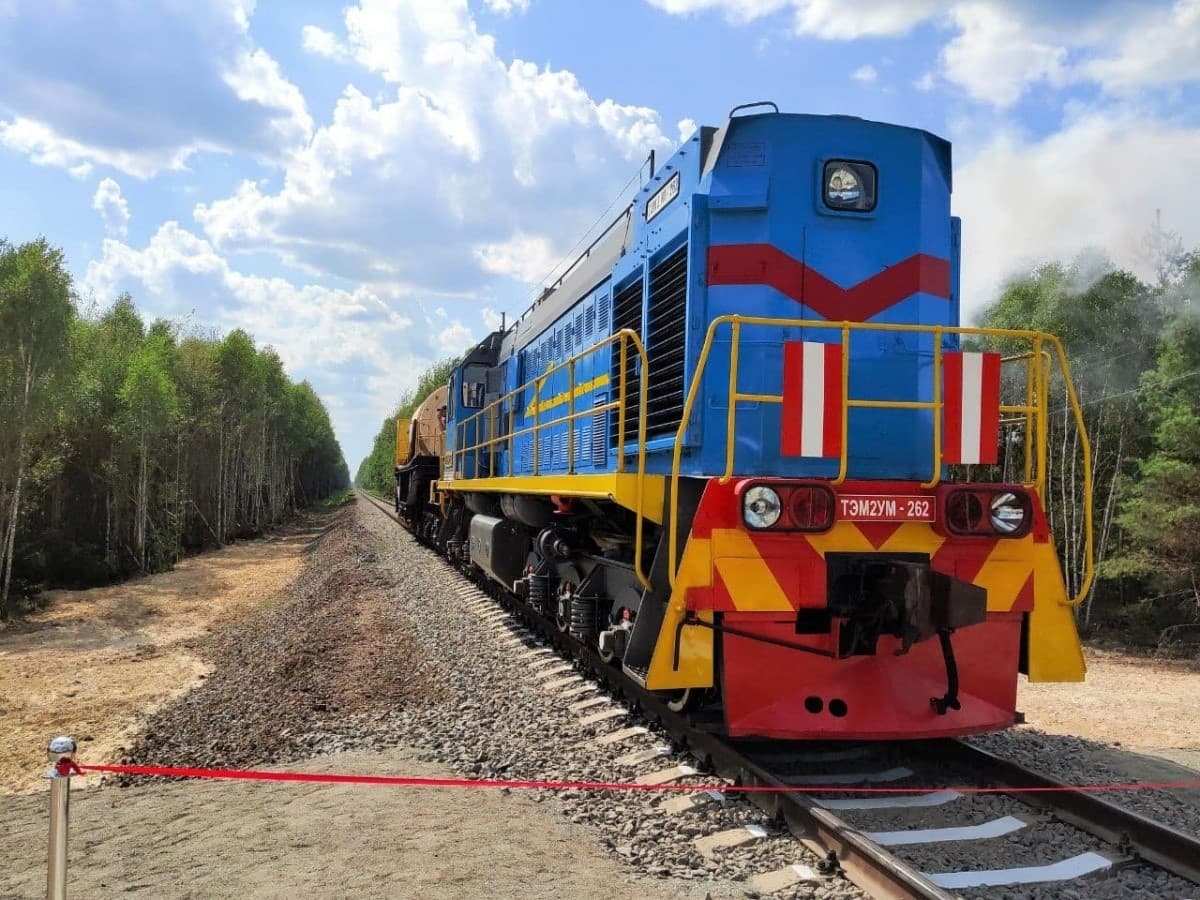
The first test run of a special train on the new section of railway, enabling spent fuel assemblies to be transported to the new dry storage facility in the Chernobyl zone (source: Energoatom).
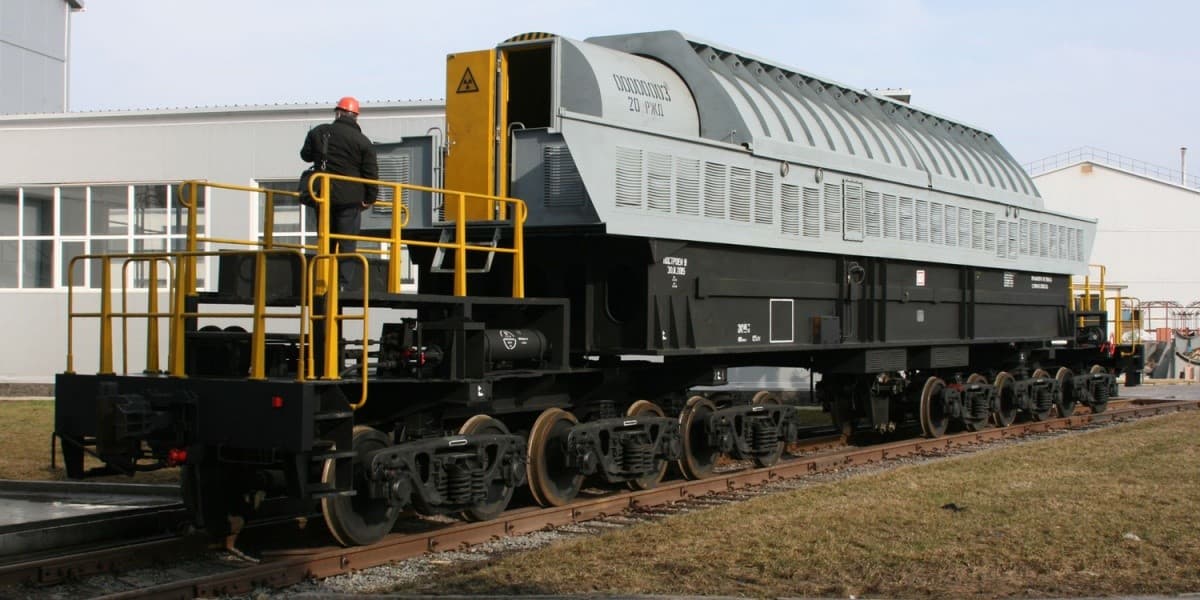
Another key event that was achieved despite the Russian invasion and occupation was completion of the dry storage facility for spent fuel from Ukrainian VVER reactors, obtaining its operating licence, and the start of transporting and storing fuel assemblies there. On 29 July 2021, following completion of the 43 km railway line from Vilcha to Yaniv, a test run of a special train carrying a mock-up spent-fuel container was conducted. During construction, two teams worked towards each other from opposite ends and drove a symbolic golden spike when they met. This fulfilled a necessary condition for commissioning the storage facility.
Tests of railcars for transporting spent fuel (source: Energoatom).
Cold tests took place in January 2022. The nuclear safety authority was expected to issue the permit, which was significantly delayed compared with expectations, on 9 March 2022. The first shipment of actual spent fuel was then expected in April. However, the war caused further delays. The permit is nevertheless expected to be received soon. At present, the biggest problem is the ban on transporting nuclear material due to the war. The facility will store fuel assemblies from seven VVER1000 reactors and two VVER440 reactors at the Rivne, Khmelnytskyi and South Ukraine power plants. A total of 16,530 fuel assemblies are to be stored there, including 12,010 from VVER1000 units and 4,520 from VVER440 reactors. It has been built by US company Holtec since 2017, around 14 km from the border with Belarus. Thanks to it, there will be no need to send spent fuel to Russia and pay for this. Exports of spent fuel from Ukrainian nuclear power plants should end completely by 2025. This should save around $200 million annually.
The Chernobyl zone is also preparing construction of an interim storage facility for waste from the reprocessing of spent fuel from Ukrainian nuclear power plants that took place in Russia. This facility is expected to be built over the next two years. It will be constructed on an area of around five thousand square metres at the same location as the interim spent-fuel storage facility just described. The question is how this construction will be affected by the war.
Preparations for cold tests of the new spent-fuel storage facility for Ukrainian nuclear power plants in Chernobyl (source: Energoatom).Preparations for cold tests of the new spent-fuel storage facility for Ukrainian nuclear power plants in Chernobyl (source: Energoatom).
Conclusion
On 12 October, Viktor Petrovych Bryukhanov, the first director of the Chernobyl Nuclear Power Plant, died at the age of 85. He became director of the plant in 1970. He initially oversaw its construction and subsequently its operation until the accident at the fourth unit. He was tried for his role in the accident and sentenced to ten years in a labour camp. However, he was pardoned in 1991 and subsequently worked for a company involved in addressing the consequences of the Chernobyl accident.
Fortunately, in the case of the Chernobyl Nuclear Power Plant, the damage caused by the Russian invasion is limited. It will probably be possible to repair it within a relatively short time. The enormous damage Russia has caused Ukraine as a whole is another matter. The cost of remedying it will be colossal. It is therefore a question whether Ukraine will have the resources to develop the Chernobyl area.
It would be appropriate to expand radiation monitoring across the entire affected area and to remediate the remaining dosimetrically problematic sites. The areas that remain closed need to be mapped in greater detail. This would enable a broader opening of the biosphere reserve to tourists and industrial use of the immediate surroundings of the plant.
An important step is that the necessary facilities for processing liquid and solid radioactive waste have been completed. At the same time, the new sarcophagus has been commissioned and received the necessary permits. The gradual dismantling of the old sarcophagus and the destroyed reactor can therefore begin. As part of the preparatory work, the location and volume of solidified melt from the destroyed reactor core need to be mapped as accurately as possible. As I have already explained, the observed increase in neutron flux in the destroyed reactor is natural, but in any case this flux needs to be monitored in detail.
The ISF-2 dry storage facility for spent fuel from the other Chernobyl Nuclear Power Plant units has also been brought into normal operation. The decommissioning of the already shut-down units 1 to 3 should therefore continue intensively.
As has now also become clear, it would be good for the site to have its own stable source of electricity. For now, it has a photovoltaic power plant, whose area will be expanded. However, it would be appropriate to secure a stable source that does not depend on the weather. A small modular reactor is also being considered, for example. I mentioned that Witkowitz was also considering building its prototype here. We will have to wait and see how the war changes these plans.
I hope that Ukraine will defend itself and that the war will end as soon as possible. Then the potential for revitalising the affected Chernobyl area could be utilised to the fullest. One way of helping Ukraine would be to visit the biosphere reserve and the power plant itself after the war. I have written here several times that financial support for remediation work in Chernobyl would be a very meaningful way to support Ukraine, and now also its recovery after Russian aggression.
A lecture by our Ukrainian colleague, who works at the Chernobyl Radiation and Ecological Biosphere Reserve, on the impacts of the Russian invasion on Ukrainian nuclear facilities.
A lecture on the difference between the Chernobyl series and reality:
Translation disclaimer
This article is a machine translation of the Czech original and has not yet been fully reviewed. In case of any doubt, please refer to the Czech version.
Sdílejte článek prostřednictvím:
You might also like

23 October 2026, 11:01

23 October 2026, 06:34