23 October 2026, 14:38
Loading...
Chernobyl – film, reality and the present day – part 2
Vladimír Wagner
28 July 2019, 08:59
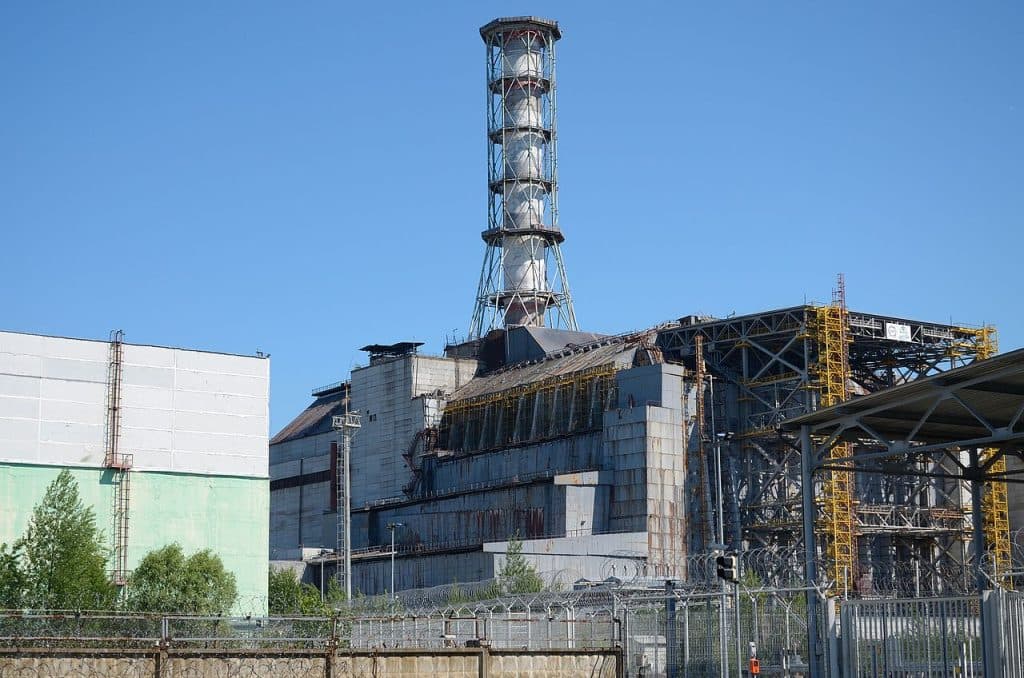
This is a continuation of the article Chernobyl – film, reality and the present day. Part 1 can be found at this link.
The current situation in Chernobyl
On 10 July 2019, the keys to the new sarcophagus covering the destroyed Chernobyl reactor were symbolically handed over from the European Bank for Reconstruction and Development to the Ukrainian government. The sarcophagus, known as the Arch, was largely financed by European and US donors through the bank. Its auditors also oversaw the financing and construction process. A total of 45 donor countries and institutions contributed to financing the EUR 1.5 billion project.
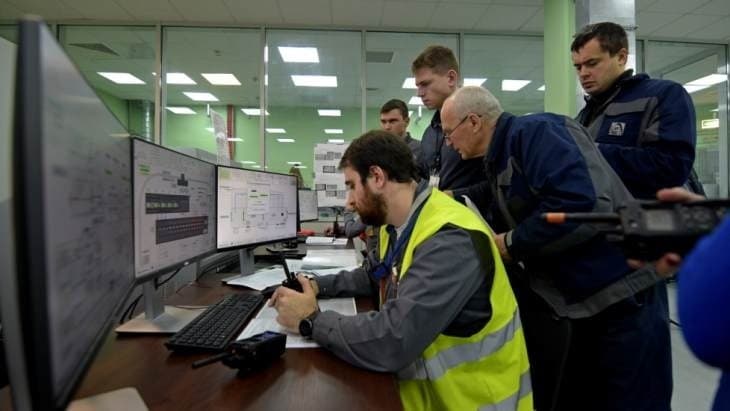
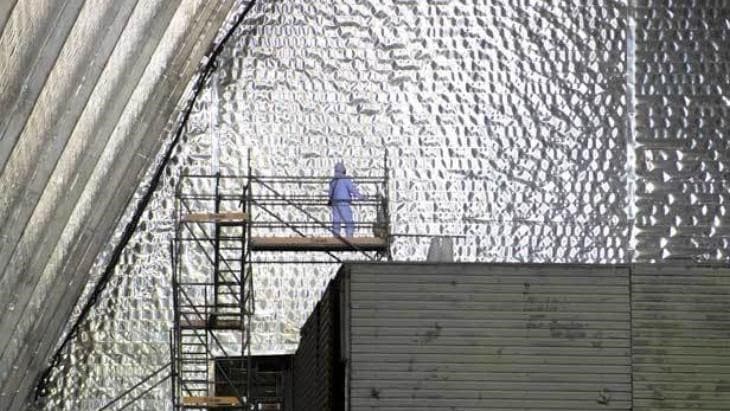
The sarcophagus was built away from, though close to, the destroyed reactor between 2010 and 2016 (the situation before completion). At the end of November 2016, it was moved over the old sarcophagus containing the destroyed reactor. During 2017 and 2018, it was hermetically sealed and its internal equipment was installed and commissioned. It is the largest movable structure built on solid ground, measuring 257 m wide, 162 m long and 108 m high, and weighing more than 36,000 tonnes once fitted with equipment, including a number of cranes. Inside are laboratories and technologies intended to enable the dismantling of both the old sarcophagus and the destroyed reactor. It received an operating permit from Ukraine's nuclear regulator at the end of January 2019. Testing of its internal equipment could then begin.
Since April 2019, when test operation ended, one year of trial operation has been under way. Test operation was used to verify the functioning of equipment including cranes, various systems for handling and cutting radioactive components, and placing them in containers. Testing with mock-ups of real structures and debris also served to verify the qualifications and capabilities of operators. The most important task now is the dismantling of unstable parts of the old sarcophagus. This stage should begin as soon as possible and is expected to be completed in 2023. However, given the limited knowledge of the condition of the structures, it is difficult to estimate the complexity of the work and set an exact schedule and dates for completing this first stage of dismantling the old sarcophagus, and especially the subsequent stages.
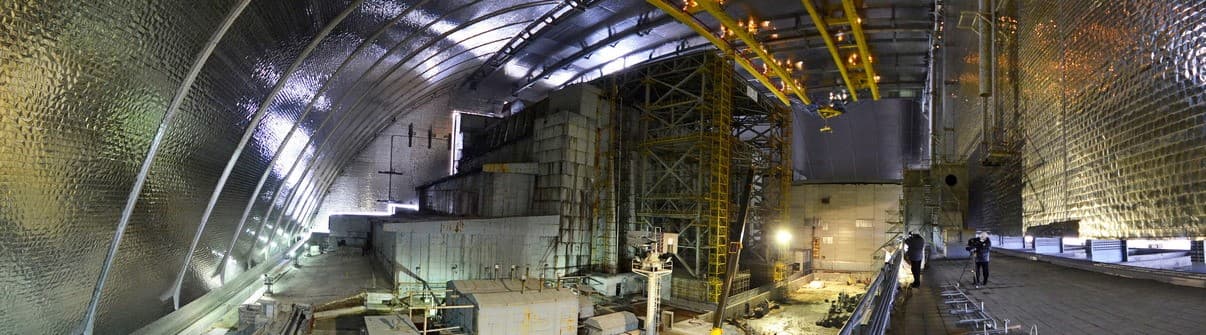
The symbolic key was received by Ukraine's new President Volodymyr Zelenskyy. During the ceremony, Oleksiy Ananenko and Valeriy Bespalov, two of the three surviving former plant workers who opened valves in diving gear to drain the reservoir beneath the reactor, were also awarded the country's highest state honour, the Order of the Gold Star. The award for the third man, Borys Baranov, was handed to his son Oleksandr. The Ukrainian president also used the occasion to announce a new decree changing the area's status. It sets out new plans for the revitalisation and development of the area. Much of the previously closed zone is intended to become a place of intensive tourism development. New routes are expected to be established and mobile signal coverage strengthened. Unnecessary restrictions, such as the ban on photography in areas designated for tourism, should also soon be lifted. On the Ukrainian side, the exclusion zone is managed by its administration. The Chernobyl Nuclear Power Plant's website is here.
It should be recalled that the revitalisation of affected areas around Chernobyl is proceeding in three directions. The most heavily affected areas closest to the plant will be used for industrial purposes. Much of the less affected land will be used for tourism. This is primarily an area where, following the departure of people, wilderness has emerged, including Europe's largest untouched forest. Natural scientists would also use this part for research. A smaller part would serve as a memorial to the Chernobyl disaster. Some land, particularly in Belarus, which has the largest affected share relative to its total area, would return to normal use.
Decommissioning Chernobyl Nuclear Power Plant
An important task, whose implementation also affects the progress of revitalisation and land use, is the gradual decommissioning of the plant, whose last unit stopped operating in 2000. The first step was the gradual transfer of all spent fuel assemblies to a central wet interim storage facility. At the same time, it was necessary to refurbish buildings, particularly their roofs, distribution systems and systems whose long-term operation is required for the plant's decommissioning.
Systems and technologies that are no longer needed are also being progressively dismantled. During the decommissioning of the plant's first three units, a range of materials will need to be sorted. Those that are not contaminated will be released from the plant and can be recycled and used. This requires reliable radiation monitoring. Of interest to us is that radiation monitoring equipment for this released material is being supplied to the plant by Czech company VF Nuclear, VF a.s.. Delivery of the equipment is taking place during this summer.
A major step is the gradual dismantling of the reactor core. After the fuel was removed in 2015, the first process channel from Unit 1, which housed a fuel assembly and removed heat from it, was extracted at the end of 2018. The individual Chernobyl reactors have between 1,661 and 1,693 such channels in their cores, as well as 227 channels for control and emergency rods. They will gradually be extracted, cut into pieces and placed in special containers. This stage should continue until 2028. The three decommissioned units will then be placed in safe storage until 2045, when the radioactivity of their internal components has fallen sufficiently. The units should then be fully dismantled by 2064.
A very important industrial complex nearing completion is intended to enable the processing and storage of radioactive waste. It extends over the plant site and part of the exclusion zone outside the plant, at the Vektor complex. It comprises four interconnected facilities and is intended to sort solid radioactive waste, process it, place it in containers and subsequently store it in interim storage facilities. This includes waste accumulated during operation, waste to be produced during the plant's decommissioning, and waste generated in the new sarcophagus during the dismantling of the old sarcophagus and the destroyed reactor. The first facility enables temporary storage of low-, intermediate- and high-level liquid and solid radioactive waste. It has been in use since 2010. It is followed by a facility that produces solid radioactive waste, which is then sorted by activity in the third facility and where low- and intermediate-level waste is processed. Incineration and cementation are used. It will subsequently enable radioactive waste to be immobilised and packaged. The final component is an interim repository for short-lived radioactive waste, whose 300-year design life enables storage for long enough for the radioactive material to decay completely.
Decommissioning of the artificial reservoirs used for cooling and ensuring sufficient cooling water for the site has also made considerable progress. Here, the water level could be lowered. The start of operation of the new sarcophagus, the Vektor complex and plant decommissioning work are creating an environmentally safe system for the whole area.
Industrial park around the destroyed plant
The first facility being built in the industrial zone is linked to the decommissioning of Chernobyl Nuclear Power Plant. A dry interim storage facility for fuel assemblies accumulated during the plant's operation has been completed there. It also includes equipment and hot cells where fuel assemblies are processed and inserted into containers, which are then placed in storage. It was built by US company Holtec. The fuel assemblies are currently stored in wet interim storage. From there, they are transported by rail in a container to the dry interim storage facility, where they are processed in hot cells and placed in a container that is inserted into a concrete vault. The fuel assembly storage process is clearly shown in the following video. Comprehensive functional tests are currently under way. Since mid-May, tests with mock fuel assemblies have been carried out to comprehensively verify the functionality of the entire process and all equipment. Tests using real fuel assemblies should take place in October 2019. The work will be conducted in a limited mode, with a number of fuel assemblies sufficient to fill only two concrete vaults. Based on their outcome, the facility will receive an operating licence. Operations are expected to begin in May next year. Around 21,000 fuel assemblies accumulated over its operating lifetime, and transferring them from wet to dry storage will take around ten years.
Holtec is now working on another similar storage facility for fuel assemblies from Ukrainian pressurised water reactors. This dry interim storage facility will be able to accommodate 458 HI-STORM containers, containing a total of 16,529 spent fuel assemblies. The advantage of this purpose is that it naturally entails the closure and control of a larger area from the perspective of protecting these operations. Closing off land in this area is therefore not a drawback. A new railway line connecting the interim storage facility with the Vilcha-Yaniv line has been built within the exclusion zone to transport fuel assemblies to the facility. Construction at Chernobyl and preparations of the technologies in the US are so far proceeding according to plan. The interim storage facility is scheduled for completion in 2020.
Another component of the industrial zone, whose total area should be around 320 km2, will be a large photovoltaic power plant using the grid connection and high-voltage line to Kyiv. The first 1 MW section, comprising around 4,000 photovoltaic panels over an area of approximately 1.6 ha, was commissioned in early October 2018, roughly 100 m from the sarcophagus. It is operated by Solar Chernobyl, a Ukrainian-German joint venture. Installed capacity is planned to grow to the gigawatt range in the future. A total of 1,172 ha of land has been allocated for this, and Japanese, French, Chinese, Spanish and other companies are interested. The low land lease price will be used, along with the existing infrastructure for exporting power and transmitting it to Kyiv. Here too, a fenced and closed site that uses land otherwise difficult to use is highly suitable.
As decontamination and reconstruction of the area progress, further opportunities for using these sites will certainly emerge. For example, consideration is being given to creating training grounds for responding to emergencies resulting from natural or industrial disasters. Other European countries and organisations could also train there. German emergency response services already held similar exercises there in 2018.
Before even partially opening the zone in the immediate vicinity of the plant, a specific problem must also be addressed. There are a large number of free-roaming dogs, whose packs have long been a familiar feature of the area. They need to be gradually caught, medically examined and placed with suitable owners. One initiative involves transporting around 200 of these dogs to the United States following thorough veterinary and dosimetric examinations, where prospective owners take them in. Clearly, this part of the programme is largely symbolic and draws attention to the problem rather than actually solving it. What matters here is finding suitable homes for these dogs in Ukraine.
Tourism development
The tourism use of formerly affected areas will have two dimensions. For now, the greatest attraction is the nuclear power plant accident itself and its consequences. The Chernobyl series has dramatically increased the site's appeal in this respect. The new sarcophagus and the plant itself, as well as the town of Pripyat and many of its well-known buildings and locations, will certainly be among the most visited places. Visitors also like to see the town of Chernobyl, some abandoned village houses and places with abandoned equipment. The Duga-1 antenna system and harbour are also frequently visited, as are numerous examples of old rural architecture, including religious buildings. Tourists also visit long-term residents who returned semi-legally; there were more than a thousand of them. Today, only around 300 remain, mostly elderly women. They are very nicely portrayed in the 2015 film The Babushkas of Chernobyl. A returning couple, Lydiia and Mykhailo Sovenko, even had a daughter, Mariinka, in the zone in 1999; she is now almost 20. She now lives outside the zone, but visits her mother there.
The designer of the new Arch sarcophagus is French, and with some exaggeration he could claim that in the future it will be as much of a tourist attraction as the Eiffel Tower is today. The Arch and surrounding buildings, such as the turbine hall at Unit 4, symbolise the stage of stabilising and dismantling the destroyed reactor. They will therefore always feature in travel agencies' plans. The recently announced competition for a mural on the eastern gable of the turbine hall also contributes to gradually shaping their image. All submitted designs can be seen on Chernobyl Nuclear Power Plant's Facebook page. Whether any of them will ultimately be realised, and whether it will be the winning design, remains an open question.
More than 30 years have passed since the accident at Chernobyl Nuclear Power Plant. Due to age and weather conditions, many abandoned buildings and facilities are deteriorating. Their poor structural condition is beginning to endanger visitors. Some must therefore gradually be removed, while those to be preserved as memorials to the accident need to be restored and stabilised. At the same time, safe routes to memorial sites need to be inspected and determined. New precise rules must also be established, simplified, and parts of previously closed areas opened. Preparing the site for increased safe tourism would help curb illegal visits, the risk of radioactive objects being removed, and the risk of damage to memorial sites and historical objects. It is also true that its conversion for conventional tourism will cause the site to lose some of its appeal for stalkers and other illegal visitors.
Such changes can be expected in the previously closed zone. New official tourist routes are gradually being opened, enabling safe visits to many symbolic and well-known places in the affected area. An example is the opening of four routes in September 2018. These routes focus primarily on exploring abandoned places associated with the accident and the region's history. However, routes focused on discovering the beautiful wilderness of these areas can be expected to become increasingly important. Planned new mapping of radiation conditions and the creation of an up-to-date radiation map using drones, being prepared with experts from the University of Bristol, will also help.
The enormous importance for preserving European nature of the national park in the restricted area around Chernobyl Nuclear Power Plant will continue to grow. It covers 2,300 km2. Even before the accident, the area was agricultural and sparsely populated, with large expanses of untouched forest. After people left as a result of the accident, nature had completely free rein. More forest areas were planted, and Przewalski's horses were brought into the area. Czech experts from Prague Zoo also contributed to their introduction there. Populations of rare European animals, including European bison, moose, deer, wolves, bears, foxes, otters and eagles, have grown sharply. For example, the wolf population here has been found to be seven times higher than in other protected areas. A recent international GPS study of wolf movements in the Belarusian section showed that some travel several hundred kilometres beyond the zone's boundary.
On the Belarusian side, a large part of the heavily affected land is the Polesie State Radiation-Ecological Reserve. Its main section, covering 1,313 km2, was designated as early as 1988. It was expanded by a further 894 km2 in 1993 and now covers 2,150 km2 in total. Some 96 settlements were abandoned in this area and approximately 22,000 residents were resettled. Around 5,000 ha of new forest has been created. The reserve's administration is located in the town of Khoiniki. Together with the Ukrainian section, it forms Europe's largest untouched forest and area of pristine wilderness. Rules for tourism in this zone are also being prepared for the Belarusian section.
Biologists, ecologists and natural scientists from across Europe and the world, including the Czech Republic, have been using it for a very long time. They are precisely those expressing the greatest concern about the forthcoming opening of previously closed areas. Clearly, the interests of growing tourism and the protection of a highly valuable natural environment will have to be reconciled very carefully. In this Belarusian section, for example, a stretch of the Pripyat River was recently opened for fishing after 32 years, although only with a special permit.
It should be remembered that the land cannot be left without human care. The accumulation of dry woody material increases the risk and impact of fires, which naturally occur in such extensive untouched forests during spring and summer. One example was a fire in early April 2019 that affected around 20 ha in the Ukrainian section, with 30 abandoned village houses also burning. Ultimately, 100 firefighters and 20 pieces of equipment, including an aircraft and helicopter, took part in extinguishing it. A fire in June 2016 also affected the area of the well-known Red Forest. One of the largest forest fires occurred in 2014 and covered 400 ha.
Work to more precisely demarcate the Ukrainian-Belarusian border in these locations and install border markers is also a sign that the areas may soon at least partly open. Intensive work took place in the first half of 2019. The first forum of regions in Ukraine and Belarus that include affected land or lie nearby was held in October 2018. Several hundred regional representatives, businesspeople and representatives of various associations attended to discuss potential opportunities arising from revitalisation. A number of commercial and other agreements were signed during the event.
Conclusion
The Chernobyl television series has sparked a huge increase in interest in the accident at Chernobyl Nuclear Power Plant. This came at a time when installation of the new sarcophagus, covering the old sarcophagus containing the destroyed reactor, had been completed. An environmentally safe situation is therefore being established, making it possible to begin opening and revitalising previously closed areas. In any case, tourism around Chernobyl Nuclear Power Plant needed to be addressed. Interest had already been growing in previous years. In 2014, 8,000 visitors came to the Chernobyl exclusion zone; in 2016, more than 36,000; in 2017, more than 49,000; and in 2018, more than 63,000. The number of tourists could now increase several-fold, requiring changes to how visits and tourism in the region are organised.
Involvement of the global public and tourism development could help this transformation and provide an inflow of financial resources. Interest in this history could also help those affected and those involved in dealing with the accident. Not only financially, but above all psychologically. Recognition of their efforts and psychological and health support are highly valuable. A very good interview with photographer Václav Vašků, who visits the area very frequently, also says much about the region and its inhabitants.
Finally, I would mention one more issue. There has also been considerable resentment in Russia that such a successful film about a Soviet tragedy was made in the West. Reports emerged that a Russian film about these events would be made, perhaps with a Western agent as the main culprit. I can understand that Russians would be irritated by a film being made about their trauma, which they have not yet addressed in cinema. However, if they criticise the HBO series for historical inaccuracy, their work would have to be historically more accurate while also having artistic value at least comparable to the British-American series. That will certainly not be easy. Russians have the advantage of better access to sources and eyewitnesses. If they used it honestly, it could be interesting. However, the history of Chernobyl is so well known that it is clear there is really no place in it for a Western or other agent.
I do not know to what extent reports about the content of the future film are real, but a work about Chernobyl is indeed being filmed in Russia. It is director Danila Kozlovsky's film “When the Storks Fell”, based on the true story of a group of volunteers who helped deal with the consequences of the Chernobyl accident. The director also plays the young protagonist. While the HBO series was filmed at Lithuania's Ignalina plant with shut-down RBMK units, Danila Kozlovsky filmed at Kursk Nuclear Power Plant, where RBMK reactors are still operating. The main part of filming, however, took place at the almost completed Unit 5. Plant experts served as consultants, as did eyewitnesses to the real events at Chernobyl. Filming at the plant was completed in early July 2019, followed by a meeting and discussion with the director as thanks to its workers. The film should be released in 2020. Plant workers hope that the premiere could take place in Kurchatov itself. It will certainly be interesting to see the Russian perspective and how this young Russian director approaches the subject.
Note: The author's lecture on the Chernobyl accident for Pátečníci is here.
Translation disclaimer
This article is a machine translation of the Czech original and has not yet been fully reviewed. In case of any doubt, please refer to the Czech version.
Sdílejte článek prostřednictvím:
You might also like
23 October 2026, 11:01
23 October 2026, 06:34