
23 October 2026, 14:38
Loading...
Czech energy sector needs power plants for winter
Ladislav Kříž
17 August 2023, 14:22
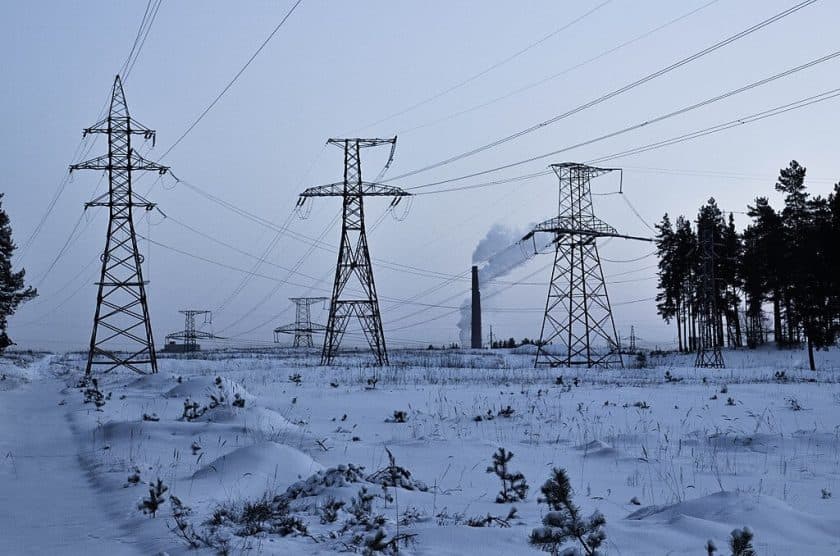
The Czech energy sector needs to be built for winter. Gas consumption is up to six times higher in winter than in summer, while electricity consumption almost doubles in winter. Gas is the main fuel used for heating, whereas electricity is used for this purpose more as a supplementary source, for example for additional heating. This applies to businesses too.
Looking at daily gas consumption last year, the ratio between peak and minimum consumption was 6.2:1. Maximum consumption occurred on 11 January, reaching 44 045 thousand m3, while the lowest daily consumption in July was just 7 090 thousand m3. For electricity, the ratio is approximately 2:1. The highest daily electricity consumption was 251 780 MWh on 14 December, while the lowest was 137 172 MWh on 7 August.
Energy systems at our latitudes need to be sized for winter peak demand. We can often be impressed by how much capacity can be built in solar power plants, measured in multiples of the capacity of nuclear plants. What matters, however, is how much they generate in winter, when consumption is highest. We need to build solar PV wherever possible; it is a clean domestic source. But it generates mainly in summer, and we still cannot store summer electricity for winter. That remains the problem for the energy sector.
A key indicator of Czechia’s energy security is ensuring sufficient resources for winter. In the case of gas, storage facilities help us; for electricity, we need to find dispatchable power plants. These certainly include nuclear plants, hydropower plants, coal-fired and gas-fired sources. Winds also blow reliably in winter, but wind power plants still face distrust in Czechia and their permitting process is lengthy. Moreover, it is usually not windy on a freezing winter night. Abroad and at our latitudes, this role of essential supplementary power plants is mostly performed by gas-fired power plants, and to some extent still by coal-fired power plants. However, it is not economically viable to build a power plant that runs only a few days a year; the market will not pay for it. Most countries have already realised this and are introducing support for such sources. In Germany, operators are paid by the state to keep a power plant available solely in case it is needed for a few days in winter.
Emission allowances and the market will, within five years, make it unprofitable for companies to operate coal-fired power plants, and they will close them. That is right; climate protection needs to move towards an emission-free energy sector. The problem, however, is that we will still need coal-fired sources for a few days in winter for several more years, but who will pay for them and keep them operational for only a few days? We do not have a capacity payment system like the French, British and Poles, or an equivalent like the Germans.
If we simply let everything carry on as it is, in a few years we will be hot. Or rather, cold. Not entirely, as we will probably manage everything with help from abroad, but we will no longer have domestic security of supply. The French, British and Germans already know this.
Translation disclaimer
This article is a machine translation of the Czech original and has not yet been fully reviewed. In case of any doubt, please refer to the Czech version.
Sdílejte článek prostřednictvím:
You might also like
23 October 2026, 11:01
23 October 2026, 06:34