10 September 2026, 15:21
Loading...
Final plan for winding down mining at Czech OKD
Beáta Packová
23 September 2020, 10:53
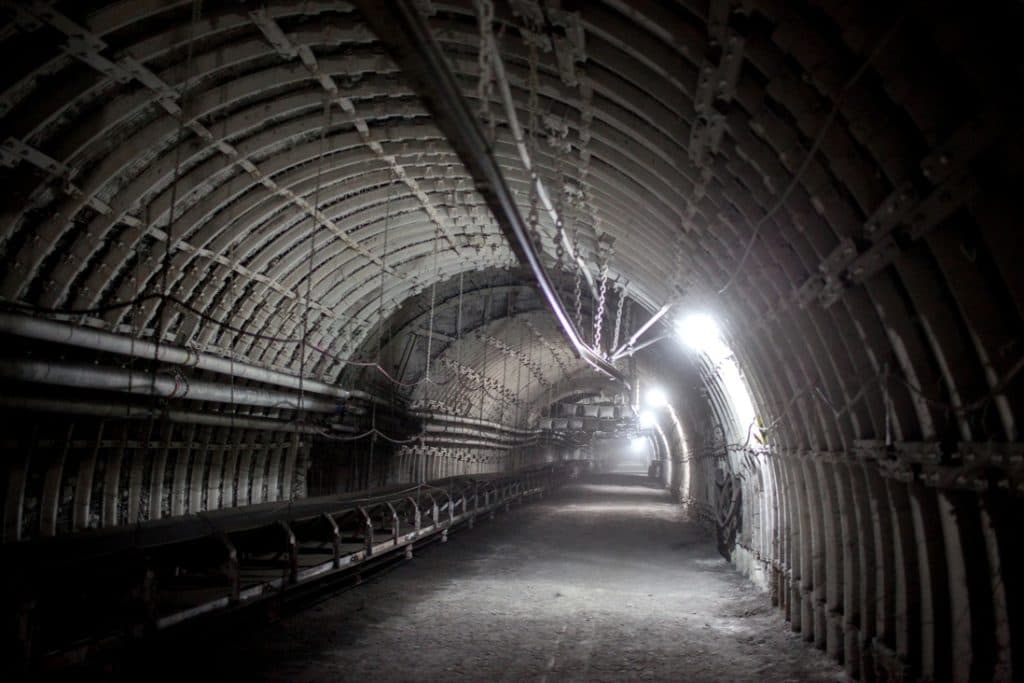
On 22 September, the government made its final decision on winding down mining at OKD’s mines. The move, reinforced by the coronavirus crisis and altogether necessary and logical, will also complicate the electoral situation. For a long time, it was unclear how the wind-down would proceed. Now, however, the Ministry of Industry and Trade has presented a specific plan for the gradual end of mining at the mines.
Wind-down phases
There will be several phases. OKD and some of its employees will gradually be transferred to the state-owned enterprise DIAMO, which specialises in remedying the consequences of mining activity after extraction ends. The gradual transfer to DIAMO will begin as early as December this year. This will be followed by three phases for ending mining at individual mines:
- As of 1 January 2021 – the Útlum-Jih and Útlum-Sever sites
- As of 1 March 2021 – Darkov and ČSA
- Other areas, including ČSM-Sever and ČSM-jih, will follow.
The entire process should take place between 2020 and 2035. It will cost the state approximately CZK 15.6 billion. Part of this sum will go towards pumping mine water and methane, decommissioning sites, while the final item will be employee wages.
Employee layoffs should also take place gradually; however, it is already estimated that roughly half of the current total workforce of 5,300 employees will lose their jobs from the very first wind-down phase.
The state also expects close cooperation with the Moravian-Silesian Region and individual municipalities. According to the press release, all state bodies will seek to find new employment opportunities for workers and jointly determine the direction in which the region will develop.
Real impacts
The government now wants to save OKD from another collapse by transferring it to DIAMO, while also seeking to mitigate the socio-economic impacts on the entire region.
According to Minister of Industry and Trade Karel Havlíček, OKD’s previous owners are responsible for the current situation. This claim is incomplete. Coal prices have been falling since the 1990s, while the state also contributed to the difficult situation through an unfavourable sale.
The current government always needs to find someone to blame; in this case, it will apparently be Zdeněk Bakala forever. Yet during the current coronavirus crisis, the state was slow to act and is coming late with its final plan to wind down mining at OKD.
A politically motivated scenario is evident here, one that essentially helped Andrej Babiš win the election. In the end, he did not save OKD, and the country will also have to deal with lawsuits arising from the recognition of claims by the original investors in the final settlement.
The state will therefore face not only a severe impact on the region, but also lawsuits that will cost taxpayers dearly. The total sum of CZK 15.6 billion could thus double. This is not to mention that it does not include the costs of closing other coal companies that will follow OKD’s fate or are already in the process.
OKD has thus reached an end that has finally been outlined, although it may be prolonged and will certainly cost a great deal of money. Whether the state really considered this when it renationalised the company in 2018 will remain a mystery. Had it calculated all the costs and expenses, it would never have wanted OKD from an economic perspective. From a political perspective, that is another matter.
Translation disclaimer
This article is a machine translation of the Czech original and has not yet been fully reviewed. In case of any doubt, please refer to the Czech version.
Sdílejte článek prostřednictvím:
You might also like
10 September 2026, 10:37
9 September 2026, 15:05
9 September 2026, 13:24