
23 October 2026, 14:38
Loading...
Michael Moore’s new film ‘Planet of the Humans’ is a sharp critique of environmental activists
Vladimír Wagner
3 May 2020, 08:59
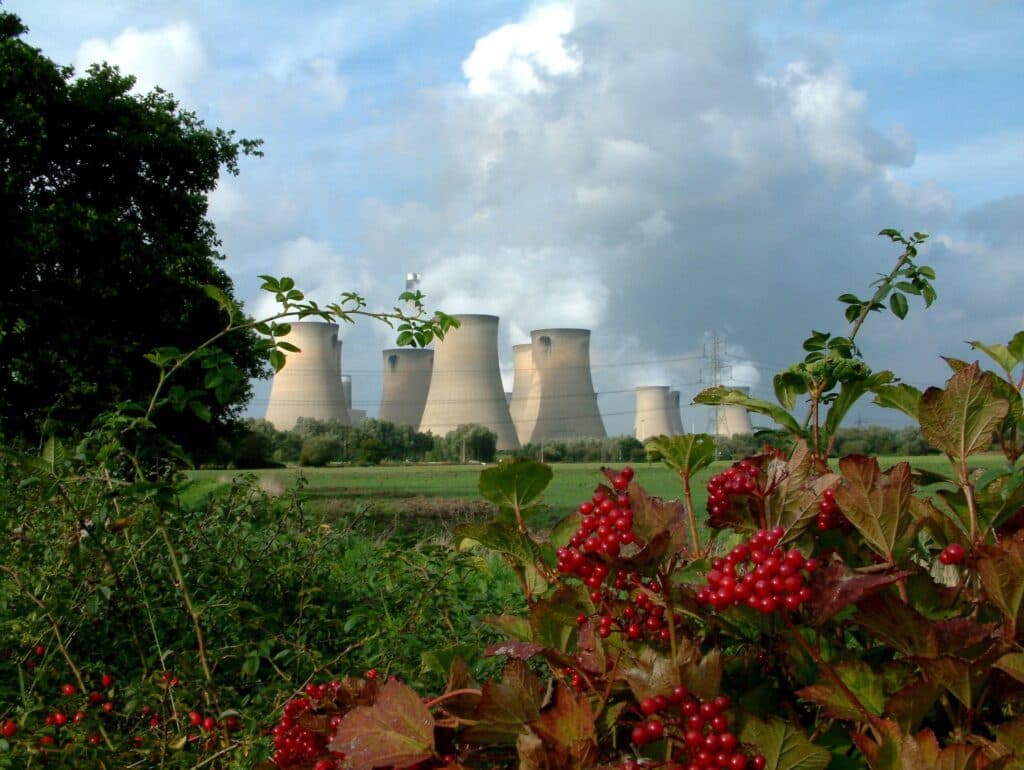
Michael Moore and Jeff Gibbs recently made their new film available for free distribution. Like the earlier films by the same author, it is a highly controversial work. This time, it is a sharp critique of environmental activist movements. As with his previous films, different people’s views on ‘Planet of the Humans’ will differ radically, but in any case it is worth watching.
Planet of the Humans seeks to document that a number of methods promoted by environmental activists in their pursuit of reducing carbon dioxide emissions are environmentally harmful and outright counterproductive. I strongly agree with it, particularly on the promotion of large-scale biomass burning as a source of electricity or in the form of biofuels. For example, I too have described as an environmental disaster the replacement of coal in electricity generation with wood imported over enormous distances, for example in this article.
My colleague Kašinský and I very sharply criticised the ideas of Czech environmental activists to replace fossil fuels in Czechia with biomass on a massive scale in an analysis of biomass utilisation options. I likewise agree with it that the notion of replacing fossil fuels solely with renewables is unrealistic, and that pursuing it at any cost leads to very negative impacts, not only from an environmental perspective.
Personally, however, I do not agree with its view that the environmental problems of modern humanity cannot be solved through scientific and technological progress. Above all, I do not share the largely nihilistic message of the film, which sees the only solution in reducing the number of people. Yet it does not show even remotely what that would mean in practice.
On the other hand, it must be said that this is a truly classic Michael Moore film. It is very well made, highly engaging and emotionally effective. At the same time, it contains the typical simplification and black-and-white portrayal. As well as clearly branded culprits. It is made in exactly the same way as Moore’s previous films. It has the same mixture of facts, half-truths, accusations rendered untrue by their simplification, and emotional manipulation as his earlier works. In my view, none of his films can be described as documentaries. They have an entirely different aim than an emphasis on a factual depiction of reality; they are more of an ideological appeal.
It uses exactly the same methods and dirty tricks that are a classic tool of campaigns by green activist groups. I read online reactions from precisely these circles. It is amusing how those who celebrated Moore for his earlier films made using the same methods are now attacking him. They want to ban his film and take him to court. With a degree of satisfaction, one can say that they are getting a taste of their own medicine. And they do not like it at all.
The film has already been watched by more than five million viewers, and a large number of very harsh criticisms of the work can be found online, mainly from the aforementioned environmental activist groups. Whatever your eventual opinion of the film, I personally think that, as with his previous films, watching it is not a waste of time.
So be sure to watch it:
Translation disclaimer
This article is a machine translation of the Czech original and has not yet been fully reviewed. In case of any doubt, please refer to the Czech version.
Sdílejte článek prostřednictvím:
You might also like


23 October 2026, 11:01

23 October 2026, 06:34