23 October 2026, 14:38
Loading...
Progress in small modular reactors in 2020
Vladimír Wagner
19 January 2021, 18:57
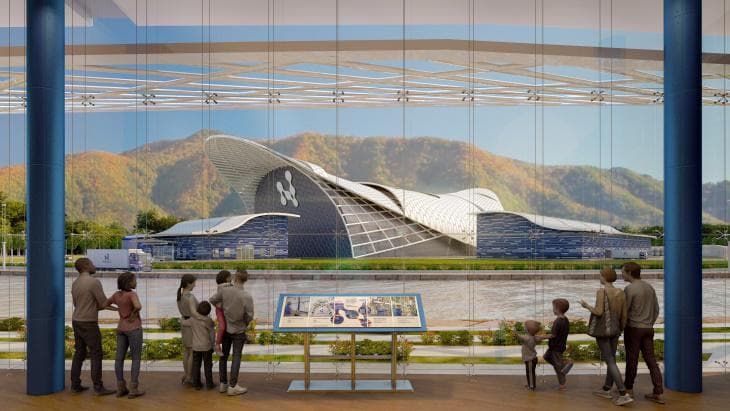
Last year marked the first year of operation for the floating nuclear power plant Akademik Lomonosov, while the gas-cooled high-temperature small modular reactor HTR-PM is nearing completion. Significant progress was also made last year on other projects. The NuScale reactor received a general licence in the US. Let us take a closer look at developments last year.
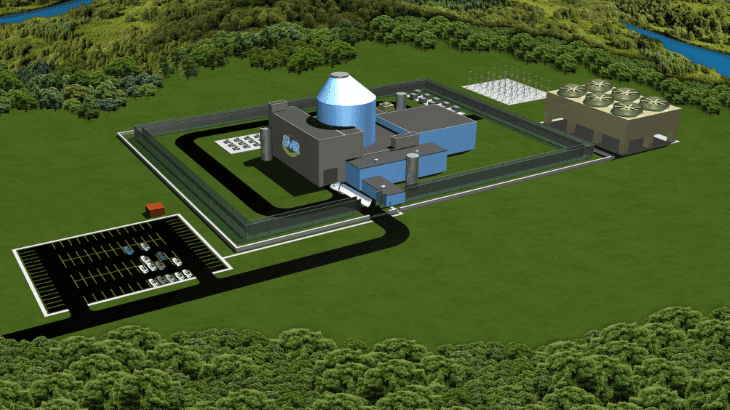
In the previous article (here and here), we looked at progress in nuclear energy in 2020, mainly in the field of large units. We will now focus on small modular reactors. We will build on the overview of the situation from last year. Let us recall that these reactors can be divided into two types. The first consists of conventional light-water reactors, which are simply scaled-down versions of large ones. The second consists of innovative reactor types. Let us look at the progress achieved in the individual areas.
Conventional light-water reactors
As already mentioned, the floating nuclear power plant Akademik Lomonosov has been operating for more than a year in the Russian city of Pevek. It is gradually taking over electricity and heat supplies for Chukotka. Based on the experience gained from it, a commercial floating nuclear power plant project is expected to be developed. It will use the more powerful RITM-200 reactors, which are already being deployed in a new generation of nuclear icebreakers. These reactors could also be used as small modular reactors, planned specifically for Russia's northern regions. Both floating nuclear power plants and small land-based units would also be offered abroad. These projects are described in greater detail in the aforementioned overall overview of nuclear energy last year. They are intended for specific applications where they face less intense economic competition. China is also working on floating nuclear power plants, and both countries have also begun construction of their first nuclear heating plants.
All other projects are still at the paper-design stage. Among Western small modular reactor projects, NuScale is the furthest advanced. In September 2020, it completed the assessment of its safety parameters by the US Nuclear Regulatory Commission (NRC). Its capacity was previously expected to be 50 MWe, but is now 60 MWe, with an increase to as much as 77 MWe under consideration. This increase in capacity will therefore still need to be assessed. However, this general licence does not eliminate the need to license a specific project for this reactor at a given site. It appears that three qualified operators will be sufficient to operate a power plant with twelve NuScale modules. Construction of the prototype is planned to begin in 2025, with completion in 2029. As this date approaches, the first potential customers for the reactor are emerging in the US. Ukraine has begun assessing potential uses for the reactor, and representatives of Ukraine and NuScale signed an agreement on the matter in 2020.
Let us look at several other light-water reactor projects. In 2020, Holtec decided to use Framatome fuel in its SMR160 pressurised-water small modular reactor. The use of proven fuel would help speed up and simplify its development. Ukraine is also considering this reactor.
Korean company KEPCO is also offering Czechia its SMART small modular reactor. It is one of the world's first integral-type reactors. It is an advanced water-cooled and water-moderated reactor generating thermal output of 365 MWt. It can simultaneously produce 110 MWe of electricity or 100 MWe of electricity and 40 000 tonnes of desalinated water. A single reactor pressure vessel contains the main components, including the reactor core and fuel, pressuriser, 8 steam generators and 4 coolant pumps. Thanks to this integrated reactor vessel arrangement, large-diameter piping is not required, substantially reducing the risk of accidents involving a large loss of coolant. A small water inventory located in the steam generator reduces the risk of restarting the fission reaction after an accident involving a break in the main steam line. The built-in pressuriser is designed to maintain pressure at the same level throughout normal operation. Passive safety features enhance reactor safety by reducing risks.
Canada is intensively cooperating on the development of both conventional and innovative small modular reactors, considering their deployment a necessary condition for achieving carbon neutrality. The UK is also becoming involved for similar reasons. Nordic countries, such as Finland and the Baltic states, are particularly considering the deployment of small modular reactors in district heating. Finland would need a large number of them to replace fossil fuels in district heating. It is therefore considering involving Finnish industry in their production. Estonia is already seeking interested cities where the first small modular reactors could be built.
The UK therefore wants to become both a producer and exporter of small modular reactors. They would complement the large reactors being built in the UK. Rolls-Royce is working on one such reactor. The company also supplies reactors for British nuclear submarines. Its pressurised-water reactor should have a capacity of 400 to 450 MWe. Turkey discussed the possibility of cooperation and the use of these reactors last year.
GE Hitachi submitted its BWRX-300 boiling-water small modular reactor to the Canadian authority for safety assessment. This is a 300 MWe boiling-water reactor with passive circulation. The submitted documentation covers the first two of three review phases. Its potential use is also being discussed in Czechia and Poland. There are many other projects using the light-water concept, but let us now look at examples of several innovative projects.
Innovative small modular reactor types
As already mentioned in the overall overview of nuclear energy last year, China succeeded in completing its first innovative small modular reactor in 2020. It is the helium-cooled high-temperature reactor HTR-PM. Two modules sharing one turbine completed hot testing at the beginning of 2021 and are nearing start-up. The situation is described in greater detail in the aforementioned overview. A critical issue for this reactor will be how helium cooling and the use of spherical fuel with TRISO particles perform in operation. If its operation proves reliable and economically viable, it will represent a breakthrough in the supply of high-temperature industrial heat as well. The experience gained from it will be highly interesting, as other helium-cooled designs are under consideration. In practice, it will become clear whether leaks of expensive helium, which would worsen operating economics, can be prevented effectively. Other reactors remain only on paper for now. Let us mention some of those that progressed last year.
Already in 2019, First Global Power's MMR (MicroModular Reactor) microreactor was submitted to the Canadian nuclear safety authority for assessment. It is intended to be a high-temperature gas-cooled reactor with a capacity of 15 MWt and 5 MWe. The fuel in this reactor should not need replacing. It is expected to last throughout its service life, which will be around twenty years. Besides Canada, South Korea is also considering its use.
Reactors that envisage using molten salts for cooling or as a carrier of liquid fuel are highly innovative. Indonesia is considering building the ThorCon small modular reactor, which envisages using liquid fuel in the form of molten salts. This type of reactor would have a major advantage for Indonesia, as it would also be suitable for using thorium, of which the country has large reserves. It is being considered for use in a floating nuclear power plant with a capacity of 500 MWe. This is twice the originally planned capacity. The main problem with this project is that it is a highly exotic concept, with no licensing experience so far.
Another reactor using molten salts is Moltex Energy's 300 MWe SSR (Stable Salt Reactor). TerraPower, owned by Bill Gates, is also working on the IMSR-400 reactor of this type.
In 2020, California-based company Oklo also submitted its innovative Aurora fast modular reactor to the US nuclear safety authority for safety assessment. The reactor will have a capacity of 1.5 MWe. There are many other innovative projects, but most are still only at the conceptual design stage.
Conclusion
The first prototypes of small modular reactors are entering operation in China and Russia. We specifically mentioned the floating nuclear power plant Akademik Lomonosov and the HTR-PM high-temperature reactor. They could demonstrate how these reactors perform in operation and what their operating economic parameters will be. So far, these are specific cases for non-standard applications. Such applications have a greater chance of succeeding, as there is less competition from other possible energy sources. Even so, modular reactors need serial production and a sufficient number of orders to improve their economics. We will see whether there are enough customers for the reactors mentioned and whether serial production is actually implemented.
Other projects are still only on paper. NuScale could be the closest to implementation, having received a licence from the US nuclear safety authority NRC in September 2020. It should be recalled that this is a general licence. A specific project will then require a licence for the particular power plant. In any case, it has moved closer to possible implementation. Simplifying the licensing process and the requirements for specific projects is important for the competitiveness of small modular reactors in decentralised energy systems. Positively, legislation is being prepared in the US that would set safety requirements for small modular reactors. The Department of Energy (DOE) has supported a proposal to reduce their emergency planning zone compared with large reactors. This would help improve their competitiveness. It is important for increasing the number of potential customers, and thus production serialisation and improved economic parameters. Establishing appropriate licensing conditions is therefore a critical condition for their success. It must be emphasised that most projects are still a long way from completion, construction of a first prototype and the start of serial production that would allow them to be factored into the energy sector. It therefore remains very much an open question which projects will ultimately be implemented, and when. And when they could be used in Czechia as well.
Lead photo source: Moltex Energy
Translation disclaimer
This article is a machine translation of the Czech original and has not yet been fully reviewed. In case of any doubt, please refer to the Czech version.
Sdílejte článek prostřednictvím:
Topics:Opinion
You might also like
23 October 2026, 11:01

23 October 2026, 06:34