
23 October 2026, 14:38
Loading...
What does the Czech ČEPS report really say about the need for Tykač’s power plants?
Vladimír Wagner
28 March 2026, 08:33
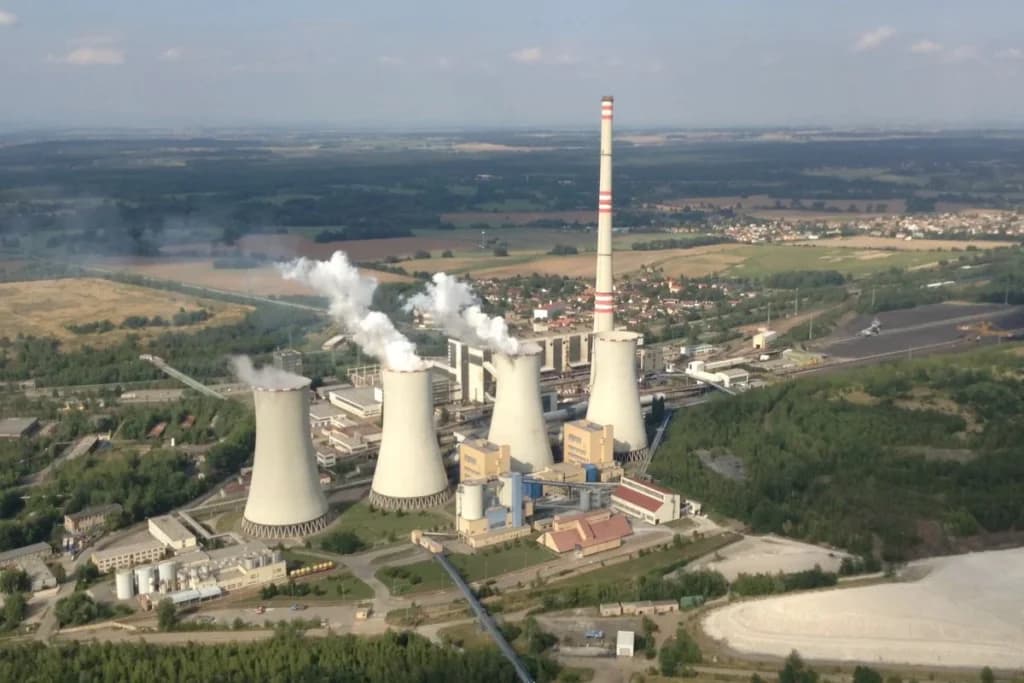
ČEPS recently published a study on the impacts of shutting down the power plants of the Sev.en group. The conclusions, which were widely reported in the press, concerned the Chvaletice, Počerady and Kladno plants. According to the report, Počerady and Kladno can be shut down without critical impacts; two units at Chvaletice need to be retained to ensure system adequacy. Let us look at what the ČEPS report says.
ČEPS was tasked with assessing the impact of the announced end of electricity generation on the safe and reliable operation of the power system at the time of the plants’ decommissioning. Its study analyses whether the closure of the given sources jeopardises the safe and reliable operation of the system. It also examines whether this would make it impossible to use standard means, such as ancillary services, to maintain grid frequency, the required voltage stability and the necessary inertia. Another task is to assess whether this would disrupt the ability to maintain island operation in the given area, ensure compliance with the security criterion (N-1), and provide black-start capability in the event of a system outage.
If any of the aforementioned services cannot be provided without the assessed sources, ČEPS recommends continuing operation of the facility in question, or replacing it with another facility or method.
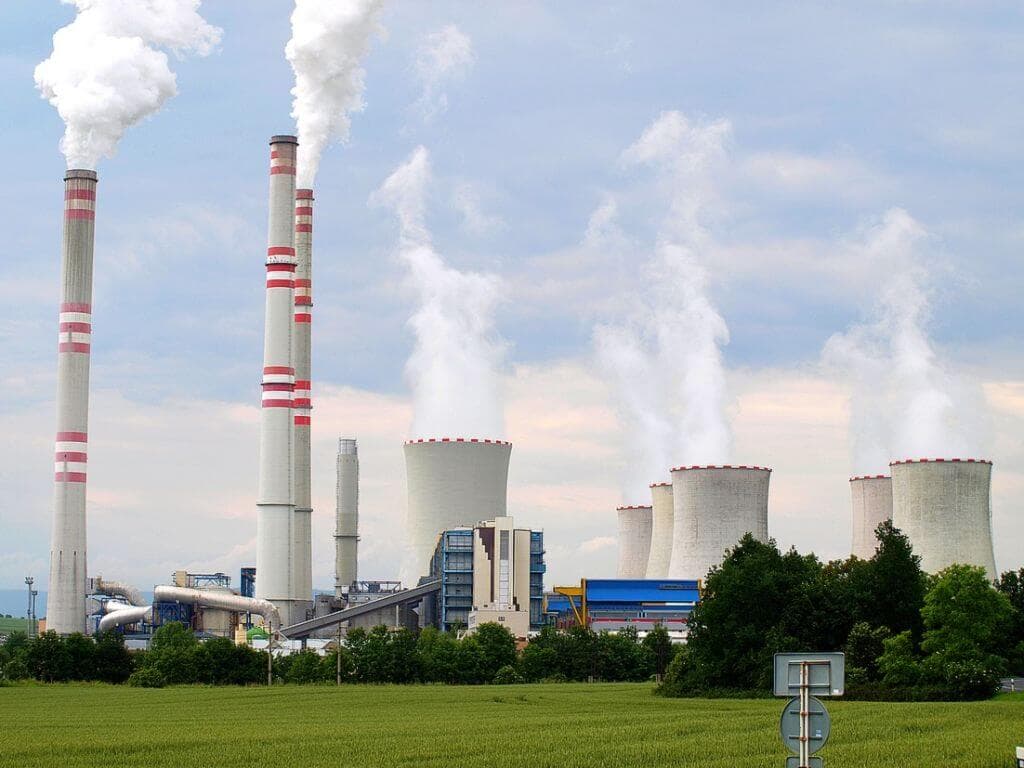
Počerady power plant. Source: ČEZ
ČEPS study on the impacts of shutting down Sev.en power plants
In the case in question, ČEPS assessed the possibility of shutting down three facilities operated by the Sev.en group. These were the Chvaletice power plant, with total capacity of 820 MWe, and Počerady, with total capacity of 1025 MWe, which operate at the 400 kV voltage level. It also assessed the Kladno combined heat and power plant, with total electrical capacity of 342 MWe. ČEPS’s assessment addressed only the electricity generation aspect. The Kladno CHP plant operates at the 110 kV voltage level. The announced shutdown date was set between 31 December 2026 and 1 March 2027, with total decommissioned capacity amounting to 2 187 MWe. The resource adequacy analysis assessed whether, after the sources were shut down, generation together with imports could ensure sufficient electricity supplies throughout the year in question.
Let us look at electricity generation and consumption last year. These are preliminary data. In 2025, gross electricity generation was 76 TWh, net electricity generation was 71.4 TWh, and net electricity consumption was 59.3 TWh. The difference of 12.1 TWh comprised 3.8 TWh of grid losses, 0.9 TWh of losses from pumped-storage plant operation, and net exports of 7.4 TWh. Coal-fired plants generated 23 TWh. The Sev.en group’s plants generated around 7 TWh of electricity, only slightly less than net exports. If conditions in 2027 were broadly repeated, but without the three plants mentioned, Czechia would be roughly at net zero in terms of exports and imports.
Let us consider the situation that would arise with the Czech generation mix if it did not use the option of electricity imports. To do so, we will first use a simple programme that colleagues at the Institute of Plasma Physics of the Czech Academy of Sciences made available online. I used it in an analysis of the cost of various potential Czech generation mixes in a recent article. Let us first assume roughly the potential of the current mix: nuclear sources at 4.04 GWe, solar PV at 5.2 GWp, wind at 0.37 GWe, hydro excluding pumped storage plants (which are included among storage sources) at 1.1 GWe, biomass and waste at 0.97 GWp, coal at 8.8 GWp, gas at 2.4 GWp, and storage at 1.1 GWp with maximum capacity of 5 GWh. These are approximate “on-paper” values, and reality may differ somewhat. It should also be remembered that these theoretically available capacities are not always available in full.
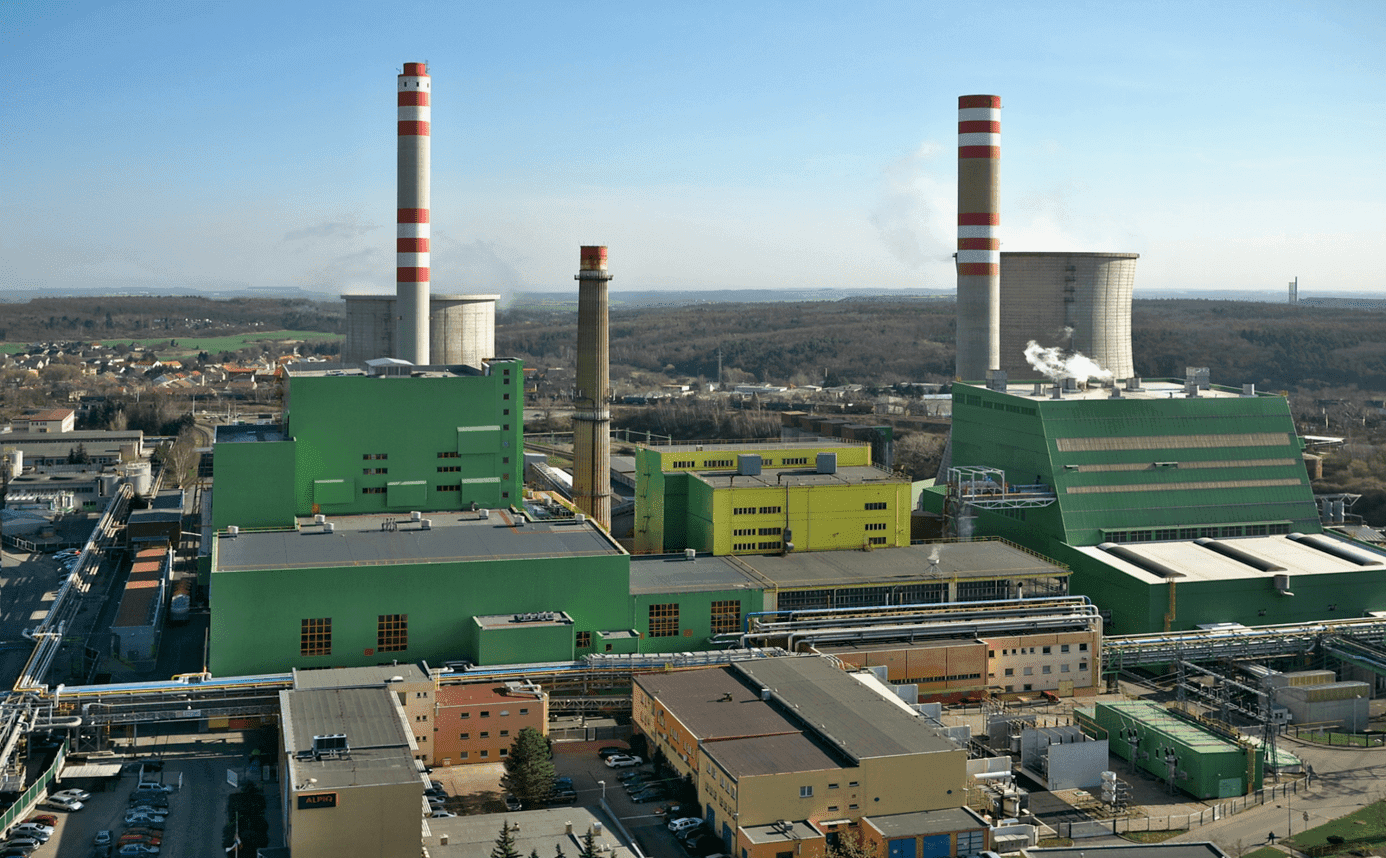
Source: Sev.en
If we use a simulation programme, such as that from colleagues at the Institute of Plasma Physics of the Czech Academy of Sciences, we find that even without imports, the current mix is able to cover needs in every year of the past five-year period. If we remove the capacity of the aforementioned Sev.en plants, we get the same result assuming ideal use of all available capacity, though reserves are significantly reduced.
ČEPS reaches the same conclusion using a more complex programme that incorporates a more detailed description of available resources in the Czech Republic, including the possibilities for electricity imports from neighbouring countries. It also uses a wider range of possible model scenarios for weather patterns during the year. Its conclusion is that, from the perspective of resource adequacy, it is not necessary to keep Chvaletice, Počerady and the coal-fired units at the Kladno CHP plant in operation. Even after their shutdown, the Czech power system will have sufficient resources and cross-border transmission capacity to cover domestic electricity demand. In all climate models, the loss-of-load expectation (LOLE) is zero hours.
As regards assessing the necessity of these resources for balancing services, ČEPS reaches the same conclusion. After assessing the availability of certified capacity for these services, it could be concluded that under all climate scenarios there would be zero hours during which insufficient capacity would be available to ensure power balance.
The only problematic area for ČEPS remains system adequacy. Here, ČEPS identified three risks: the provision of voltage and reactive power, the security plan, including black-start capability, and power flows (N-1) in the area concerned. However, this applied only to two units at Chvaletice. ČEPS recommended keeping them in operation until they are replaced by other facilities or measures in the area.
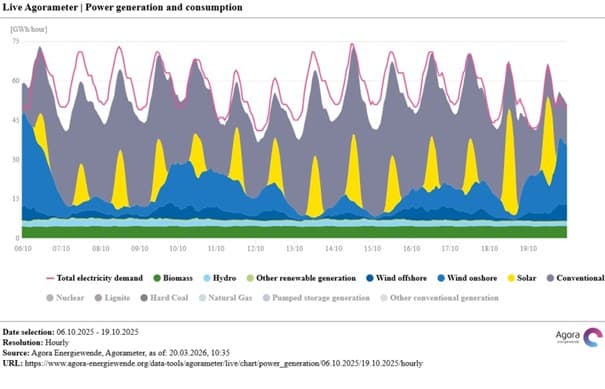
Electricity generation in Germany and consumption between 12 and 20 October 2025. It is clear that generation came predominantly from fossil sources. Consumption is also marked. It is evident that Germany was also importing electricity intensively at the time, including from Czechia. It is not very likely that Germany will supply us with electricity in the future under such weather conditions (source: Agora)
But what could be the problem?
Let us recall that ČEPS conducted the analysis only for 2027, and its statement stresses that the conclusions apply only to that year. No analysis was carried out for subsequent years and no conclusions for them can be drawn from it. It is also clear that new power plants capable of operating when there is no wind or sunshine and supporting the inertia of the electricity system, namely nuclear and gas plants, will not be available before the 2030s.
We face a period in which the electrification of transport, the rollout of heat pumps and the development of artificial intelligence are likely to lead to rising electricity consumption, while coal-fired sources will be closed on a massive scale both in Czechia and in neighbouring countries. The situation in which Sev.en’s coal plants are not essential may within just a few years turn into one in which we lack them. However, restarting them will no longer be possible.
Emissions allowances have an equally negative impact on the economics of plants owned by other coal power operators. Besides Tykač’s Sev.en group, the largest operator of coal-fired power plants in Czechia is the ČEZ group, with total capacity of 4 322 MWe, followed by Sokolovská uhelná with 700 MWe and Křetínský’s EPH with 600 MWe. Municipal heating plants and industrial CHP plants contribute through cogeneration. However, some of these plants are already planning relatively early closures. Coal capacity will therefore decline further. After any shutdown of the Sev.en plants, the next larger operator will most likely be in a very strong position to negotiate continued operation. The Sev.en group was the first to throw in the towel, and the others may benefit substantially from this.
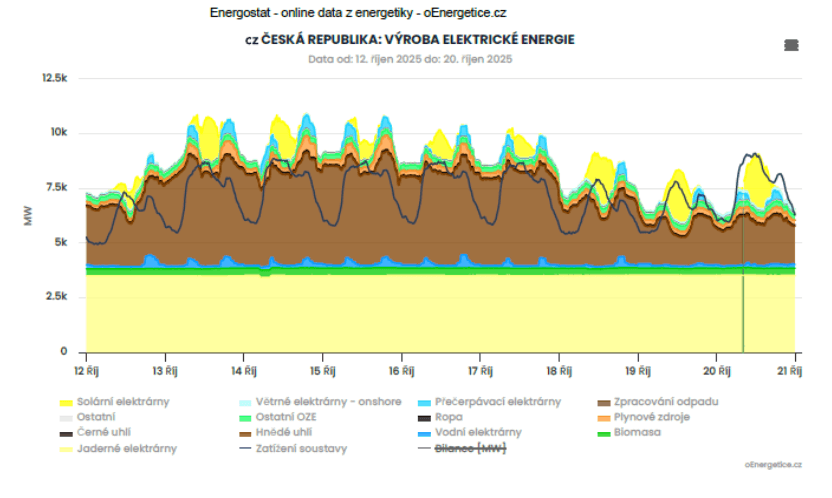
Electricity generation from different sources in Czechia between 12 and 20 October 2025. It is clear that solar and wind sources also delivered very little in Czechia, while there was enormous demand for fossil sources; Czechia was exporting electricity intensively at the time (source: oEnergetice).
Another key issue not addressed by ČEPS’s study is the impact of the shutdown on electricity prices and balancing service prices. These will be very strongly affected by the development of the availability of the necessary resources, mainly in neighbouring countries, as well as by gas prices on the global market. And here, it is highly likely that resources will be lacking. Coal plants are also expected to be shut down in neighbouring countries, where they too are affected by allowance prices. Construction of new gas-fired capacity is also behind schedule there, and with a rapid accumulation of orders for combined-cycle gas plants, competition and delays could be very significant. Naturally, the study also does not address whether it will be economically possible to maintain mining at the relevant coal mines after the main customers are shut down, or how this will affect the availability of suitable coal for district heating purposes.
As we have now seen, a black swan can also arrive, causing absolute unpredictability in gas prices. They may surge far beyond all expectations, and no one knows how long such high prices will persist. Similar unexpected events can occur at any time.
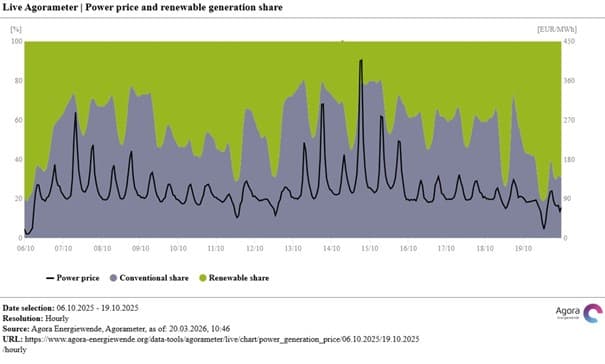
The ratio between renewable and fossil sources in electricity generation between 12 and 20 October 2025. It is clear that fossil sources had to provide a large share of generation. Electricity prices on the exchange reached as much as hundreds of EUR/MWh. Under such weather conditions, electricity will neither be readily available nor cheap in the future (source: Agora).
Conclusion
The ČEPS study confirms that the Czech electricity grid can currently withstand the shutdown of the Sev.en group’s three coal-fired sources in 2027. However, it says nothing about the critical period that will follow and last until new nuclear and potentially gas-fired sources are completed. My personal view, however, is that it would be far more advantageous and safer to bridge this period with coal-fired sources and instead avoid building large gas-fired plants and their later costly conversion to burn hydrogen. This could also be more efficient in terms of environmental impact, resources expended and emissions. Germany has secured capacity payments for coal-fired sources and has left open the possibility of operating them until 2038. Czechia should proceed in the same way.
In my view, the crucial issue is security. It may be possible for us to bridge the energy transition period more or less successfully, but it is also quite likely that yielding to the campaign of green activists will lead us into a dramatic crisis. Capacity payments and keeping the Sev.en plants operating until they are replaced by corresponding low-emission sources may prove to be very cheap insurance against black swans. As I discussed in an earlier article, the idea promoted by Facts about Climate and similar groups that we can safely shut down all coal-fired sources without even having to build new nuclear sources is detached from reality.
Translation disclaimer
This article is a machine translation of the Czech original and has not yet been fully reviewed. In case of any doubt, please refer to the Czech version.
Sdílejte článek prostřednictvím:
Topics:Opinion
You might also like
23 October 2026, 11:01
23 October 2026, 06:34