Will Andrej Babiš dismantle Czech energy sector?
Recent statements by Minister of Industry and Trade Marta Nováková and Prime Minister Andrej Babiš on a new energy strategy represent a dramatic change. Above all, his statement that he has decided at least to postpone a decision on the construction of new nuclear units and is instead considering extending the operation of Dukovany to 60 years means abandoning the existing energy strategy, which sought to replace coal-fired units with nuclear and renewable sources.
Minister of Industry and Trade Marta Nováková said four days ago that she would postpone the decision on financing and constructing a new nuclear unit. Instead, she is considering extending the operation of the nuclear units at Dukovany to 60 years, i.e. until 2045. She cited as the main reason that ČEZ's minority shareholders would not support the construction of a new unit, as it is a long-term strategic investment with a payback period of decades. She said she would not be pressured into a hasty decision.
Green activist organisations Calla and Hnutí Duha responded very quickly to the statements. They welcomed the decision to postpone construction of the new units, which they view as cancelling plans to build new reactors not only at Dukovany, and are already considering how job losses in the region will be addressed.
A more detailed and clear explanation was provided by Andrej Babiš in his answers to parliamentary interpellations. The key statement was probably that any new unit should be built by ČEZ without state support, and that minority shareholders effectively decide whether ČEZ will actually build it.
What matters is not starting construction, but completing it successfully
Let us look at how these statements, and above all the anticipated follow-up steps, will affect Czech energy. If the prime minister and minister meant their remarks to say that a decision need not be made by the end of the year and that time is needed to find the broadest possible consensus on how to implement the project, that is acceptable. Although it raises considerable doubts that an enormous number of years have already been wasted searching for this. What matters is not beginning to build a unit, but successfully completing the facility.
With the exception of the Greens, all other political parties support the use of nuclear power and the construction of new reactors. A substantial part of society also supports this path. However, when it comes to deciding which financing option to choose and which specific reactors to build, there are a number of possibilities. And there is no agreement here. Each existing option has its advantages and disadvantages, and none is without risk. It is therefore necessary to reach agreement that, once a specific financing model and supplier-selection process have been chosen, the final decision will be respected and its implementation supported even by those who preferred other options.
Building a nuclear facility is a long-term undertaking and, as with all major infrastructure projects, problems that must be overcome are highly likely to arise. It therefore requires stable long-term support. If there were a risk that a change in the political leadership would stop construction or alter the project, it would be better not to begin construction at all. The necessary consensus and support must be negotiated. The disastrous outcome when nuclear energy is used for political conflict can be seen in Bulgaria's Belene project. In the 1990s, it was at a far more advanced stage than the first two Temelín units. Yet political conflict and manoeuvring around it meant that, after costly twists and turns, another round of attempts to complete it is being launched this year.
The problem is that Andrej Babiš's subsequent statements during the interpellations show that this is not a case of a government representative seeking to negotiate and secure broad support. Rather, it is once again manoeuvring without a strategy or longer-term vision. Let us examine the options concerning another issue raised in the prime minister's and minister's statements: extending Dukovany's operation to 60 years.
Can Dukovany's lifetime be extended to 60 years?
Generation II reactors whose operation can be considered for extension to as much as 60 years began operating in the 1970s. Only a few years ago, in 2015, was the last Generation I reactor shut down. It was a Magnox reactor and had operated for 45 years. Such a long operating period cannot be contemplated for all types of Generation II reactors either. The longest-operated reactors of this type are only now approaching 50 years of operation. For example, the Oyster Creek reactor was shut down on 17 September 2018. It was a 619 MW reactor that entered commercial operation in 1969, and thus operated for 49 years. When the unit's original 40-year licence expired in 2009, it was extended by a further 20 years after thorough inspections. However, in 2010 the operator decided to close it in 2019. The reasons were economic. Competition from cheap gas and the need to build cooling towers required by new environmental rules worsened the economics of another ten years of operation. A number of other units are approaching 50 years of operation, and some have already received licences for another ten years after detailed inspections.
The situation for VVER 440 reactors may be particularly relevant to us. The first VVER 440 reactor has undergone preparation for an operating-life extension to as much as 60 years. It is Novovoronezh Unit 4, which entered service in 1972. It underwent extensive refurbishment last year. In this case, the reactor vessel was also annealed for 150 hours at a temperature of 475˚C, making it possible to restore the original properties of the steel used to a considerable extent. The refurbishment should allow another 15 years of operation until 2032, or 60 years in total. Interestingly, annealing was carried out in 1996 on the first of the two units at the Loviisa plant. These are also VVER440 reactors, although with Western containment. The first began operating in 1977 and the second in 1980.
Technologically, it is indeed possible to extend Dukovany's lifetime to 60 years. Most likely, annealing will not even be necessary. The condition of the reactor vessel and the degree of its damage from neutron flux determine whether this process is needed. This is monitored using surveillance specimens. They are placed in the reactor vessel and removed for analysis at precisely defined intervals. So far, everything indicates that annealing will not be needed. However, it should be noted that a number of other parts of the plant's equipment, such as cables, are ageing not only technologically. The possibility of further extending the plant's operation will therefore be examined very thoroughly.
It should be recalled that continued operation of Dukovany may also be impossible for political reasons, mainly pressure from neighbouring anti-nuclear countries. The examples of Belgian nuclear units and France's Fessenheim plant show that pressure from Germany can be so strong that it could result in Dukovany being closed not after 2035, but even earlier. This could only be resisted if there were broad agreement and support for the extension at least within the Czech Republic, including support for continued operation from green activists. The aforementioned statements by Mr Rovenský of Greenpeace after ČEZ's shareholders' meeting appeared to indicate this. However, as the current statements of green activists also show, it cannot be relied upon.
The main problem, however, is that the statements by Andrej Babiš and Marta Nováková do not come after mature consideration and with measures that would help secure the extension, but purely in the style of: „now I do not have to worry about anything until the end of my term, and those who come after me will deal with it“. This is also evidenced by the response of Dana Drábová, who, as an expert in the field, reminded us that keeping Dukovany operating even until 2035 will be a problem.
Replacing coal sources – the main task of new nuclear units
Even an extension will not solve the main problem that another lengthy postponement of the decision on building new nuclear capacity would bring. The principal task of new nuclear facilities is not merely to replace the ageing Dukovany plant, but above all coal-fired sources that will gradually begin to be retired. Together with renewables, they should deliver the Czech Republic's transition to low-emission energy and fulfil our share of climate goals in Europe and globally. It is therefore not merely a matter of building one or two units to replace Dukovany, but of beginning gradual, longer-term construction of capacity which, together with renewables, primarily in decentralised form, will ensure low-emission energy generation and enable the gradual electrification of transport and industry.
This is the objective of the current energy strategy. Postponing the decision to build the first unit or units by another several years therefore effectively means failing to fulfil the Czech Republic's energy strategy. It should be understood that without a decision on the method of financing, it is impossible to select a specific reactor type, supplier and implementation method. Consequently, a specific project cannot be prepared and then carried out. There is also a risk that, if delays are prolonged, some permits already obtained may expire.
It is of course possible to cancel the current energy strategy and draw up a new one. Andrej Babiš's latest comments during the interpellations suggest this. As in the current energy strategy, it would involve intensive development of the efficient use of decentralised renewable sources. There is agreement on this. However, such an energy strategy will also have to address which sources will replace both Dukovany and retired coal-fired capacity. Let us look at what reality and Prime Minister Andrej Babiš offer us.
What will Andrej Babiš's government's new energy strategy be?
The first option, discussed by both the prime minister and many others, is the massive use of gas. However, it is predominantly imported from Russia. Naturally, liquefied gas can also be imported from the United States. Yet given the volume by which European gas consumption is expected to rise, imports from Russia will dominate in any case. That the Germans are fully aware of this is evident from how strongly they insisted on construction of the Nord Stream II gas pipeline. We will probably therefore import gas from Germany, but it will be Russian gas. It is paradoxical that those promoting the gas route are also the strongest critics of buying Russian reactors. At present, we have Russian reactors, but there is no Czech dependence on Russia from this perspective. Our Russian units are maintained by Czech companies, which are also capable of refurbishing them. Fuel stocks can be held for years, and switching to Western suppliers is not a problem. The same would apply if new reactors were purchased. This can also be seen in Ukraine's case. It has far fewer problems freeing itself from dependence on Russia in nuclear energy than in gas supplies.
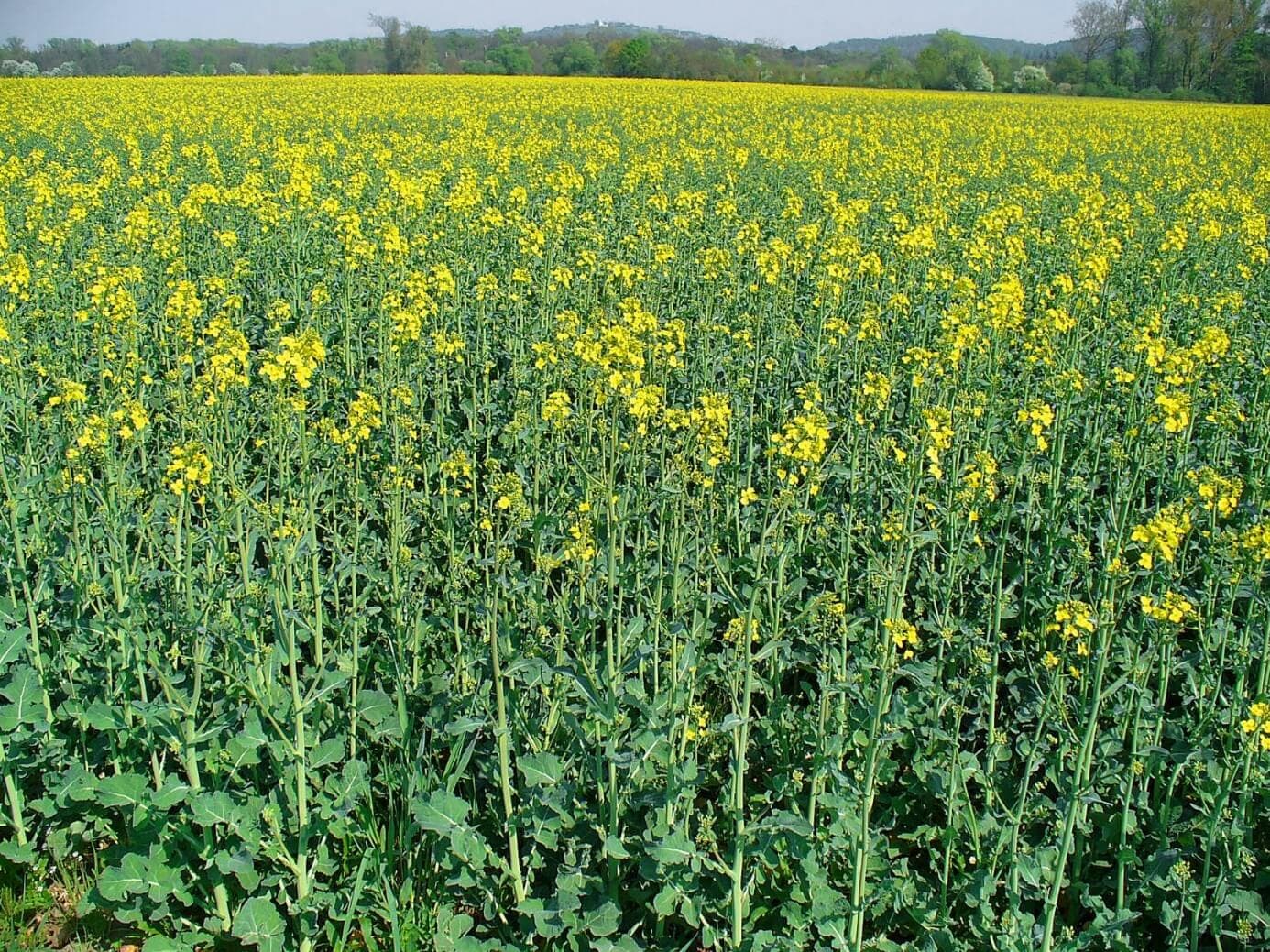
Green organisations add the massive use of biomass for electricity generation. In their aforementioned response to the prime minister's and minister's statements, Calla and Hnutí Duha explicitly emphasise biogas. Local agricultural and forestry waste resources, requiring no long-distance transport, are already fully used, primarily for heat production or cogeneration. Even now, it would often be more environmentally beneficial and appropriate to return this biowaste to the soil as fertiliser than to burn it for electricity generation. It is therefore clear that, in the case of the massive electricity production from biogas planned by green organisations, crops will have to be grown specifically to supply the necessary large biogas plants. In that case, maize cultivation can be expected to predominate. Like rapeseed, which is grown for biofuel production, this maize would be a highly profitable agribusiness, but in my view it would be an even greater environmental disaster than rapeseed. Another disaster would be following the path of Denmark or the United Kingdom, which are replacing coal in power generation by burning wood biomass, including material imported across oceans. The environmental impacts and risks of such biomass use are described here.
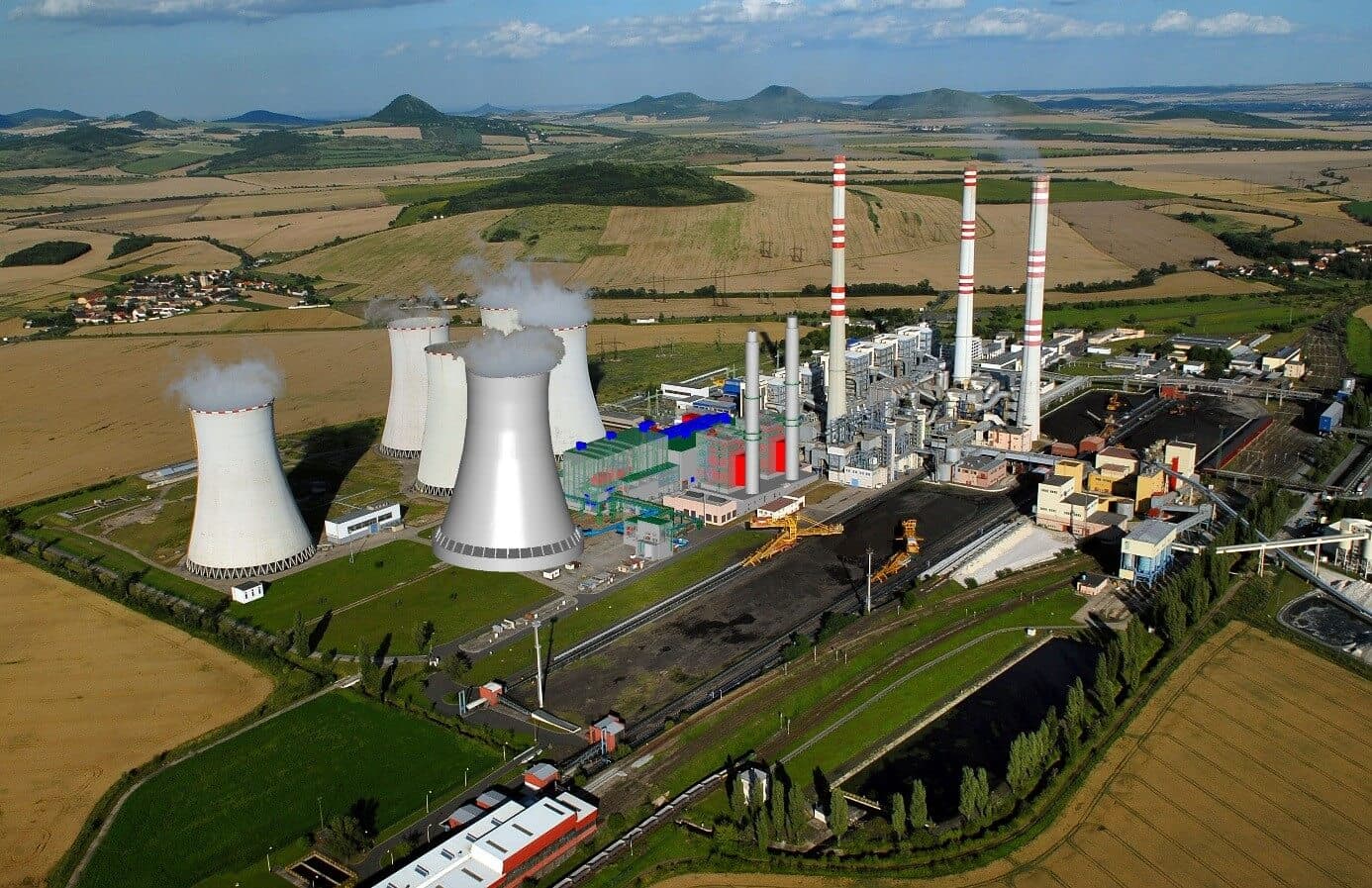
The second option, which would reduce the need for gas imports and slow the increase in electricity prices, is to slow the phase-out of coal-fired power plants. Further old units would be refurbished to meet emissions limits and operated for additional decades. One example is the Počerady power plant. It has coal available, but other plants face the fundamental problem of insufficient fuel. They cannot continue operating without a further breach of mining limits. It is therefore possible that Andrej Babiš's current steps away from nuclear power, celebrated by green activists, will ultimately lead to breaching the limits, demolishing villages and destroying the landscape, and to following Germany in this respect as well. Perhaps the residents of Horní Jiřetín should consider that too.
Low-emission energy nowhere in sight
By an interesting coincidence, Andrej Babiš put forward his proposal to change the state energy strategy soon after publication of the IPCC climate-change panel report, which notes the growing risk that CO2 emissions will not be reduced sufficiently soon. The Czech Republic has relatively limited options for using low-emission sources. The possible pathways, as well as the situation and options in the Czech Republic, are described in greater detail here and here. Its sole option with major potential is nuclear power. The Czech Republic successfully completed at least two Temelín units despite enormous pressure from anti-nuclear activists at home and in neighbouring countries. Thanks to this, it was able to sharply reduce pollutant and carbon dioxide emissions.
A major advantage was also the population's relatively positive attitude towards this energy source, the industrial base in the sector and the availability of sufficient experienced specialists. If politicians had been able to use these strengths, the Czech Republic could have been on the path to low-emission energy, with potential it could offer not only to its immediate surroundings. Hungary is addressing low-emission sources and Poland urgently needs them as well.
Unfortunately, politicians concerned themselves with matters other than energy, and Andrej Babiš now appears to have embarked on a path to destroy these advantages completely. His current steps are celebrated by green activists who fought intensively to prevent Temelín from being built at all, and who believed Dukovany should already have been shut down after 30 years of operation, like German units. They are partners of the organisations that caused Germany, instead of now dramatically reducing emissions, to spend enormous sums essentially only on replacing prematurely retired nuclear units, burn imported and domestic coal intensively, and destroy Hambach Forest. They also sought intensively to impose the German path here.
The slowdown in nuclear power development in Europe and the United States was to a considerable extent caused precisely by the intensive campaign of green anti-nuclear activists. It is true that Europe and the United States are not the regions where energy needs are growing rapidly and which will be key to managing CO2 emissions. Those are emerging and developing countries. China and India are therefore crucial, for example. China is precisely an example of a country undergoing a nuclear-power renaissance. At the same time, it is also installing renewables intensively. For now, electricity generation from nuclear sources is growing at a rate similar to wind power, and nuclear and wind power, alongside hydro, could be the key low-emission sources. If nuclear power's role in the development of China's future energy system is confirmed and the effects of anthropogenic CO2 emissions on climate development prove to correspond to IPCC projections, historians may in future conclude that the main culprits for failing to prevent them were not climate sceptics but anti-nuclear green activists.
The example of Bavaria
If the current government truly implements the idea of Prime Minister Andrej Babiš and Minister Marta Nováková to abandon the current energy strategy and eventually exit nuclear power, it will enact the scenario I described in the following text as a second Bavaria. The development of the situation in present-day Bavaria shows very clearly, and will continue to show, the consequences of such a scenario. Let us recall that Germany and Bavaria have also faced, and continue to face, extreme pressure to transition to renewables. At the same time, Germany is very wealthy and Bavaria is among its most developed and wealthiest federal states.
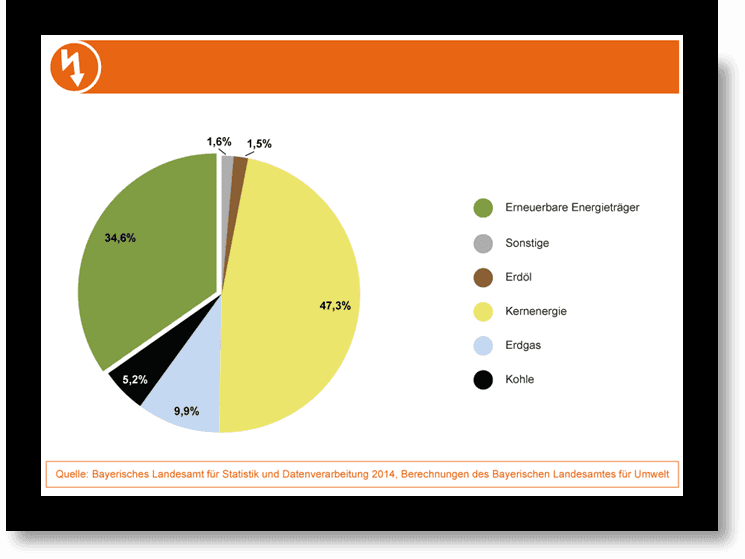
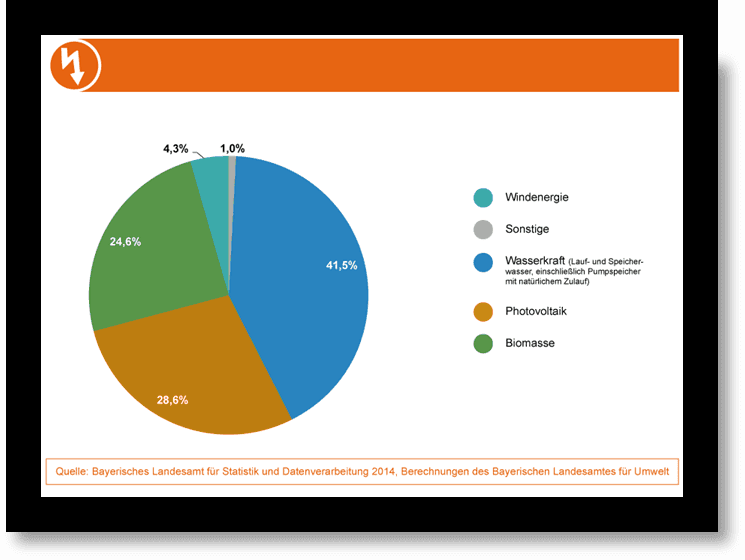
At the beginning of the Energiewende in Bavaria, nuclear power dominated electricity generation, providing more than half of output and ensuring that Bavaria was an electricity exporter despite extensive industrial production and consumption. Nuclear power plants still account for more than 40% of generation and are the main source in the state. Looking at 2014 figures, nuclear sources supplied 47.3% of electricity, gas-fired plants 9.9%, coal-fired plants 5.2% and diesel plants 1.5%. Fossil sources therefore supplied 16.6% in total. Renewables provided 34.6% of electricity overall. However, it must be stressed that a substantial part of this came from hydro, which benefits from highly favourable natural conditions provided to Bavaria by the Alps and the Danube. Hydropower thus supplied 14.4% of electricity. Bavaria supported photovoltaics extremely strongly, yet they still supplied only 9.9% of electricity; biomass supplied 8.5% and wind sources only 1.5%. It should be noted that little new renewable capacity has been added in Bavaria since then, while nuclear capacity has declined. The situation has therefore not changed dramatically. Only renewables' share of total generation has increased as nuclear output declined. A dramatic change will occur only in 2022, when Bavaria shuts down its last nuclear unit and the federal state completely loses self-sufficiency in electricity generation. It will also have to increase fossil-fuel use dramatically. It will be difficult to increase hydropower output in Bavaria in the future, not only because of major public opposition to building new large dams. A large increase in electricity generation from biomass also faces environmental constraints, as massive maize cultivation for biogas sources or mass burning of wood biomass in thermal power plants places substantial burdens on the environment. Despite massive support throughout Germany, wind sources have not achieved a share greater than 2%. Bavaria has also reached the limit with photovoltaics. Capacity under ideal conditions matches demand. Further substantial growth will require a breakthrough in energy-storage technologies. It is uncertain when such a breakthrough will occur, and until then Bavaria will have to replace nuclear sources with fossil fuels or import electricity from elsewhere.
What can be deduced from this for the Czech situation? The Czech Republic does not have Bavaria's potential for hydropower. Czech hydropower can generate only between 2% and 3% of electricity. In absolute terms, that means around 2 TWh annually, compared with Bavaria's 14 TWh. Wind sources generate around 0.6% and photovoltaics 2.7%. It is naturally possible to reach Bavarian levels, which would not be a major difference for wind and would mean installing roughly 7 GW of photovoltaic capacity. In that case, Czech photovoltaic output would also approach summer daytime demand, as in Germany, and encounter the same limit. Biomass generates roughly 2.5% (2.0 TWh) of electricity in the Czech Republic. If we add German output from other renewables to Czech hydropower potential, which is determined by geographical conditions, we obtain roughly 23% of Czech generation from renewables. The remainder must therefore be supplied by nuclear power, which now generates around 35%, and above all fossil sources. We currently export electricity, but if we seriously intend to transition to electric mobility and replace fossil sources with electricity in other sectors, this reserve will be easily consumed. It is therefore clear that, if we turn away from nuclear power, fossil sources, i.e. coal and gas, will be used intensively. In that case, we will probably find it difficult to avoid another breach of mining limits; without it, we would face a shortage of coal reserves. This is also evident in Germany, which is not only expanding mining areas but also importing coal intensively.
Conclusion
Those who read my articles not only on Osel and OEnergetice know that I usually try to use the most sober headline possible. The original title of this article was: “What does the current development regarding the construction of nuclear units mean?” However, I then read the prime minister's responses to parliamentary interpellations, felt it necessary to sound the alarm, and this rather tabloid-like headline resulted. I learned that he really wants to create a new energy strategy, and the only things he said in this area, apart from saying that any new unit should be built by ČEZ without state support and that minority shareholders decide there, were that it was necessary to consider why the Počerady gas power plant is idle, that the Czech Republic has reserves in wind-energy use, that there are several plans and it is not our government that decides, and that the Czech Republic can return to solar power.
This clearly demonstrates the prime minister's and government's complete inability to do anything in the energy sector. The current energy strategy includes the !! necessity !! of using the potential of decentralised wind and photovoltaic sources as efficiently as possible (that is, rooftop photovoltaics). After five years in which Andrej Babiš has held power as finance minister and prime minister, and in which nothing has been done to fulfil this important part of the state energy strategy, he begins speaking of unused potential and a return. At the same time, he announces a plan to kill off the second key point of the state energy strategy on the path to low-emission energy: building new nuclear units.
But I consider his statement that the government does not decide in this area and that the decision rests with ČEZ's minority shareholders to be the main tragedy. Let us recall the most active among them. They are foreign stock-market speculators represented by Cypriot companies and the Greenpeace movement (in greater detail here). The prime minister's statement therefore most likely says that ČEZ's minority shareholders create the real state energy strategy. These minority shareholders will thus prepare for the government the new update he has announced. That is the only guarantee that it will actually be implemented. I recently described the available options besides the current state energy strategy. It will therefore be very interesting whether the new state energy strategy will be the green activists' scenario, emphasising gas and biogas, or the speculative investor's scenario, emphasising maximum extraction of value from ČEZ's existing assets without strategic long-term projects, only short-term investments exploiting periods of very high electricity prices or subsidies – in other words, a path stressing the maximum extension of coal use and gas.
Where such a path leads, one where direction constantly changes and essentially nothing is done, is shown by the situation in Belgium, which gets 40% of its electricity from nuclear power. In 1999, its government decided that all nuclear units would be shut down after 40 years of operation and that no new ones would be built. It turned out that ideas about replacing them with renewables were unrealistic and would mean returning to coal, so it was subsequently decided they would operate longer. Under conditions of political instability and chaotic changes in energy strategy, a situation arose in which the operator had no idea whether it would shut down nuclear units immediately, in one year, or in five or ten years. In such a case, especially when shareholders focus solely on profit, interest in maintenance and preparation for reliable longer-term operation is minimal. Belgium must now devise emergency plans for its energy sector, industry and population for the winter. And Andrej Babiš is sending us on the same trajectory.
I am glad when at least someone reads a long article all the way to here. They need not agree with my views; they can find differing views, for example from the aforementioned ČEZ minority shareholders. However, I would very much like as many people as possible to familiarise themselves with energy and its situation in the world, and especially in the Czech Republic. The prosperity of our industry and the living standards of society as a whole are founded on reliable, efficient and environmentally sound energy. That is why I wrote a popular series on the possibilities of individual sources (here, here, here, here, here, here, here, here, here, here, here, here and here). Together with colleagues, we also prepared a study on the state, risks, challenges and possible scenarios of Czech energy, Czech energy at a crossroads. You can compare the views in it with those of the aforementioned minority shareholders, for example, and form your own view on this area, which affects every one of us.
In the future, we will be able to compare. Finland, the United Kingdom, Hungary and Slovakia have taken the path towards low-emission energy through a combination of nuclear power and renewables. We shall see how they fare and how France's energy system compares environmentally and economically with Germany's. No one can take away from Miroslav Grégr and Miloš Zeman the fact that they managed to push through and enable completion of two units at the Temelín nuclear power plant. Green activists themselves confirmed this by awarding them the Ropák prize. Likewise, Martin Bursík will find it difficult to shed the label of ideological architect of the renewable-support law that led to the Czech photovoltaic boom. It is possible that Marta Nováková and Andrej Babiš will go down in history as those who destroyed Czech nuclear power and undermined the energy sector in general. But naturally, I may be wrong, and the gas path may prove to be the right one.
Written for the oenergetice and Osel websites
Translation disclaimer
This article is a machine translation of the Czech original and has not yet been fully reviewed. In case of any doubt, please refer to the Czech version.