France bowed to Commission pressure in setting its climate targets, but did so in its own way

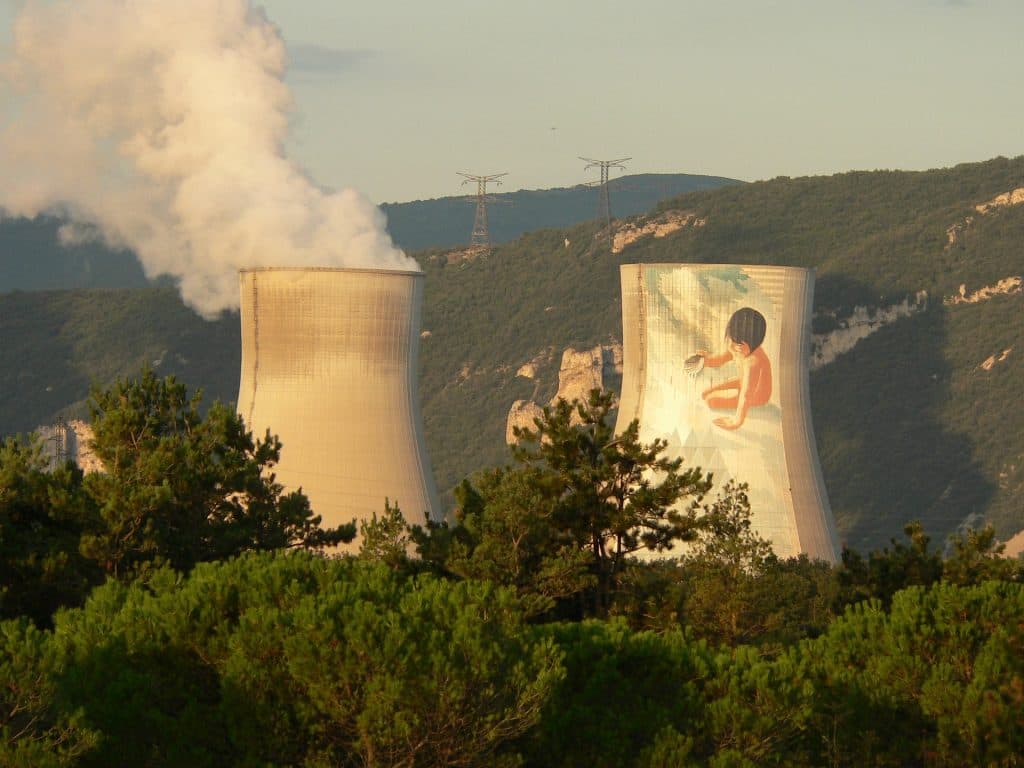
France submitted its final national energy and climate plan (NECP) to the European Commission on Wednesday, 10 July, ten days after the legal deadline. Euractiv reports. Given that most member states failed to submit their plans on time, this is no surprise. What is interesting, however, is that the plan also includes controversial targets for renewable energy sources by 2030, which the French government had previously been reluctant to accept.
Under European legislation, each member state is required to submit a plan setting out exactly how it will meet the Union's decarbonisation and CO2 emissions reduction targets by 2030.
At the end of May, we reported that France had refused to specify a target for the share of renewable energy in gross final energy consumption by 2030, as required by the Renewable Energy Directive (RED), adopted in March 2023.
The reason is the country's energy mix, which is characterised by a relatively high share of nuclear energy, at up to 36 %. France therefore prioritises a “low-carbon” target of 58% in its draft, to which both renewable energy sources (RES) and nuclear power contribute. The European Commission, however, has said that this approach is unacceptable and does not include sufficiently ambitious targets for the development of RES.
Although France was not expected to give in to pressure from Europe, the final version of its NECP commits the country to developing renewable energy sources, with gross final energy consumption of 1 381 TWh and a RES contribution of 570 TWh.
Two points remain contentious
First, France has now set an electricity generation target (TWh), whereas previously the country tended to focus on setting targets for installed capacity in gigawatts.
Second, the renewable energy target in the plan may still not be enough for the Commission. Although the document does not explicitly state the planned share of RES in gross final energy consumption in 2030, a simple calculation shows it would be 41.3%. The Commission, however, says France's target should be at least 44%.
Some, however, believe the Commission will approve the plan.
“It is not enough, but it is in the European Commission's interest for France to make progress,” said French Green MP Julie Laernoes, who worked on the draft law on energy and climate planning.
Dropping the plan's “low-carbon” target raises questions about France's efforts to secure greater support for nuclear power at EU level—particularly its desire for a “low-carbon” target in any new EU-wide targets for 2040. One example is through the nuclear alliance.
Translation disclaimer
This article is a machine translation of the Czech original and has not yet been fully reviewed. In case of any doubt, please refer to the Czech version.