11 October 2026, 08:24
Loading...
Germany prepares new form of support for offshore wind farms

David Vobořil
19 January 2026, 12:57
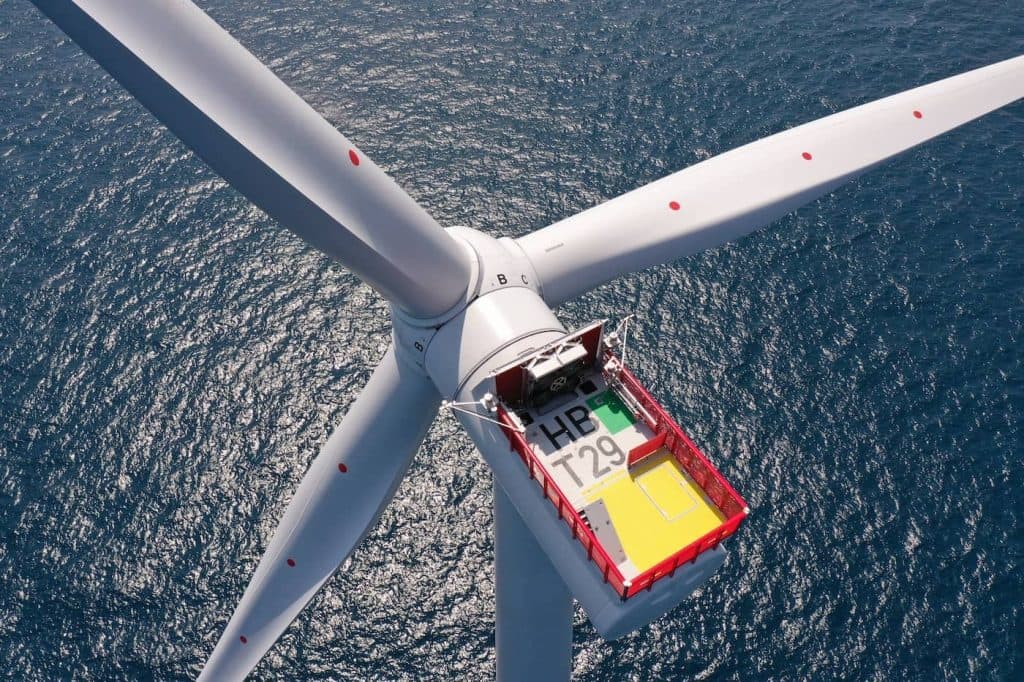
Germany’s Federal Ministry for Economic Affairs and Climate Action (BMWK) is working on a new form of support for offshore wind farms. Its aim is to make investment in these sources more attractive by adapting support conditions to current market risks. Declining interest in building wind farms in German waters was evident in the final auction last year, which failed to attract any bids.
Offshore wind farms are one of the pillars of decarbonising Germany’s energy sector. However, the industry is facing waning investor interest. Over the years, Germany’s support system evolved to the point where, instead of receiving support, developers competed to offer the most money for the right to build and operate an offshore wind farm.
Offshore wind farm developers say that in the current environment, it is no longer possible to submit bids without subsidies. Yet in summer 2023, oil companies BP and TotalEnergies pledged to pay a total of 12.6 billion in a German auction for the right to build offshore wind farms in the North and Baltic Seas. This was the first auction in which investors paid for the right to build offshore wind farms in Germany. By contrast, no bids were submitted in the latest auction.
Risks for offshore wind farm developers have increased in recent years due to geopolitical tensions and supply chain problems, as well as increasingly unpredictable price and volume risks in the electricity market. The industry has also criticised current plans for locating wind farms too close together, which would reduce their output due to the wake effect.
Despite warnings from industry and political representatives of Germany’s northern federal states, the government intends, according to Tagesspiegel Background, to press ahead with the next round of auctions, scheduled for February. Holding the auction as planned would, according to Timm Meyerjürgens, CEO of TenneT, only provide further ammunition to populist parties opposed to the energy transition.
“Everyone knows the auction will not be successful,” Meyerjürgens said.
The industry is therefore calling for the next rounds to be postponed so that the auction design can be changed in advance. The German government, however, insists that the upcoming auctions go ahead in their current form. Work on a new support framework is already under way, however.
Industry organisations propose specific changes
The German Association of Energy and Water Industries (BDEW) and the German Offshore Wind Energy Foundation (BWO) are calling for reform measures to be introduced quickly, including a new support framework.
In its paper, BDEW proposes replacing the competitive market premium with two-way contracts for difference (CfDs) to guarantee operators a fixed electricity price and eliminate the price risk associated with electricity price volatility. BDEW also calls for greater distances between individual wind turbines to eliminate negative effects on airflow and thereby increase the utilisation of installed capacity.
According to BDEW, cooperation with neighbouring countries on spatial planning should also be improved, and cross-border connections between designated sites should be enabled. The association is also calling for the option to extend the operating life of existing wind farms and for new projects to be approved for 35 years from the outset, to improve cost-effectiveness and reduce the environmental impacts of wind farm construction.
Translation disclaimer
This article is a machine translation of the Czech original and has not yet been fully reviewed. In case of any doubt, please refer to the Czech version.
Sdílejte článek prostřednictvím:
You might also like
10 October 2026, 13:19
10 October 2026, 07:37
10 October 2026, 07:02