11 October 2026, 08:24
Loading...
High hydrogen costs and weak demand are holding back its development in Germany, energy agency study finds

David Vobořil
13 April 2026, 13:24
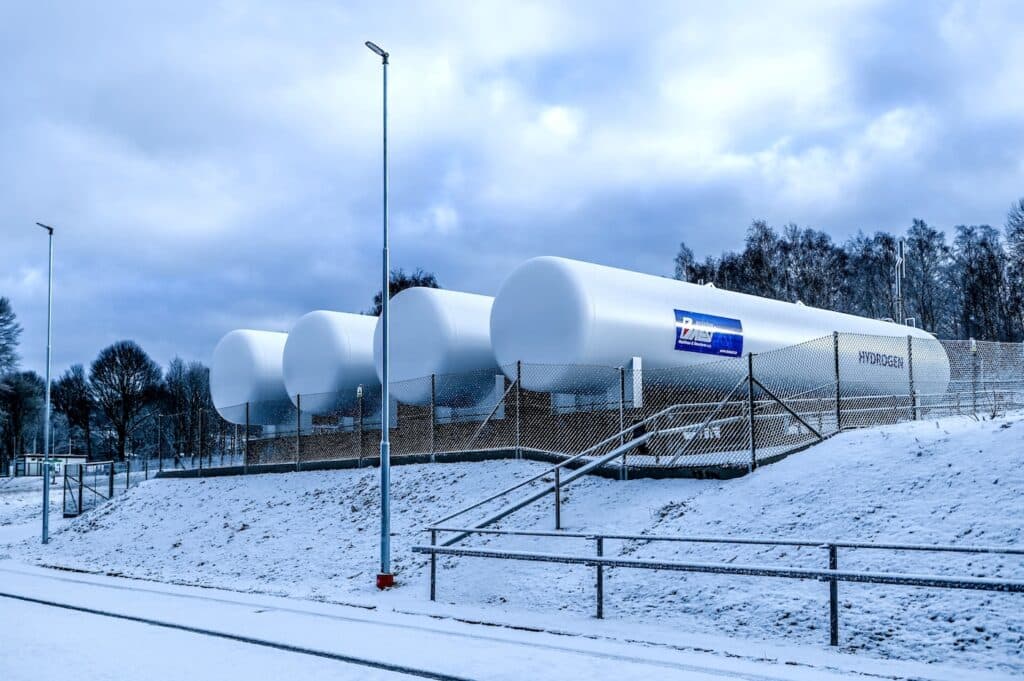
The development of Germany’s hydrogen economy is lagging behind original expectations. According to an analysis by the German Energy Agency (dena), the market ramp-up is being held back primarily by the high cost of producing green hydrogen, insufficient demand and continued investment uncertainty. Although the government and industry consider hydrogen a key tool for decarbonisation, particularly in heavy industry, its wider use is progressing more slowly than expected.
According to dena, there is a significant mismatch between planned production and actual demand for hydrogen. Germany has ambitious plans for domestic production capacity, but it is struggling with high costs. Industrial consumers often hesitate to invest in the necessary technologies because of the expense and uncertainty about future hydrogen prices and availability.
“Producing hydrogen from renewable sources is and remains costly. The main factor affecting costs is the purchase of electricity, compounded by complex criteria for procuring it. Added to this are investment costs, which are often underestimated in electrolysis projects,” dena says.
The analysis warns that rapid market development cannot be expected without sufficiently strong and stable demand. Companies in sectors such as steelmaking, chemicals and refining have expressed interest in using hydrogen, but the implementation of specific projects is often postponed.
The economics of projects remain a key problem. Low-carbon, and especially green, hydrogen is still significantly more expensive than fossil alternatives. As a result, investors and consumers are waiting for clearer price signals or additional support mechanisms.
“Willingness to pay on the demand side is limited as long as fossil alternatives are cheaper. Instruments such as a greenhouse gas emissions quota may have some effect, but their effectiveness is diminished by price volatility and planning uncertainty,” dena says.
Dena therefore warns that without targeted policy instruments, such as contracts for difference (CfD), operating support or offtake guarantees, the hydrogen market will develop much more slowly than government strategies envisage.
Infrastructure development is also lagging
Another major obstacle is underdeveloped infrastructure. Although Germany is planning an extensive hydrogen backbone network, building it will take many years. This complicates the connection between hydrogen production, imports and consumption.
The report also highlights the need for better coordination between the different parts of the value chain—that is, production, transport, storage and end use. Without these elements being synchronised, there is a risk of isolated projects emerging without any practical use.
Ambitious targets face reality; development will be slower without support
Germany has set ambitious targets for developing its hydrogen economy, including installing electrolysers with a capacity of tens of gigawatts and importing large volumes of hydrogen from abroad. However, dena says the reality is that achieving these targets will require significantly greater effort and better-designed policies.
Experts say that in the short term, a greater role for so-called low-carbon hydrogen—not just green hydrogen—will be necessary. This could help bridge the initial phase of market development until renewable energy sources are sufficiently widespread and costs fall.
The analysis warns that without the swift introduction of effective support mechanisms, Germany risks losing momentum in hydrogen technologies. This could affect not only the achievement of climate targets but also the competitiveness of industry.
Hydrogen is expected to play a key role in decarbonising sectors where electrification is not readily feasible. However, unless current barriers—especially high costs, weak demand and missing infrastructure—are removed, its development will remain limited in the coming years.
Translation disclaimer
This article is a machine translation of the Czech original and has not yet been fully reviewed. In case of any doubt, please refer to the Czech version.
Sdílejte článek prostřednictvím:
You might also like

10 October 2026, 13:19

10 October 2026, 07:37

10 October 2026, 07:02