MHI to develop new Japanese fast reactor
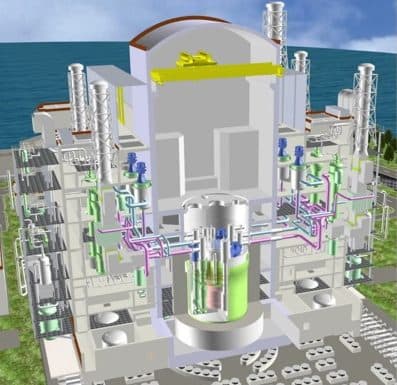
The Japanese government has selected Mitsubishi Heavy Industries (MHI) to lead a project to develop a conceptual design for a demonstration sodium-cooled fast reactor. The demonstration fast reactor is expected to come online in the 2040s.
MHI is overseeing the reactor’s conceptual design, research and development. Mitsubishi FBR Systems (MFBR) is also working on the development alongside MHI. Founded in 2007, MFBR is an engineering company responsible for the development of fast reactors in Japan. The subsidiary draws on MHI’s experience in operating nuclear facilities.
The conceptual design for the new nuclear reactor is scheduled to be completed in fiscal year 2024.
A strategic plan for deploying fast reactors, adopted by the Japanese government in December 2018, set out an assessment of the effectiveness of several fast reactor designs. New reactor concepts are intended to encourage technological competition among private-sector corporations.
The company revised the strategic plan in December 2022. Under the revised plan, the fast reactor is to use sodium. Another important consideration is the choice of an equipment manufacturer capable of designing, developing and manufacturing the technology in line with the policy directions set by the government.
In 2007, the Japanese government selected MHI as a key partner in developing the practical use of fast reactors. The company’s selection drew on its experience developing the experimental Joyo reactor and the prototype Monju reactor. The two companies subsequently carried out conceptual studies, research and development for a commercially viable power plant.
In December 2019, the two companies signed a cooperation agreement with Japan’s government nuclear regulator on the development of fast reactors, with participation from French companies. These include Framatome, the French Alternative Energies and Atomic Energy Commission, and France’s nuclear regulator. Japanese companies began further cooperation on fast reactor development with US-based TerraPower in January 2022.
“All these activities will enable faster reactor development and the introduction of domestic sodium testing facilities essential for research and development. MHI will continue to refine its technologies and develop the human resources needed to support this initiative,” MHI said.
Fast reactors and their history
Fast reactors use a fast neutron spectrum. This allows the design to use fuel more efficiently, achieving a higher burnup of nuclear fuel. In addition, thanks to their higher neutron flux density, they can fission or transmute actinides, thereby partially addressing the issue of spent nuclear fuel.
Fast reactor designs rely on fuel reprocessing and the use of mixed-oxide (MOX) fuel. The aim is to operate nuclear facilities in what is known as a closed fuel cycle.
Historically, fast reactors have been operated mainly by the United States (EBR I, EBR II and Fast Flux Test Facility reactors), France (Rapsodie, Phenix and Superphenix reactors) and Japan. Russia’s BN-600 and BN-800 reactors are currently operating commercially at the Beloyarsk Nuclear Power Plant.
China currently operates the experimental CEFR fast reactor. Since 2020, China has been building the CFR-600 demonstration fast reactor. The company’s 2020 plans envisaged connecting the reactor to the grid this year.
Fast reactors in Japan
Japan’s nuclear regulator has historical experience with sodium-cooled reactors. Japan operated the Monju reactor in Fukui Prefecture and the experimental Joyo reactor in Ibaraki Prefecture.
Despite Japan’s experience operating fast reactors, further development was halted after the government decided to decommission the Monju reactor in 2016. The decision followed problems with a sodium leak in 1995.
Translation disclaimer
This article is a machine translation of the Czech original and has not yet been fully reviewed. In case of any doubt, please refer to the Czech version.




