The gap between carmakers' stated emissions and vehicles' actual emissions is widening
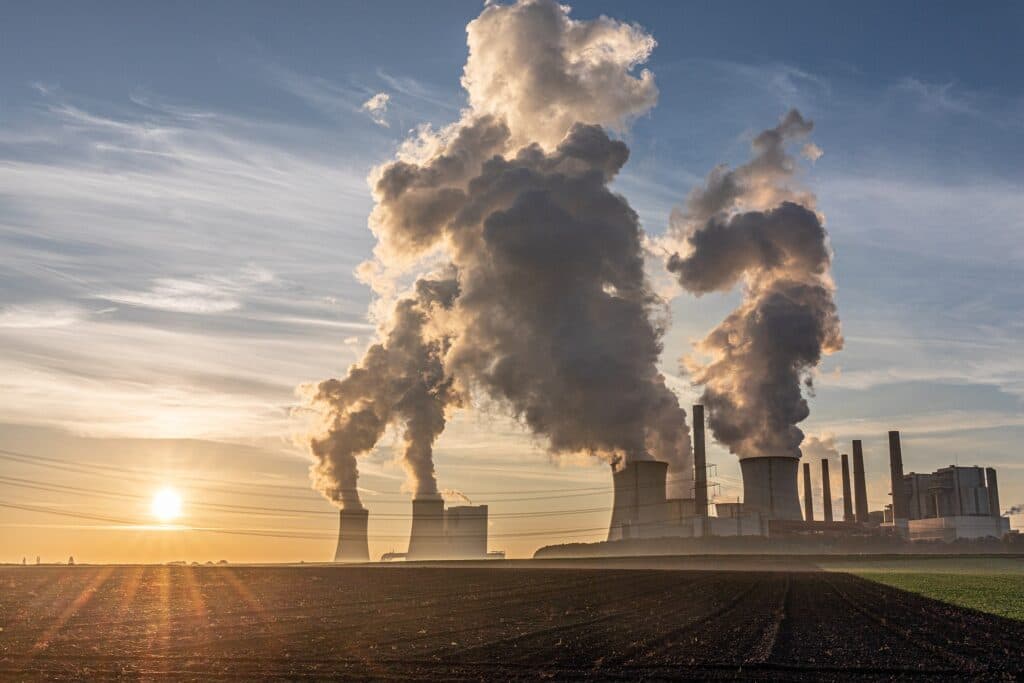
The gap between measured and actual carbon dioxide emissions from cars has grown by 80% over the past five years, despite advanced testing procedures designed to determine vehicles’ real-world emissions. The study highlighting the problem was conducted by the International Council on Clean Transportation. Euractiv reports.
The International Council on Clean Transportation (ICCT) has tracked the gap between officially reported CO2 emissions and the CO2 actually emitted by vehicles in everyday use since the beginning of 2010.
The non-governmental organisation that helped uncover the “Dieselgate” scandal has now found that official and actual CO2 emissions figures for passenger cars in Europe do not match, and that the gap is widening. For vehicles registered in Germany, the gap was 8% in 2018, rising to 14% in 2022.
“Without countermeasures, official CO2 emissions figures will become increasingly unrepresentative of real-world values,” said Jan Dornoff, ICCT’s head of research and a co-author of the report.
The study analysed CO2 emissions data reported by the European Environment Agency alongside real-world fuel consumption data for more than 160 000 combustion-engine and hybrid cars, as reported by consumers on the spritmonitor.de website.
Dornoff also warned that if the gap between claimed and actual figures remains this large, it will “undermine the EU’s efforts to reduce transport-related CO2 emissions and leave consumers paying more for fuel than expected.”
Methodology updated after the Dieselgate scandal
Following the “Dieselgate” scandal in 2015, when it emerged that major carmakers such as Volkswagen had used special devices to fraudulently lower emissions readings in laboratory tests, the methodology in use in Europe was revised.
In September 2017, a globally harmonised test procedure for light vehicles (WLTP) was introduced, having been agreed at UN level. The test is designed to represent real-world driving emissions more accurately than its predecessor.
However, according to the study, the gap between test emissions and real-world emissions is widening again despite the stricter methodology. It found that cars’ CO2 emissions measured under WLTP fell by 7.3% between 2018 and 2022. However, the study found that real-world emissions fell by only 2.3% over the same five-year period.
Correction mechanism
Under EU legislation, manufacturers must meet emissions reduction targets based on the average across their entire fleet of vehicles produced. According to Dr Peter Mock, managing director of ICCT Europe, manufacturers should face a correction mechanism to ensure that CO2 emissions reductions are actually achieved. This would involve the EU imposing revised requirements on manufacturers to improve their fleets’ average CO2 emissions in line with the gap revealed between official and actual emissions.
“A correction mechanism can ensure that the CO2 emissions reduction targets manufacturers must meet in the coming years are updated proportionately, in line with the original level of ambition set out in the law,” Mock said.
Under EU legislation adopted in 2021, new vehicles must use on-board fuel consumption monitoring (OBFCM) devices to track their emissions performance under real-world conditions. From 2030, once enough data has been collected to identify trends, this data is expected to inform CO2 emissions monitoring.
ACEA: Study is not fully representative
The ACEA trade association, which represents car manufacturers, challenged the study, noting that the data ICCT obtained on real-world CO2 emissions “are not fully representative” of the emissions actually produced.
“The only official source of this data in the EU is on-board fuel consumption monitoring. Since OBFCM data has only been collected since 2021, there is not enough data available to accurately describe the time trends indicated by ICCT,” an ACEA spokesperson told Euractiv.
The WLTP test determines CO2 figures through measurements in a controlled laboratory environment designed to replicate real-world driving patterns as closely as possible. The ACEA spokesperson said the main purpose of these laboratory tests is to allow customers to compare vehicles’ fuel consumption and CO2 emissions.
Translation disclaimer
This article is a machine translation of the Czech original and has not yet been fully reviewed. In case of any doubt, please refer to the Czech version.




