10 September 2026, 15:21
Loading...
Czech Environment Ministry launches CZK 11 billion in investment subsidies for PV. Will it be enough?
Daniel Grecman
30 December 2023, 13:06
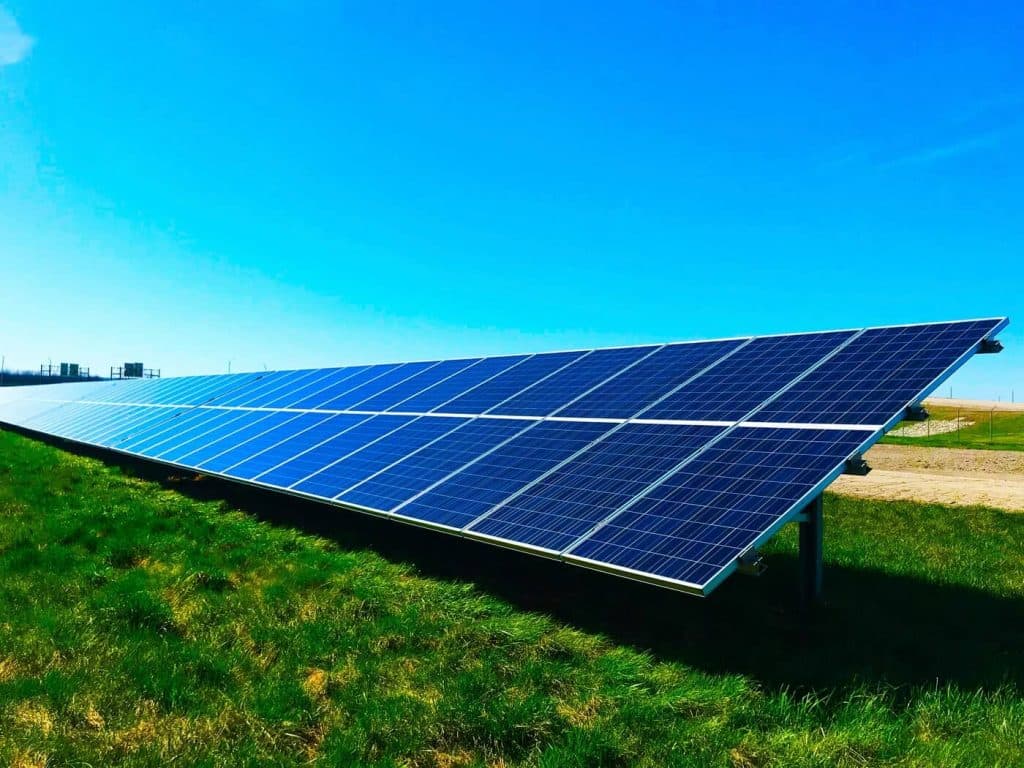
The Czech Environment Ministry (MŽP) has launched four new subsidy programmes through the Modernisation Fund, which will support the development of photovoltaic power plants (PV), both ground-mounted and rooftop, through investment subsidies. The total allocation for the new calls amounts to CZK 11 billion. However, given the sharp fall in wholesale electricity prices in recent months, the question arises whether investment subsidies will be sufficient to ensure the development of PV in Czechia.
Investment support and expected PV development
According to data from the Energy Regulatory Office (ERÚ), installed PV capacity stood at approximately 2.35 GW as of 30 September 2023, and Czechia expects rapid growth in the coming years. Distribution system operators are reporting applications for PV grid connections amounting to several GW, while preliminary data from the Modern Energy Association indicate that around 1 GW has already been built this year (not included in ERÚ data).
To meet its climate targets, Czechia needs large ground-mounted PV plants, but their development has so far stalled in many cases. This is due to lengthy permitting processes, which often also require amendments to municipal zoning plans – this change alone takes a year or longer. However, applications for and issuance of building permits for large projects could accelerate at the beginning of 2024, as they will fall under the newly established Transport and Energy Construction Authority.
Specific investment costs for large PV plants may be around CZK 20 million/MW, and individual projects compete for investment subsidies from the Modernisation Fund. For example, the maximum investment subsidy under RES+ Call No. 2/2024 is 30% according to a formula. Whether a project is economically viable then depends primarily on the electricity sales price or the project's financing costs.
Lack of operating support and an underdeveloped PPA market
And wholesale electricity prices have indeed fallen sharply in recent months, while financing costs remain very high. To ensure project economics, investors often seek long-term electricity sales contracts (known by the English abbreviation PPA) lasting 5 or 10 years or more. On the wholesale market, trading normally takes place up to three years ahead; beyond that, markets are no longer liquid.
However, PPA contracts are not yet common practice in Czechia, and many investors drawn to the energy sector as a result of the energy crisis and high electricity prices are unable to secure them. Unlike other countries, Czechia does not offer operating subsidies for PV, and some projects will therefore not proceed to implementation. Their economic payback would not be assured – or rather, the investment risk would be disproportionately high. This is the case even with an investment subsidy.
One thing is therefore almost certain – the figures presented by distribution companies as grid connection application figures will not be reached. The market is now experiencing something of a reality check.
Without operating support, PV development is rather limited – project payback would not be assured, as indicated above. The law of supply and demand applies here. Greater supply means a lower price. As wholesale prices fall sharply, buyers have less incentive to conclude long-term PPA contracts, and the gap between investors' and buyers' expectations of the sales price widens.
Translation disclaimer
This article is a machine translation of the Czech original and has not yet been fully reviewed. In case of any doubt, please refer to the Czech version.
Sdílejte článek prostřednictvím:
You might also like

10 September 2026, 10:37

9 September 2026, 15:05
9 September 2026, 13:24