5 October 2026, 16:20
Loading...
Will the green hydrogen market take off? Its production is very costly in the Czech Republic
Daniel Grecman
13 April 2025, 08:30
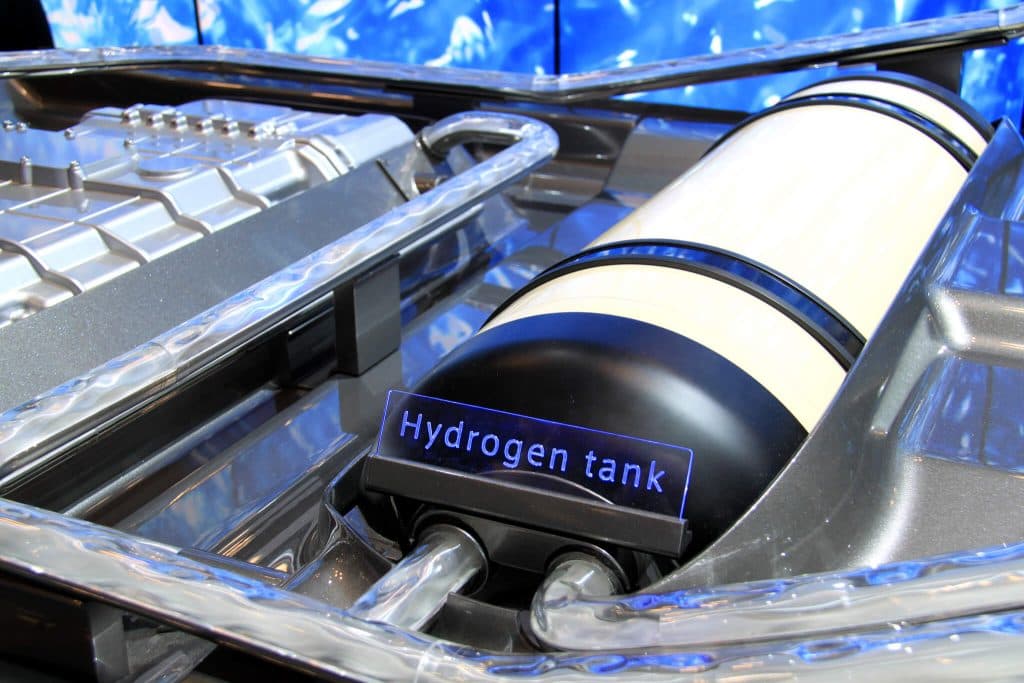
Over the past several years, the hydrogen market has been a major topic in the EU. Green hydrogen production was seen as having a bright future, especially given the rapid development of renewable energy sources (RES). Some forecasts even suggested that hydrogen would largely replace natural gas in the foreseeable future. Unrealistic expectations were also reflected in legislation, which is now said to be holding back development, as reported by the Czech Hydrogen Technology Platform (HYTEP).
Hydrogen is currently produced around the world primarily through steam reforming of natural gas. This hydrogen is referred to as grey hydrogen, and its production releases approximately 12 kg of CO₂ per kg of hydrogen (H₂) produced. In the Czech Republic, hydrogen is produced mainly from oil residues generated during the processing of conventional fuels. The country’s largest producer and consumer is ORLEN Unipetrol.
Green hydrogen is produced through water electrolysis, in which water is split into hydrogen and oxygen using electricity from RES. Emissions-free “clean” hydrogen can also be produced using electricity from nuclear power plants, whose generation is carbon-free.
However, according to the Czech Hydrogen Technology Platform HYTEP, the European Commission made a fundamental error in its assumption regarding electrolyser prices when introducing EU legislation. The Commission expected capital costs to be at EUR 600 per installed kW. In reality, the price is currently around EUR 3,000/kW. This led to projections of a steep increase in electrolyser capacity, while the rules for meeting the definition of “green” hydrogen were set very strictly.
Strict rules limit production options in the Czech Republic
Rules on additionality, under which, if a new electrolyser is installed after 2027, the RES electricity source must not be older than 36 months; temporal correlation, whereby the volume of energy produced and consumed is matched on a monthly basis until 2030 and hourly thereafter; and geographical correlation, whereby the energy source must come from the same bidding zone (the Czech Republic is a single bidding zone), significantly limit green hydrogen production options in the Czech Republic.
In other words, utilisation of installed electrolyser capacity under Czech conditions will be very low, increasing the resulting production cost. Electricity from RES will also be more expensive, as solar irradiation in, for example, Spain is often more than twice as high, putting the region at a disadvantage.
This is also reflected in the updated Czech Hydrogen Strategy of July 2024, which states that hydrogen from Czech RES will not be competitive with other EU regions in the future, once gas pipelines are converted into hydrogen pipelines. Nevertheless, local production is needed, and the Czech Republic has committed to it in view of its energy security. One option for the country may be the production of low-carbon hydrogen from the aforementioned nuclear power plants.
What price can be expected for green hydrogen from RES in the Czech Republic by 2030? According to the hydrogen strategy, with appropriate investment support, it would be EUR 8/kg H₂ (or more than EUR 200/MWh). Compared with natural gas, whose price is currently between EUR 30 and 40/MWh, hydrogen is therefore many times more expensive, even after taking into account the cost of emissions allowances for natural gas. Without further external intervention, such as operating support, market development in the Czech Republic would inevitably be very limited.
Translation disclaimer
This article is a machine translation of the Czech original and has not yet been fully reviewed. In case of any doubt, please refer to the Czech version.
Sdílejte článek prostřednictvím:
You might also like
5 October 2026, 15:34
5 October 2026, 13:26