Dispute over wind farms: Polish president vs government – who will decide the energy future?

The Polish parliament has approved an amendment to the onshore wind power law intended to relax rules for their construction. President Karol Nawrocki vetoed the proposal, but the government nevertheless plans to massively increase installed wind capacity. At the same time, it is substantially developing offshore wind farms in the Baltic Sea.
In July, Poland’s parliament passed a law relaxing the rules for building onshore wind farms. The amendment proposed a fundamental change to the distance between wind turbines and residential buildings.
As early as 2016, the 10H rule was introduced, prohibiting the construction of turbines within a distance from residential buildings of less than ten times their total height. For modern wind turbines reaching around 200 metres in height, this means a setback of at least 2 kilometres. According to Malgosia Bartošik, deputy CEO of WindEurope, this restriction ruled out construction on 99% of Poland’s territory.
In 2023, the legislation was amended. While retaining the 10H rule unchanged, it allowed municipalities to set a different distance between a wind farm and residential buildings by amending their local spatial plan. At the same time, a minimum distance of 700 metres from buildings remained mandatory, although a 500-metre threshold was already under discussion.
The Polish Wind Energy Association, representing around 150 investors, estimated that potential investment in onshore wind power plants would fall by 60–70%, it told Euractiv.
"It is difficult to find a justification for why 700 metres should be a better rule than 500; it will have a huge impact on our project portfolio. In our case, this was 700–800 MW, which will mean a reduction of around 40%," said Alicja Chilinska-Zawadzka, CEO of EDF Renewables’ Polish branch.
A breakthrough proposal
This year’s proposed amendment for the construction of onshore wind farms included not only abolishing the 10H rule, but also reducing the minimum distance to 500 metres. To expand areas available for potential construction, it proposed scrapping the minimum 500-metre distance from Natura 2000 (areas designated to protect the rarest and most endangered species, editor’s note). It likewise removed the protective setback zone between wind farms and first-class roads, which was equivalent to the height of a wind turbine. Instead of a blanket ban, it advocated construction in certain military zones as well, subject to the consent of the relevant military and security authorities.
As a benefit for residents living near wind power plants, it proposed an annual bonus of up to PLN 20,000 for households located 500 to 1,000 metres away, for each installed megawatt of capacity. Under the proposal, this sum, paid directly from investors’ pockets, amounts to CZK 115,000.
The proposal included capping household electricity costs at PLN 500/MWh until the end of 2025, equivalent to CZK 2,875/MWh. Without this change, the price freeze would apply only until the end of September this year. From October, energy suppliers would charge households under standard tariffs. The Gramwzielone portal reported that the Ministry of Climate and Environment estimates the cost of the additional price freeze at PLN 500–850 million, or CZK 2.9–4.9 billion.
Japan’s Mitsubishi withdraws three offshore wind farm projects. They are too costly
President vetoes bill, cabinet plans to bypass him
Last week, President Karol Nawrocki, who has been in office for less than a month, vetoed the bill. Instead, he submitted his own proposal to the lower house of parliament, as he promised during his presidential campaign.
"The wind farm law, as we should really call it, is a form of blackmail by the parliamentary majority and the government – not only against the president of the republic, but also against society. This law concerns wind power plants, not reducing electricity prices," he commented on the parliamentary proposal.
The president said that, regarding the electricity price freeze, he had not changed a comma compared with the parliamentary version. He wants to sign his own bill after the sittings of both chambers of parliament, which will take place in September.
A week later, Prime Minister Donald Tusk said that a regulation was already prepared through which the cabinet would push through the points of the original proposal, as reported by the Polish Press Agency. He noted that the government is not a “fan of wind power plants” and that he himself does not “like a landscape full of wind turbines”. However, he supports this solution because onshore wind power plants currently generate electricity most cheaply. At the same time, they should, in his view, have the potential to supplement Poland’s energy balance.
Climate and Environment Minister Paulina Hennig-Kloska stressed that the government would continue supporting renewable energy sources despite the presidential veto.
"We are developing the government’s strategy for renewable energy development based on already agreed investments in offshore wind power plants. This will enable wind energy capacity to double within five years," she wrote on X.
She also reported a planned amendment to regulations aimed at accelerating investment in renewable energy sources. The plans also include making repowering easier, i.e. replacing old wind turbines with newer, higher-capacity ones.
Investment in the Baltic Sea
Poland’s Energy Policy until 2040, the strategic document for the development of the sector and the country’s energy transition, envisages installed offshore wind capacity of 5.9 GW in 2030, followed by 11 GW in 2040.Currently, according to Polish government data, nineteen offshore wind farms that have obtained location permits are under development. Seven are already at an advanced stage of implementation and are being developed in the area from Ustka through Łeba to Choczewo. They are expected to be built in the Baltic Sea within five years.
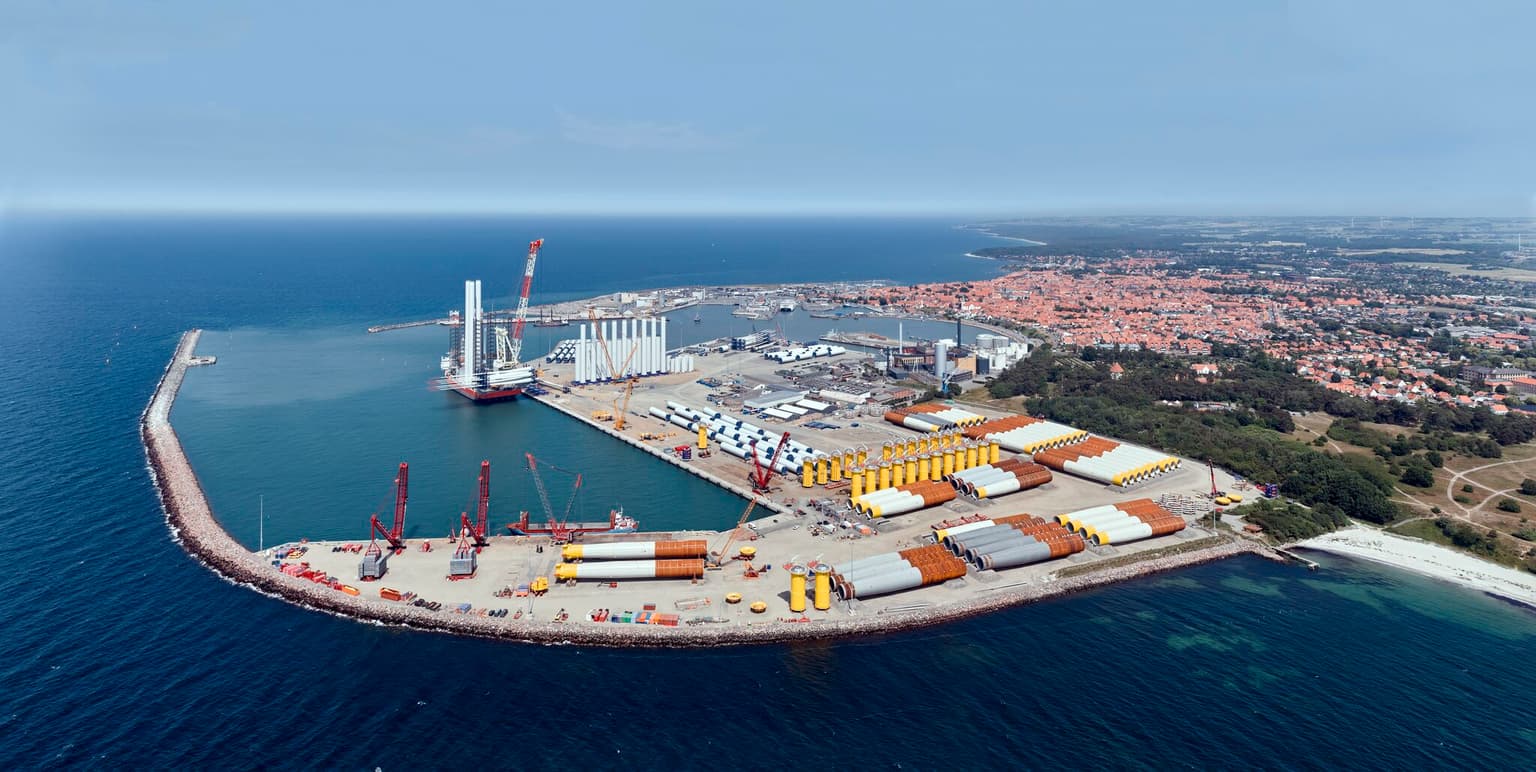
Baltic Power, a joint venture between domestic company ORLEN and Canada’s Northland Power, in July recorded a success with the installation of the first of a total of 76 turbines.
Commissioning is expected in 2026, which would make the project Poland’s first offshore wind farm. Installed capacity is to reach 1.2 GW, with the farm expected to generate a total of 4 TWh of electricity annually. On this basis, the companies say it will meet the demand of approximately 1.5 million households.
New North Sea project to examine interactions between offshore wind farms
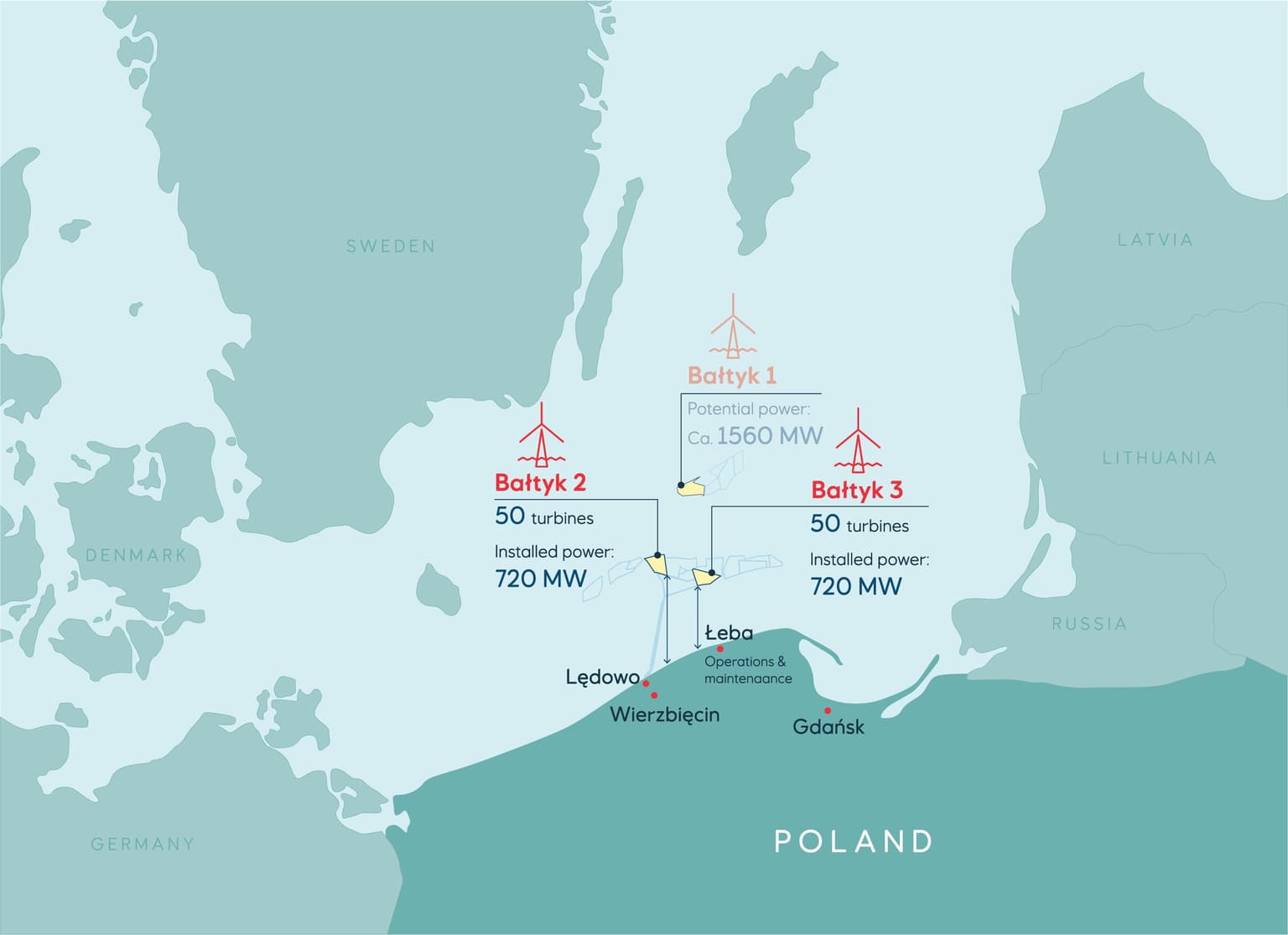
Nearby, MFW Bałtyk 2 and 3 are taking shape, two offshore wind farms being built by Norway’s Equinor and domestic company Polenergia. Their combined installed capacity is to reach 1.4 GW. Both are expected to enter commercial operation from 2028 and should supply electricity to more than 2 million households.
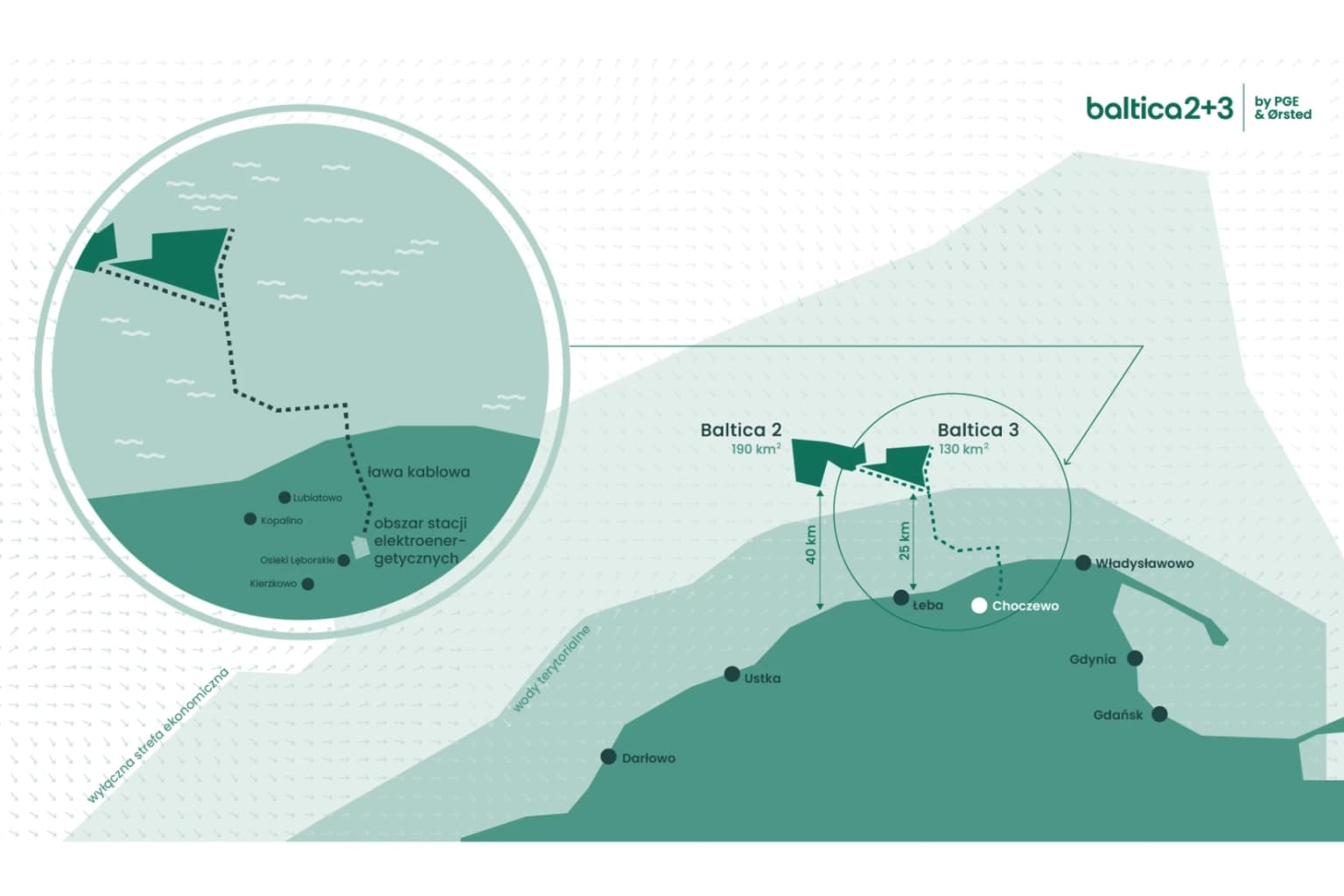
Danish company Ørsted, together with PGE, in which the Polish state holds a majority stake, says it will build the offshore wind farm with the largest installed capacity. Baltica 2 and Baltica 3 are jointly expected to reach 2.5 GW and thereby provide sufficient electricity for 4 million Polish households. The first is to be operational from 2027 and the second three years later.
Wind giants’ shares rise following investment news from Britain and Germany
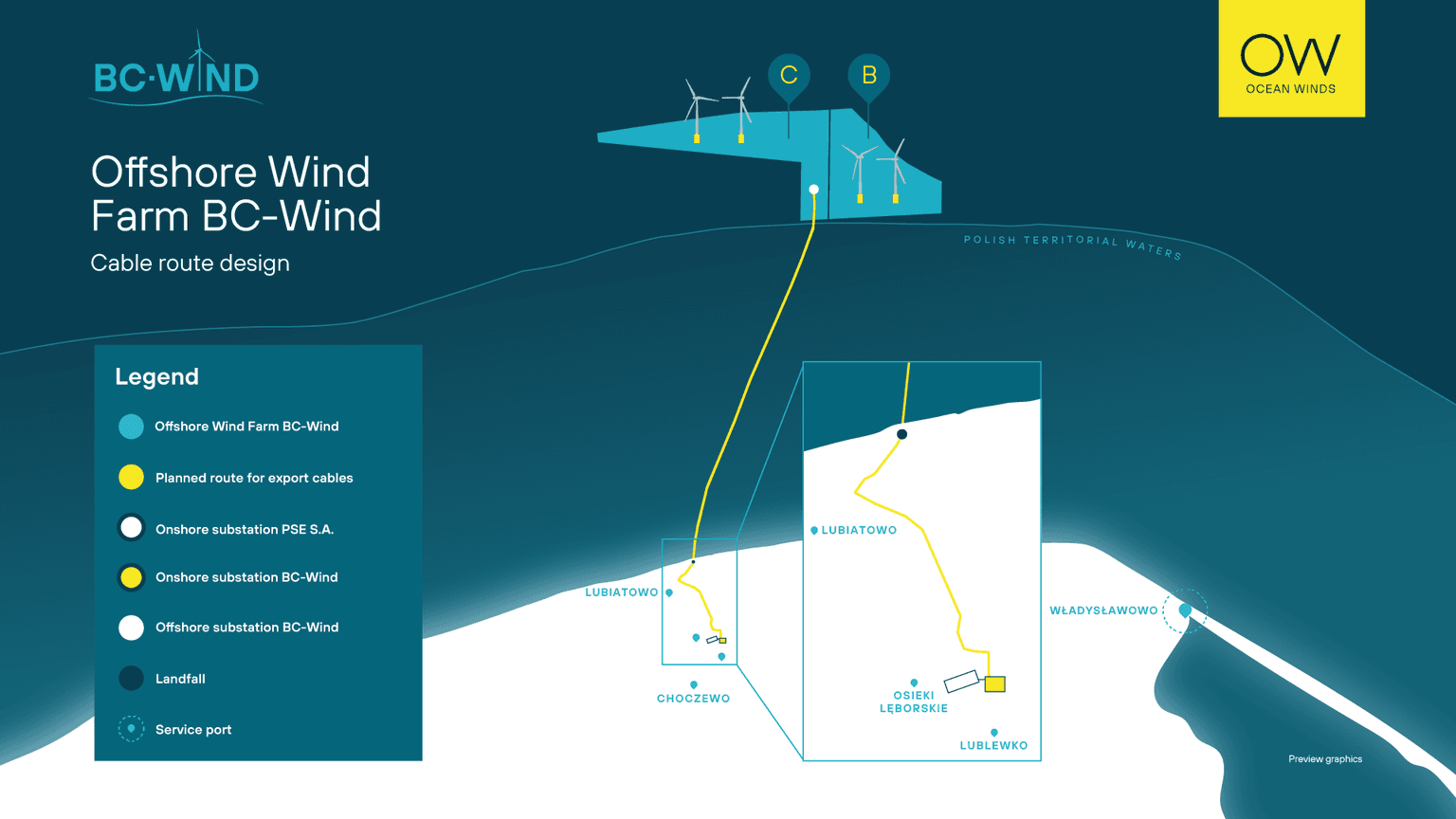
Spanish company EDP Renewables and France’s ENGIE, whose roots trace back to the Universal Company of the Suez Canal, established international company Ocean Winds, which is developing the BC-Wind project off Poland’s coast. With installed capacity of 390 MW, it is expected to supply electricity to 490,000 households from 2028.
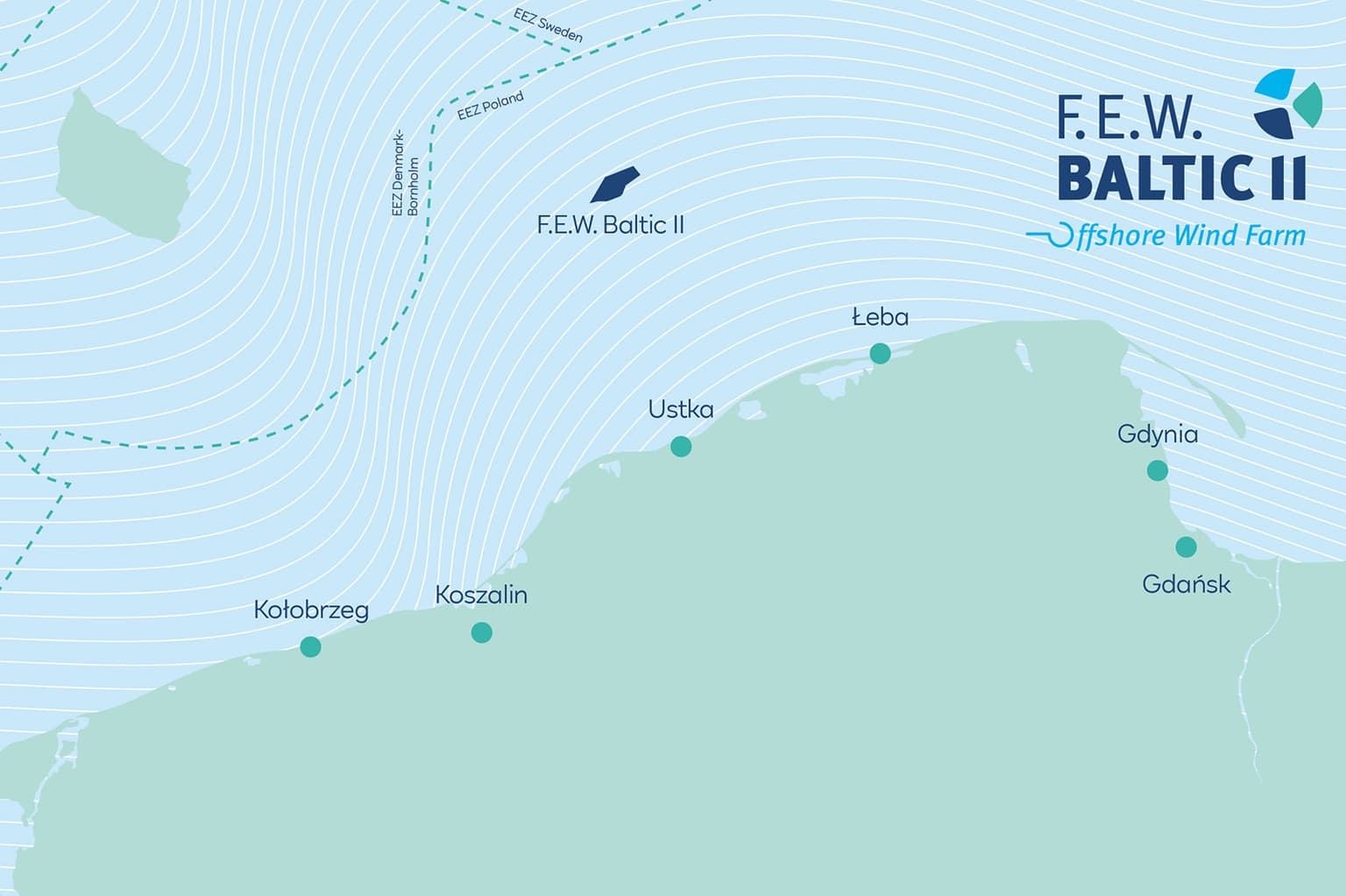
The F.E.W Baltic II wind farm, developed by Germany’s RWE, is to have only slightly lower installed capacity, specifically 350 MW. RWE states that once it comes online at the end of this decade, it will supply 350,000 households in Poland.
Czechia one step ahead
The Czech Republic lacks coastal potential for the construction of offshore wind power plants. It has also not yet fully exploited its potential for onshore wind. However, compared with its northern neighbour, it has had a legislative head start since last month.
In July, a bill to accelerate the deployment of certain renewable energy sources was promulgated in the Czech Collection of Laws. A key element is the designation of so-called acceleration areas, selected locations where the permitting process for energy installations themselves and related infrastructure will be accelerated and simplified. For example, in these areas the responsible authority will not assess the project’s environmental impacts.
"The permitting process for wind power plants in acceleration zones should be shortened from the current ten years or more to as little as one year," noted lawyer Jan Bakule of the Frank Bold expert group to the Czech News Agency.
Acceleration zones will also speed up construction, according to Environment Minister Petr Hladík (KDU-ČSL). According to his statement last year, the Czech Republic’s goal is to increase installed capacity to 1.5 GW by 2030 from the current 330 MW.
However, persistent challenges and the shortcomings mentioned in making use of available opportunities remain crucial to further development.
Translation disclaimer
This article is a machine translation of the Czech original and has not yet been fully reviewed. In case of any doubt, please refer to the Czech version.