
25 September 2026, 09:51
Loading...
Revenue caps for electricity producers should end this month; no longer desirable, says Commission

Martin Voříšek
6 June 2023, 15:01
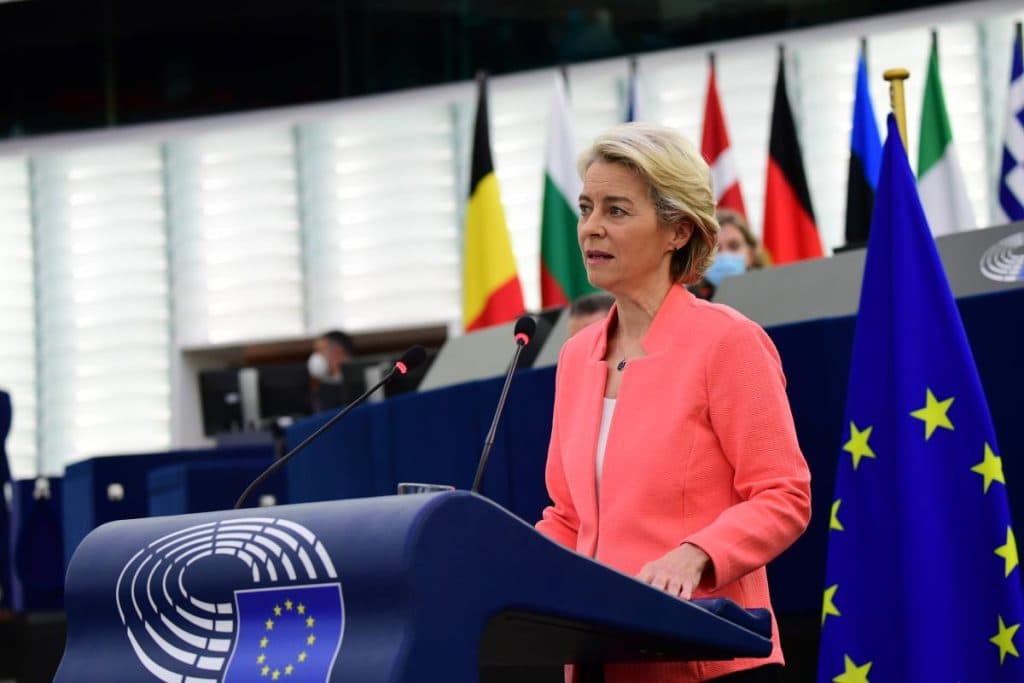
The European Commission has issued recommendations on extending the main emergency regulation, which introduced, among other measures, revenue caps for electricity producers (generally set at 180 EUR/MWh). According to the European Commission, extending the regulation is neither necessary nor proposed. On the contrary, the existence of revenue caps increases investor uncertainty, according to the Commission, and they should therefore end at the close of June.
A whole range of measures was adopted within the European Union in response to the energy crisis, which peaked last year. Most of these measures are only temporary, and any extension is assessed on a case-by-case basis. For example, the measure requiring Member States to reduce natural gas consumption was, following an assessment, extended by one year until the end of March 2024.
Although the energy crisis is gradually subsiding, a number of measures remain in force.
An extension is now being considered for what is probably the most controversial regulation, adopted on 6 March 2022. It led to the introduction of:
- a windfall tax (also known as a solidarity contribution),
- a revenue cap for electricity producers at a recommended level of 180 EUR/MWh,
- an obligation to reduce overall electricity consumption by 10% and by 5% during peak hours, as well as
- price caps for households and small and medium-sized enterprises.
With the exception of the windfall tax, these measures are limited under the emergency regulation only until 30 June 2023.
The European Commission has now stated whether these measures, which are due to remain in force until the end of June, should be extended. However, according to the European Commission, there is no reason for their continued application and they cannot be recommended.
Reduction in electricity consumption, including peak curbs, will be ensured by the new electricity market design
First, the European Commission addressed the reduction of electricity consumption, including cuts in consumption during peak hours. It did not recommend extending it, primarily because the currently prepared proposal for a new electricity market includes a number of similar measures serving the same or a similar purpose (such as so-called peak-shaving products).
We wrote in more detail about the future shape of the electricity market in the following articles:
- How does the EU envision the future electricity market? Price regulation of electricity generation is also on the table (link),
- How do European regulators envision the electricity market? They oppose support for PPAs and revenue caps after 30 June 2023 (link), and
- Does support for new Dukovany comply with the proposed changes to the electricity market? The Commission selected a CfD rejected by the government (link).
In addition, the European Commission is preparing a separate network code on demand-side response. Once completed, it is to contain binding rules on flexibility aggregation, energy storage and demand curtailment, further facilitating its regulation.
Unless an entirely exceptional situation arises, emergency measures in the area of electricity consumption are no longer needed, according to the Commission, and it therefore does not propose extending them.
Revenue caps do more harm than good and should therefore end
The Commission devoted the most attention to revenue caps for electricity producers. Following a detailed analysis, it did not recommend extending them either. They should therefore end by the end of June 2023.
Revenue caps were proposed at EU level at 180 EUR/MWh. However, most Member States (17 in total) adjusted the level of the caps for individual types of generating facilities.
For example, in the Czech Republic, the price cap was set lowest for nuclear power plants, at 70 EUR/MWh. Below the 180 EUR/MWh threshold, revenue caps were also set only for waste-to-energy facilities (ZEVO), excluding biomass, at 100 EUR/MWh, and for coal-fired power plants with capacity above 140 MW, at 170 EUR/MWh.
Conversely, the highest price cap applies to coal-fired power plants with capacity up to 140 MW (230 EUR/MWh). The remaining sources have a cap set at the level recommended by the European regulation (i.e. 180 EUR/MWh).
With electricity prices continuing to decline, revenue caps now, with some simplification, affect only nuclear power plants and waste-to-energy facilities. Prices on the reference spot market are below 170 EUR/MWh in the vast majority of hours.
The main problem created by revenue caps is their non-uniform application across Member States (whether in the level of the cap or the duration of its application). Future uncertainty, particularly for investors, regarding the application of caps then threatens future investment in renewable energy sources. Indeed, the regulation pointed to this problem already when it was adopted:
“Uncoordinated caps on market revenues from electricity produced by generators with lower marginal costs, such as renewable energy, nuclear energy and lignite generators, may lead to significant distortions among generators in the Union, as generators compete across the Union in an interconnected electricity market.”
However, investor uncertainty is not the only reason why the European Commission proposes that revenue caps end at the close of June. According to the Commission, it is also unclear whether the overall costs associated with the measure, particularly recently, do not outweigh the benefits delivered by revenue caps. For example, if a revenue cap is set too low, some producers may be discouraged from generating electricity during certain periods.
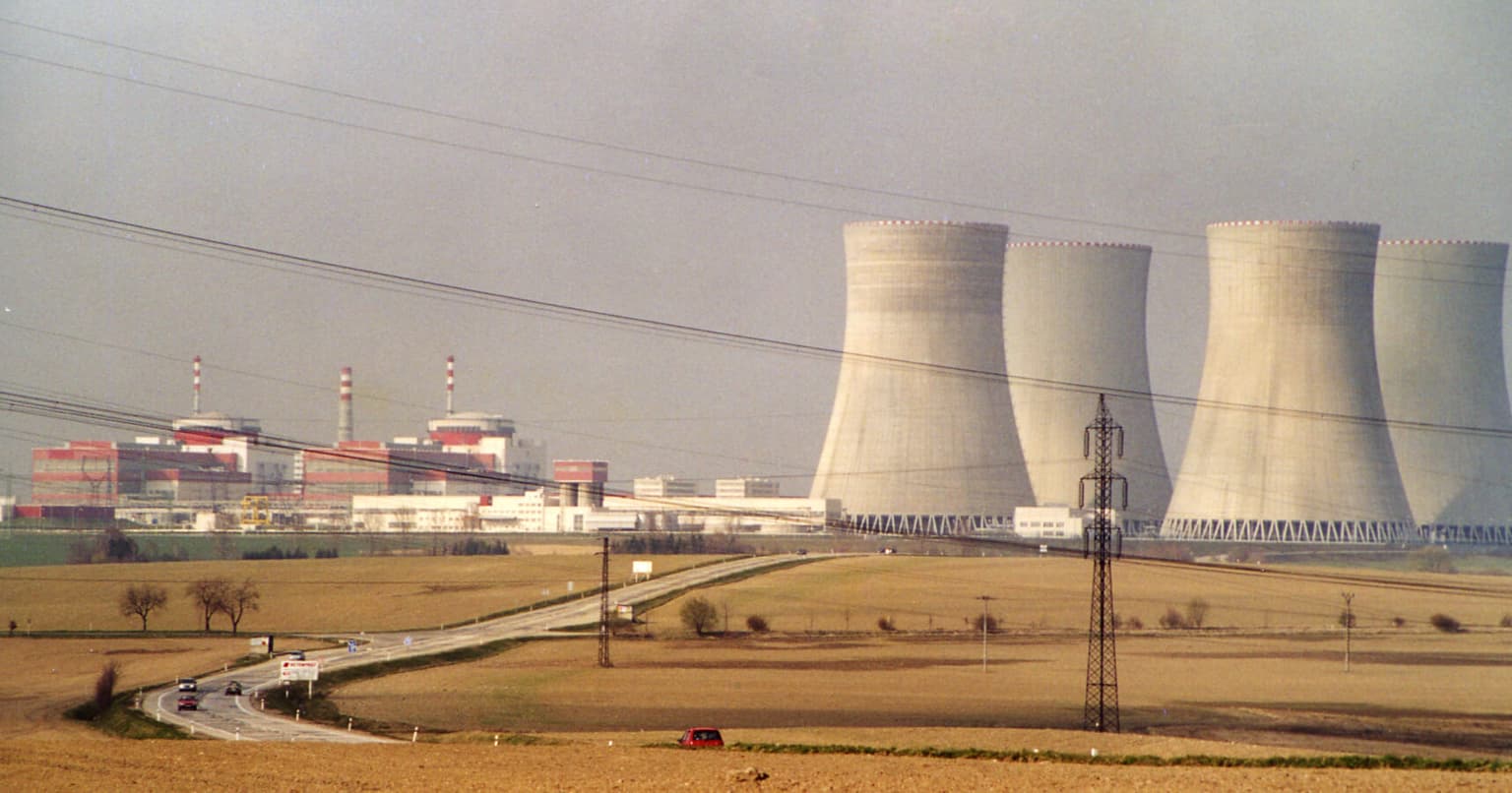
Temelín nuclear power plant, Source: ČEZ
In the Czech Republic, where revenue caps are due to apply until 31 December 2023, no proposal abolishing revenue caps in the second half of the year has yet even been published.
Price regulation for households and small and medium-sized enterprises
The last measure due to expire at the end of this June is the option to set prices for households and small and medium-sized enterprises. This measure was also used by the Czech Republic. It was on the basis of this measure that electricity and gas prices in Czechia were capped for households and small and medium-sized enterprises.
Beyond the regulation, electricity and gas prices were also capped for other customers (especially large businesses). However, their caps were achieved under the so-called Temporary Crisis Framework for State aid.
As in the case of reducing electricity consumption, this measure is also to be incorporated into the regulation governing the shape of the electricity market. For the same reason, an extension of the measure is not necessary.
The Commission's full report is available here.
Translation disclaimer
This article is a machine translation of the Czech original and has not yet been fully reviewed. In case of any doubt, please refer to the Czech version.
Sdílejte článek prostřednictvím:
You might also like

24 September 2026, 11:23

24 September 2026, 10:30
24 September 2026, 06:56