
23 October 2026, 14:38
Loading...
Geopolitical factors may drive the development of AI data centers in Europe
Jakub Musil
18 December 2024, 10:54
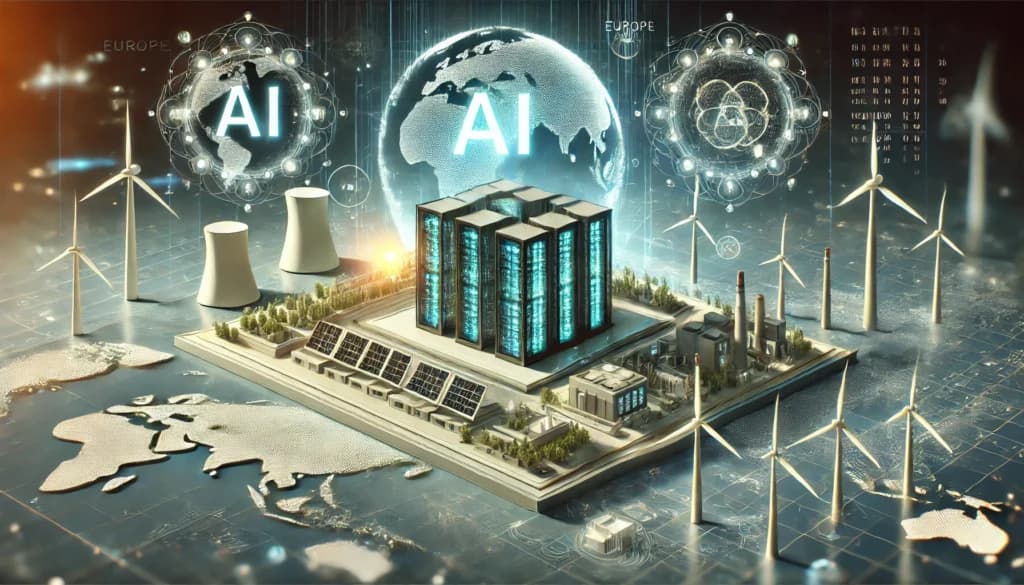
The growing use of artificial intelligence is significantly increasing demand for data centers and their energy needs. Capacity is expected to triple by 2030. Cheap and reliable energy sources, including nuclear power, will be key, which could also be an opportunity for Czechia.
New data centers will be needed to support AI development
Available capacity at data centers in Europe and North and South America has fallen significantly compared with last year, to no more than around 10% in Europe. The boom in the use of artificial intelligence (AI) is therefore likely to require the construction of a significant number of new data centers.
A study by consulting firm McKinsey estimates that by 2030, global data center demand driven by AI could rise to as much as 289 GW. That is around three times current data center demand, which stood at approximately 55 GW in 2023.

Forecast for the growth in electricity demand from data centers through 2030. Source: McKinsey
New data centers will require substantial amounts of energy
As data center capacity, measured in gigawatts, suggests, the growth of AI and new data centers will lead to higher energy consumption. Jared Cohen, president of global affairs at investment bank Goldman Sachs, says that data centers providing services for training AI models may require a steady supply of large amounts of energy over longer periods than data centers handling other computing tasks.
Cohen says the United States may not be able to meet its demand for AI computing capacity within its borders. This demand could therefore spill over into other countries. However, access to cheap, reliable, or even emissions-free energy for operating new data centers may not be the only factor determining where they are located.
Geopolitical factors may determine where data centers are located
Cohen says geopolitical factors may influence decisions about where computing capacity for AI services in the United States will be sourced. In explaining this, Cohen points to requirements for the security of processed data. He also mentions the desire to avoid supporting the development of computing capacity in rival countries such as China or Russia, or in politically unstable countries that might begin supporting geopolitical rivals.
Cohen cited the Middle East and Europe as possible regions to which demand for computing capacity from the United States could spill over. The Middle East was mentioned because of the availability of cheap energy. Despite some countries in the region being aligned with the United States, Cohen considers it a higher geopolitical risk than Europe.
Nuclear power – fuel for AI
Cohen also highlights the important role of nuclear power in supplying new AI data centers. Interest in nuclear power from technology companies such as Amazon and Google, Meta or Microsoft to power data centers that train and run AI models is another indication of this.
European countries that enable the fastest and cheapest construction of new nuclear power sources may have an advantage in attracting investment in data centers and potentially in the nuclear facilities associated with them. This could also be an opportunity for Czechia, which is preparing to build new units at nuclear power plants and, in the longer term, small modular reactors.
Translation disclaimer
This article is a machine translation of the Czech original and has not yet been fully reviewed. In case of any doubt, please refer to the Czech version.
Sdílejte článek prostřednictvím:
You might also like


23 October 2026, 11:01


23 October 2026, 06:34