20 October 2026, 15:34
Loading...
Before ordering PV for your home or business (Part 3) – the marketing and real economics of the investment
Michal Klečka
3 May 2021, 07:30
In the third instalment of our series on solar power plants and home batteries, we will focus on comparing two approaches to presenting the economics of such an investment, the technological side of the installation, and finally outline the motivations and reasons why making such an investment may make sense. However, we would like to point out in advance that a rapid return on invested funds is certainly not among these reasons.
What is most often disadvantageous about offers for solar power plants combined with battery storage for family homes and small businesses, we analysed in detail in the first instalment of the series. In brief, the problematic aspects can be summarised as follows:
- Inappropriately selected system components
- Inappropriate system design
- Complex or impossible repairs in the event of a failure of key system components
Let us now take a detailed look at one specific offer from spring 2020 by an unnamed electricity retailer. We found the following components in the offer:
- 14 solar panels with a nominal output of 14 x 400Wp for CZK 37,000
- GoodWE 5K-ET grid-tied inverter for CZK 72,000
- Pylontech 9.6 kWh high-voltage (> 200 V) battery for CZK 158,000
- Installation, miscellaneous materials, project design and subsidy administration for CZK 127,000
A total of CZK 394,000
The offer includes the following problematic arrangements described in more detail in the first instalment of the series:
- Pylontech batteries, which cannot be serviced in any way (a so-called black box) and operate at a total voltage of 200 V (safety requirements), may only be charged and discharged at 1.8 kW (less than an electric kettle).
- A GoodWE inverter which, in order to save space, weight and manufacturing costs, does not contain a transformer and instead produces alternating voltage using a high-frequency source at many hundreds of volts.
The offer is turnkey, meaning that the supplier undertakes to handle all administration, such as a technical inspection, preparation of contracts, the application for connection to the distribution system, an assessment by an energy specialist, arranging the subsidy (at that time up to CZK 155,000 in Czechia), inspection and commissioning.
The offer also included an economic calculation, which is the most important part for most customers:
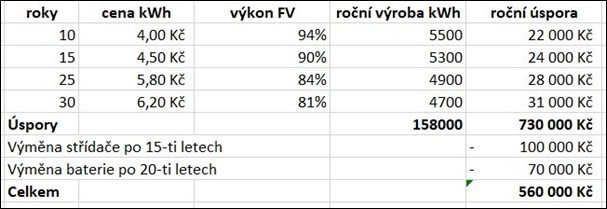
Economic calculation of an investment in PV and a battery (spring 2020)
If we look at the total annual savings in this model offer, it is worth recalling the information from previous instalments that speaking of stable, long-term electricity price growth (e.g. 2%) is, to say the least, debatable. This is true both with regard to the actual development of wholesale electricity prices on the exchange and to the time value of money, or rather growth in the purchasing power of the population. Presented in this way, the offer appears to be a relatively advantageous investment. The savings presented in the offer amount to almost three-quarters of a million crowns over 30 years. By contrast, the investor's total expenditure over 30 years, including the initial investment and investment subsidy, is stated on paper at “only” CZK 409,000. Over thirty years, such an investment would therefore, on paper, almost pay for itself twice. For comparison, we will try to view the entire issue through a more sober and realistic lens using a GWL model installation.
GWL model installation
We will compare the above offer with a model installation in which we used a combination of several systems. The roof of a family home has 8 PV panels with a total peak output of 1.8 kWp, connected via one MPPT controller to a LiFePO4 battery. Thanks to their identical position and orientation, they are always equally exposed to sunlight and there is no risk of partial shading.
The second group of 14 panels with a total peak output of 3.5 kWp is unevenly exposed to sunlight during the day, so we used 7 parallel-connected microinverters connected to the protected 230V output of a Victron MultiPlus 5 kVA inverter. Even in the event of a distribution system outage, this inverter can recharge the battery from the microinverters or power household appliances from them (so-called AC coupling).
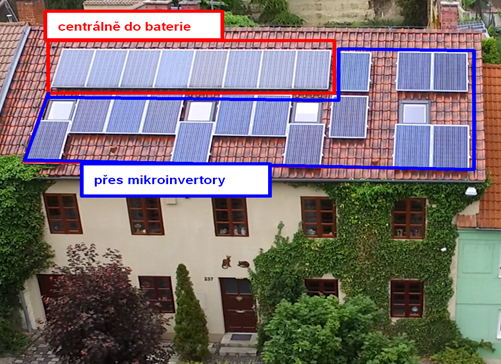
Configuration of panels in the GWL model installation.
If there were no demand for electricity in the house (appliances were switched off) and the battery was already charged, the microinverters would automatically switch off and the energy would remain as heat on the roof, just as if there were no PV panels installed.
Generation, economics and ecology of the model installation
Our example installation generates around 6 MWh (megawatt-hours) of electricity annually, of which it realistically consumes around 5 MWh itself. This is therefore the energy that the house did not have to buy from the grid. Because it is located in Czechia, whose electricity generation mix comprises around half electricity generated from coal, the owners have saved the coal required to produce 2.5 MWh of electricity. An advanced coal-fired power plant consumes around 1 tonne of coal per MWh of electricity generated. Such an installation therefore saves around 2.5 tonnes of burned coal annually. Over 10 years, this amounts to 25 tonnes, which is almost a full freight wagon.
Economic assessment of the model example
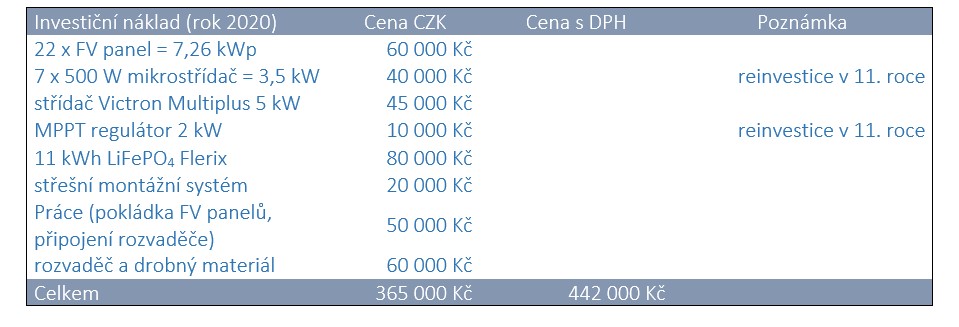
Calculation for the GWL model installation (incorrect total corrected on 21 January 2022).
In our well-designed power plant, we consume almost 100% of the electricity generated. For the purposes of an average, and thus not entirely ideal, power plant, let us assume that we consume 78% of the electricity generated, thereby replacing our normal consumption from the grid. We sell the remainder of the electricity generated (22%) to the grid for CZK 1/kWh. Conversely, we buy electricity from the grid for an average of around CZK 3.50/kWh (for example, under the D57d tariff), but this price includes fixed circuit-breaker costs, which remain regardless. We therefore only need to financially replace the variable price of the electricity saved, which is around CZK 2.50/kWh. Under these assumptions, the energy and economic balance for 1 year will look as follows:
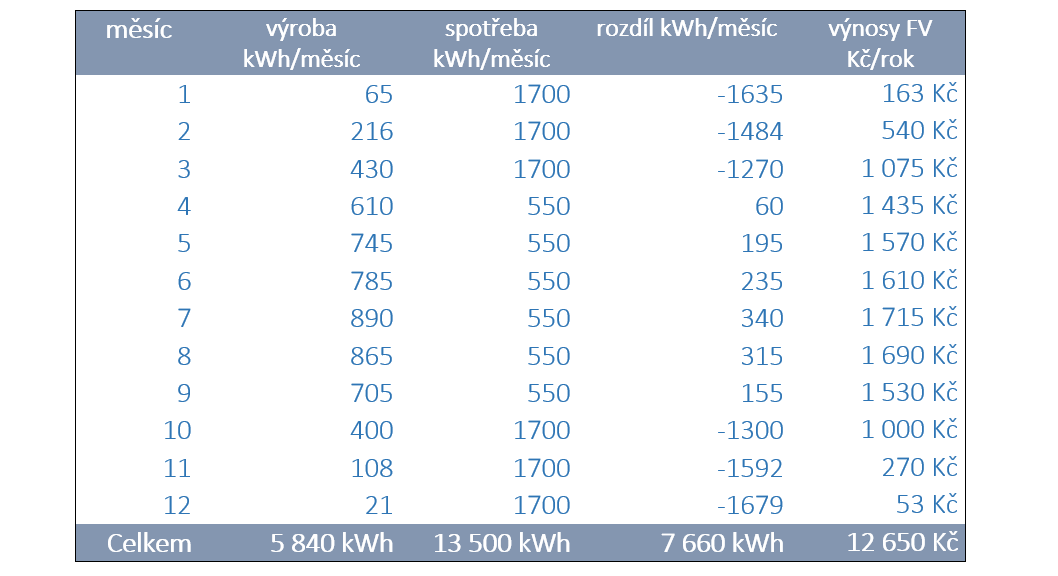
Energy and economic balance of the GWL model installation for 1 year .
The current market situation therefore means annual “returns” from installing the power plant and battery of CZK 12,650 (this is the sum of savings from reduced electricity consumption from the system and sales of surplus electricity). If we divide this annual “return” by PV generation, we get CZK 2.17/kWh.
Now let us calculate the true minimum electricity price we would actually need to receive for the electricity to pay for itself in at least 20 years.
For this second calculation, we will include investment expenditure and system maintenance costs, which, based on long-term experience and statistics, we set at a flat rate of 0.5% of the investment per year (i.e. around CZK 1,600). We will also include the effect of PV panel ageing (minus 1% of generation annually) and, as a precaution, the likely replacement of microinverters and the controller after the 10th year of operation at a cost of CZK 50,000. This will most likely not apply to Victron inverters, because they are low-frequency transformer types with a service life of many decades that can be repaired cheaply and easily in the event of a fault by replacing the specific defective component. Apart from the likely rise in electricity prices (thereby deliberately worsening the payback), we also disregard the declining value of money (inflation). The calculation also does not consider any investment subsidy.
What would a similar power plant look like in spring 2022?
Much has changed over the past two years. Above all, component availability has worsened and their prices have increased. We also encounter higher requirements from firefighters, inspection technicians and, above all, customers, who demand high aesthetic value from the installation in addition to excellent functionality. We are therefore updating this table to the 2022 standard.
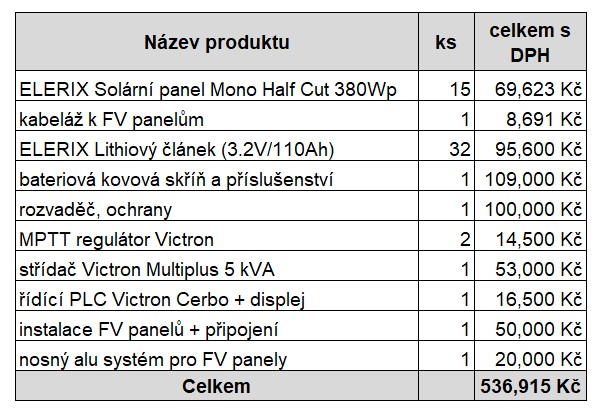
Updated prices for 2022.
How does such an investment pay off?
Under these assumptions, the minimum return required from every kilowatt-hour we generate comes to CZK 3.63. In other words, if the investment were to pay for itself in 20 years, we would need a return of CZK 3.63/kWh from every kWh generated, whereas currently this figure for this model installation is only CZK 2.17/kWh.
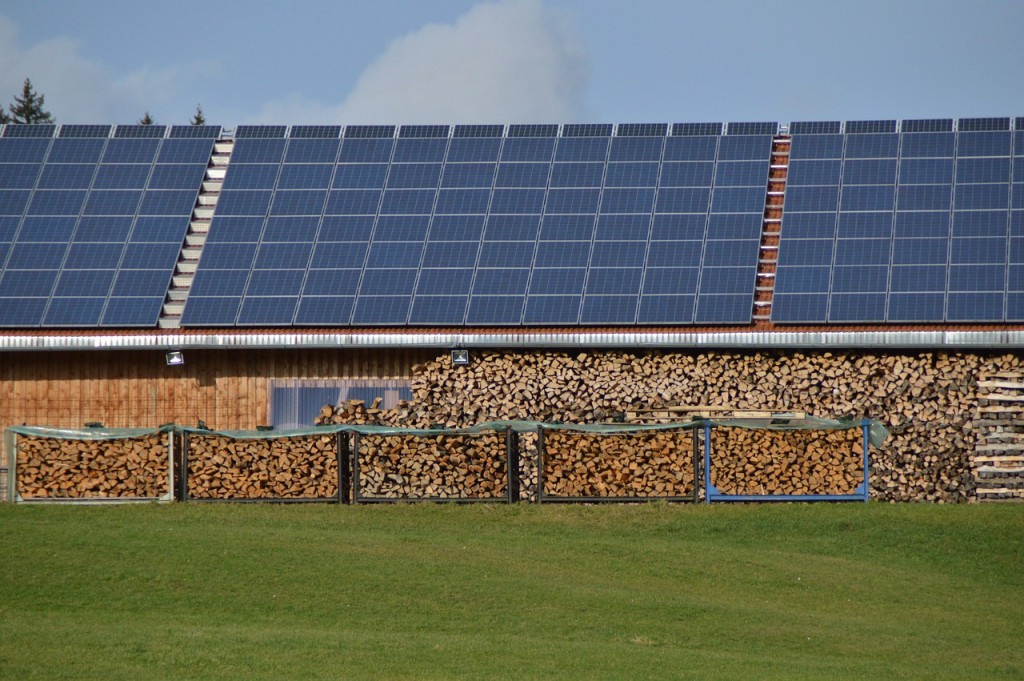
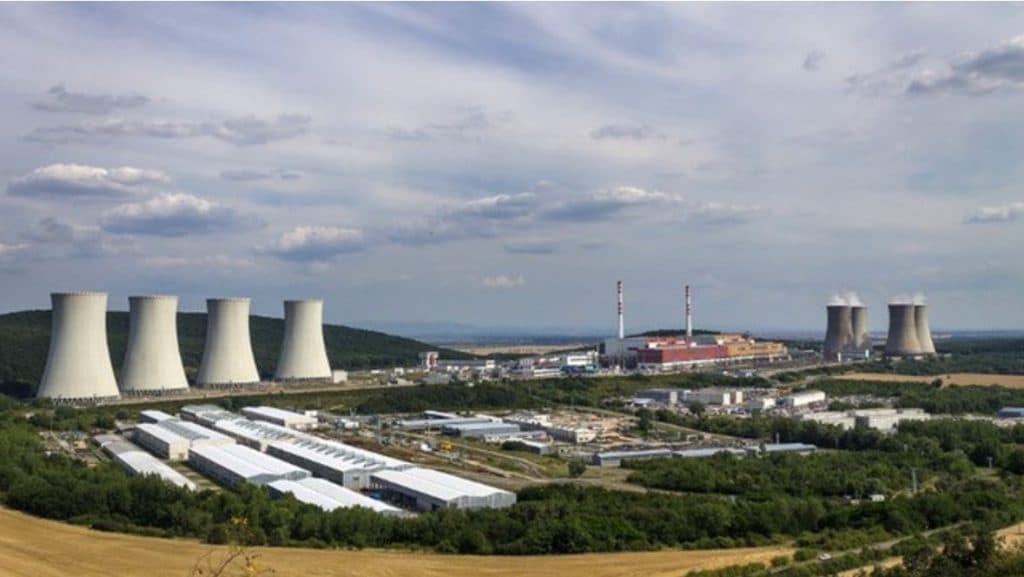
Illustrative photo
If we also include the cost of our money at least 1% above inflation and assume inflation of 2%, the price per kWh of electricity we generate would have to be even higher, specifically CZK 3.88/kWh (i.e. the minimum return required).
This calculation shows that investment in photovoltaics with a battery, without a subsidy, is not yet economically worthwhile in Czechia and other countries with low electricity prices. We always invest more money in the entire project than is returned to us even after 20 years. After 10 years, we will be almost CZK 150,000 in the red; after 20 years, we will barely break even, and will again face reinvestment in components.
What would need to change for it to work out? Above all, the market price of electricity. In our specific case, the investment would break even after twenty years if, over the power plant's lifetime, the variable electricity component cost at least CZK 3.88/kWh or more. This is why it is advantageous for large installation companies to assume electricity prices in their offers will increase by 2% or more for 30 years. After only 10 years, this rate brings them to CZK 4/kWh, which is already an electricity price at which installing a rooftop power plant and battery begins to make economic sense.
Technology corner: model installation
Storage specifications
The Elerix LiFePO4 battery contains four 12V packs, each with 8 series-parallel connected cells with a voltage of 3.2V and a capacity of 110Ah. The resulting capacity is therefore approximately 11 kWh, with a nominal voltage of 51V for the entire battery. However, only 10 kWh of capacity will be available to the building, in order to extend the service life of the entire battery to at least 20 years.
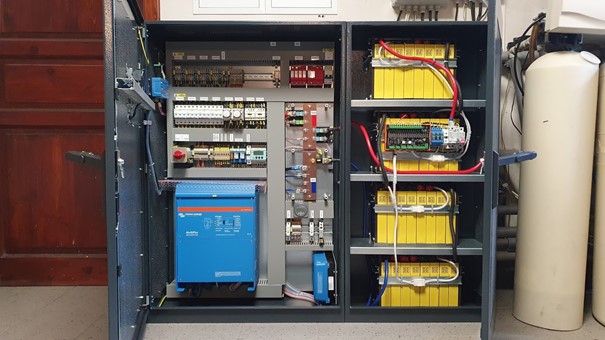
Photograph of the Elerix cell installation in the GWL model project.
The cells are housed in a protective enclosure, the dimensions of which GWL designs individually for each customer according to their available space and capacity requirements. This is a major advantage of this scalable solution, which enables any combination of space, power and capacity. Although it is custom-made, the customer usually waits no longer than one month, and the entire customised solution is not a significant investment cost in the context of the overall project. It can be wall-mounted, indoor, freestanding, outdoor, insulated, etc. Every cell and electronic component can be easily removed and, if necessary, replaced.
Despite the low rate of manufacturing defects in prismatic cells (< 1‰), we included one additional cell in the budget as a spare and service unit.
Battery protection against excessive discharge or overcharging is provided by the Elerix CPM protective BMS module. This too can be easily removed and replaced with any other BMS.
The precise battery charging and discharging status is monitored by a separate BMV-700 module from Victron Energy. This allows us to see at any time whether the battery is charging or discharging, how quickly, how much capacity remains, and enables the system to adapt accordingly. For example, it can switch on water heating in a standard boiler or turn on any other appliance, in the future perhaps another battery or an electric vehicle charging station.
Overall system logic settings
Two strings of 4 PV panels each, with a total peak output of 1.8 kWp, are connected to the battery via a Victron MPPT controller. The open-circuit voltage of each string is around 130V and the maximum current in the string is less than 10A.
Another group of 14 panels equipped with their own microinverters is connected to the system via so-called “AC coupling”, i.e. already at the standard alternating current of 230V / 50 Hz.
Energy from both groups of solar panels is, of course, directed primarily to on-site consumption in the house. The Victron inverter and microinverters handle this themselves. So how does it ultimately work?
- If there is no consumption in the house, the Victron inverter starts storing surplus energy from the 14 panels with microinverters in the battery as quickly as possible (at the output of the power plant's seven 500W microinverters, i.e. up to 3.5 kW).
- At the same time, the battery is charged from the second group of eight panels by the MPPT controller, without the inverter's involvement. A total of up to 5.3 kW can therefore be supplied to the battery.
- If the battery is charged to at least 95%, the Victron system switches on 2 kW water heating in the boiler, thus storing energy as hot water.
- If the water in the boiler is already heated or the PV panels' output is so high that neither the boiler nor the battery can consume it, the system additionally switches on pool filtration, pool heating and, where applicable, cooling of the pantry and cellar.
In our example installation, we connected the solar panels, inverter, battery, domestic hot water heater and most appliances in the house only to phase No. 2. Only three-phase appliances, namely the sauna heater and heat pump, are connected to phases No. 1 and 3.
Consumption by these three-phase appliances is very low during the months when photovoltaics generates significant amounts of electricity, and in financial terms totals a few hundred crowns per year. It can therefore be disregarded, without complicating and making the installation more expensive with three-phase inverters for such a small amount.
Conclusion
If we want an investment in PV and a battery system to look attractive, we let the price of electricity consumed from the grid rise to astronomical levels in the coming years. An alternative way of thinking about an investment in PV is to consider how long the investor would like it to take for the investment in PV and the battery to pay for itself. This can be used to arrive at an indicative value for the minimum return from 1 kWh of electricity generated by PV (whether consumed on site or sold) over the required payback period. This figure can be compared with current prices for the variable component of electricity supplied by electricity retailers and current purchase prices for surplus electricity. This provides a better idea of the actual payback of such an investment. At current electricity prices (both for electricity consumed from the grid and for surplus sales), an investment in a PV and battery system without an investment subsidy will not pay for itself. When the subsidy is included, payback periods range from 10 – 20 years depending on its amount.
It is therefore clear that an investor should have a motivation other than a rapid return on investment when acquiring rooftop PV and a battery. There may still be many reasons to undertake such an investment despite the economics. These include greater self-sufficiency and reduced dependence on conventional energy, protection against short-term and longer outages, or reduced consumption of electricity generated from fossil fuels. If such a power plant gives its owner a good feeling for any reason, then it may make sense for them. Even knowing that a return on investment without a subsidy is virtually impossible, and that even with a subsidy it still takes at least 10 years.
Translation disclaimer
This article is a machine translation of the Czech original and has not yet been fully reviewed. In case of any doubt, please refer to the Czech version.
Sdílejte článek prostřednictvím:
You might also like
20 October 2026, 12:55
20 October 2026, 10:49
20 October 2026, 06:13