This week, we once again bring you a carefully selected list of the ten most significant articles we published on oEnergetice.cz. If you missed any of them, here is a selection of the articles that attracted the most interest from our readers. Good luck in the new week!
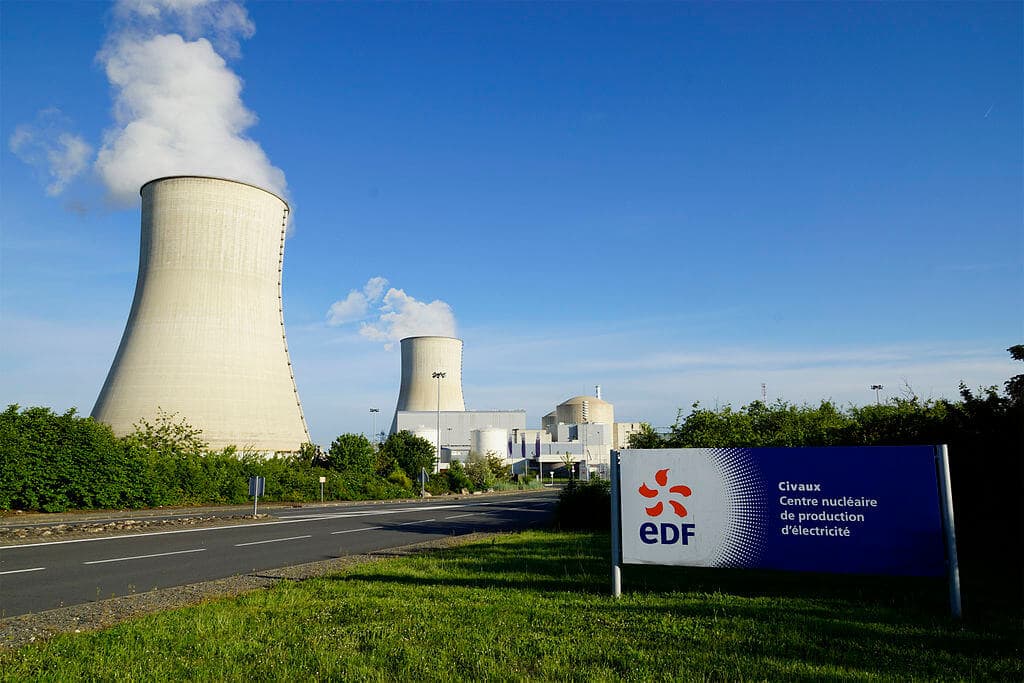
French energy group EDF is once again facing stress corrosion cracks in the piping systems of its nuclear power plants, including components that have already been repaired in the past. Reactor 2 at Civaux underwent a detailed inspection during a scheduled outage, which revealed signs of a possible recurrence of the defect. The problems previously led to a significant drop in nuclear power generation in France, with a substantial impact on wholesale electricity prices in Europe.
EDF, operator of France’s nuclear fleet, is once again dealing with problems caused by stress corrosion cracking (SCC) in piping systems used to cool nuclear reactors.
The cost of building gas-fired power plants will rise substantially, and the decision to build one is currently more expensive than at any point in the past ten years, according to a new analysis by Lazard examining the cost of electricity generation from different sources. For gas-fired plants, this marks a significant change in trend: plants completed now are relatively affordable in terms of capital costs, but building new ones will become more expensive.
Investment bank Lazard has published an analysis for several years running comparing the cost of electricity generation from major sources in the US market. The cost overview is also valuable for Europe. The bank compares sources primarily using their levelized cost of energy (LCOE), but also provides other useful information about the capital requirements of individual sources, including the prices that can be expected in the coming years.
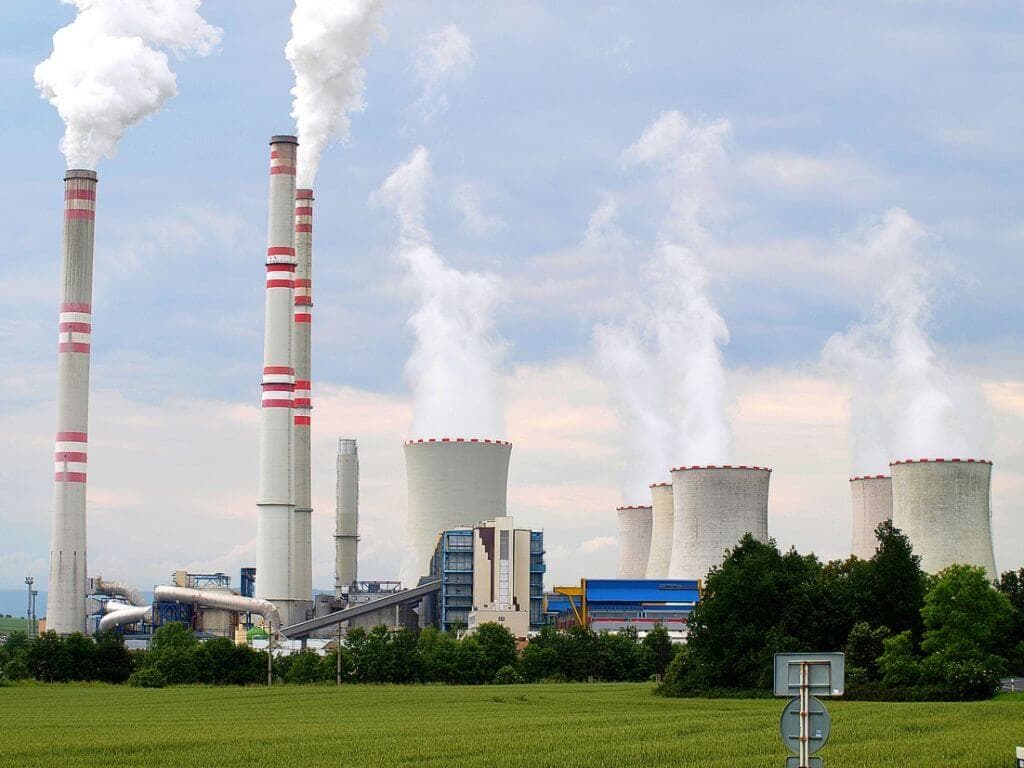
The Počerady lignite-fired power plant in the Louny area has been granted an emissions exemption. The Ústí nad Labem Regional Authority has set the maximum amount of mercury the plant can still emit. It must cease operations once it reaches the emissions cap, non-governmental organizations said in a statement sent to the Czech News Agency (ČTK). The regional authority’s decision is not yet final. Počerady is owned by Sev.en Česká energie, and the company wants to operate the plant for as long as possible, group spokeswoman Eva Maříková told ČTK.
A court overturned the original exemption, granted in 2021, last year. The newly issued extension is valid until August 2029. At the proposal of expert group Frank Bold, environmental organizations Hnutí DUHA and Greenpeace, and local associations from Most and Litvínov, the regional authority set an emissions cap and a binding condition requiring the plant to shut down once that cap is reached, the organizations said. They estimate that the plant will operate until 2028 or 2029, depending on its output.
If a price ceiling were set for emissions allowances (EU ETS) in the European Union, the Czech Republic would lose up to 150 billion korunas that would otherwise go towards investment in insulation, renewable energy and other measures. Experts said this today at a seminar entitled “What would happen if the price of an emissions allowance were capped?”, organized by Hnutí DUHA. They said the move would undermine not only the financing of climate policies, but also incentives to invest in wind and solar power plants, reducing their returns.
Revenue from the sale of emissions allowances is one of the main sources of funding for programs such as New Green Savings, subsidies for municipal photovoltaic systems and the refurbishment of heating plants. “Capping the price at 40 euros per tonne of carbon dioxide from 2027 would mean a loss of 80 billion korunas for the Modernisation Fund and 69 billion from national auctions,” said Jiří Koželouh of Hnutí DUHA. At the current price of around 80 euros, however, the Czech Republic could receive up to 386 billion korunas for investment in green energy and energy-saving measures.
A Swiss start-up has come up with a way to install a solar power plant between railway tracks. Trains can travel over it at speeds of up to 150 kilometres per hour. The first hundred metres are to be tested in operation in Switzerland for three years, but other countries are already interested in the technology.
Five years ago, Joseph Scuderi was waiting for a train in Renens, west of Lausanne, when he had an idea: why not make use of the unused space between railway tracks? At the end of April, Scuderi and his start-up Sun-Ways officially commissioned the first hundred metres of solar panels installed on railway tracks in Buttes, a small village in the canton of Neuchâtel in the west of the country, swissinfo.ch reported.
On Friday, 13 June, the European Commission published a report examining the current state and future of nuclear energy in the EU. According to the document, planned expansion of nuclear generating capacity in member states will require investment of 241 billion euros. The Commission said new financial instruments will be needed to reduce the risks these projects pose to the private sector, Reuters reported.
The Illustrative Nuclear Programme (PINC), which the European Commission publishes every few years under the Euratom Treaty, summarizes the current state and outlook for nuclear energy in the EU. The document serves as a strategic framework, mapping investment needs, planned projects and challenges related to safety, waste management and research through to 2050. According to the current draft PINC, nuclear energy will continue to play an important role in the EU’s energy mix, particularly in member states that choose to use it. The Commission also highlights the ageing nuclear fleet and the need for massive investment of up to 770 billion euros to cover reactor upgrades, decommissioning, long-term waste storage and the construction of new facilities. Particular attention is given to supporting research and development into new technologies such as small modular reactors (SMRs), and to the need to maintain European expertise amid competition from rapidly growing markets outside the EU.
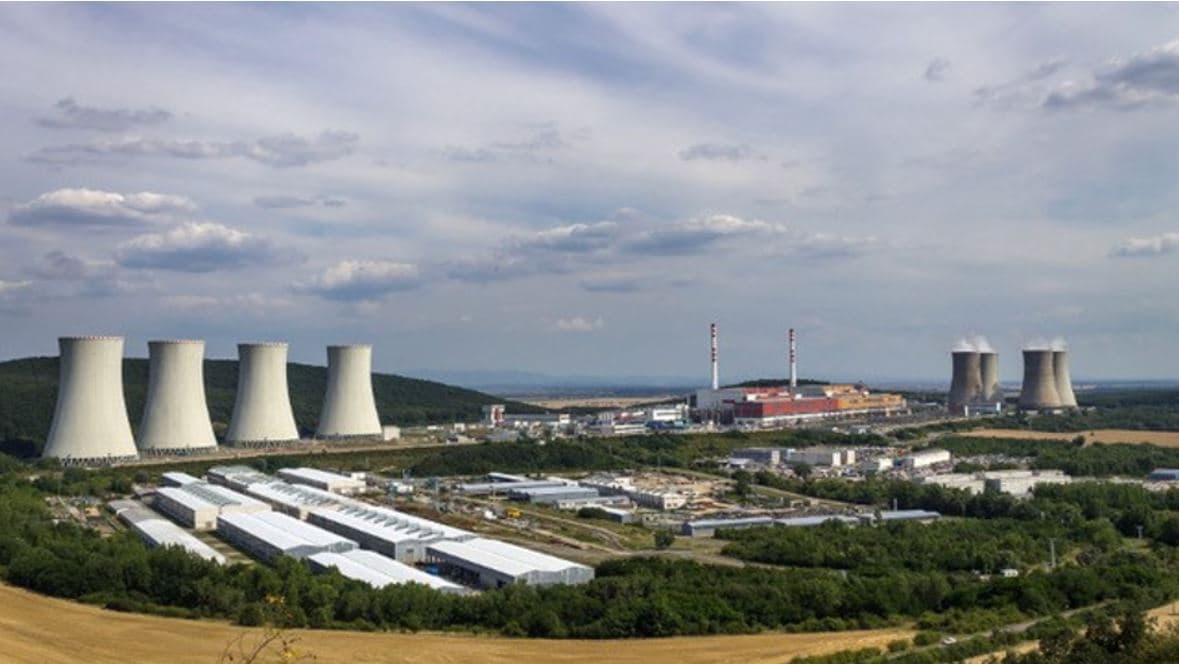
Bratislava, 17 June (ČTK) – Slovakia is preparing an intergovernmental agreement with the United States under which US company Westinghouse would build a 1250-megawatt nuclear power plant in Slovakia. Slovak Prime Minister Robert Fico told reporters today.
As recently as last year, the government in Bratislava planned to launch a tender for a technology supplier for the proposed state-owned power plant.
Energy company Red Eléctrica de España (REE), whose largest shareholder is the Spanish state, today rejected criticism from the government over the nationwide power outage in late April. According to a report published on Tuesday by Spain’s Ministry for the Ecological Transition, REE had no plan to adequately manage overvoltage. The energy company rejected this today, saying the power plant operators—Iberdrola, Endesa and Naturgy—were to blame, newspaper El Mundo reported.
REE, which manages Spain’s high-voltage grid, presented its own report today, challenging some of the conclusions in the government report. However, both reports agree that the outage was caused by overvoltage. REE rejects responsibility, though, and says the outage would not have occurred if conventional power plants (gas, coal and nuclear) had been operating properly. It also said that the system gave no warning of an impending collapse until half an hour before the outage.
Negative prices have been most frequent in Spain this year, where this phenomenon has literally boomed in recent years. Spain saw its first negative price only last year. In previous years, electricity prices there were always zero or higher. Over the long term, however, Germany has had the most hours of negative prices, a phenomenon that has been occurring there for many years.
Negative prices are an increasingly common phenomenon in the European Union’s energy sector, although until recently they were completely unfamiliar in some countries. Their frequency has risen sharply, especially in recent years, particularly during the summer around midday, when solar power generation is high. These sources are also hit hardest by negative electricity prices. Their output loses value because they generate electricity mainly when demand is insufficient.
The Polish and Ukrainian transmission system operators announced plans to nearly double gas transport capacity between the two countries. Ukraine currently needs to import more natural gas from abroad because domestic production has been curtailed by Russian attacks on its infrastructure. Increasing transport capacity over the long term, however, depends on the completion of infrastructure upgrades in Poland.
Energostat: electricity generation in the Czech Republic
Data in this chart is also available in 15-minute resolution60min15min
Energostat: electricity generation in Germany
Data in this chart is also available in 15-minute resolution60min15min
Find more up-to-date charts and data on Energostat
Translation disclaimer
This article is a machine translation of the Czech original and has not yet been fully reviewed. In case of any doubt, please refer to the Czech version.