
31 October 2026, 12:55
Loading...
Agreement in the EU: Nuclear energy designated as strategic for emissions reduction
Veronika Jurcová
10 February 2024, 08:59
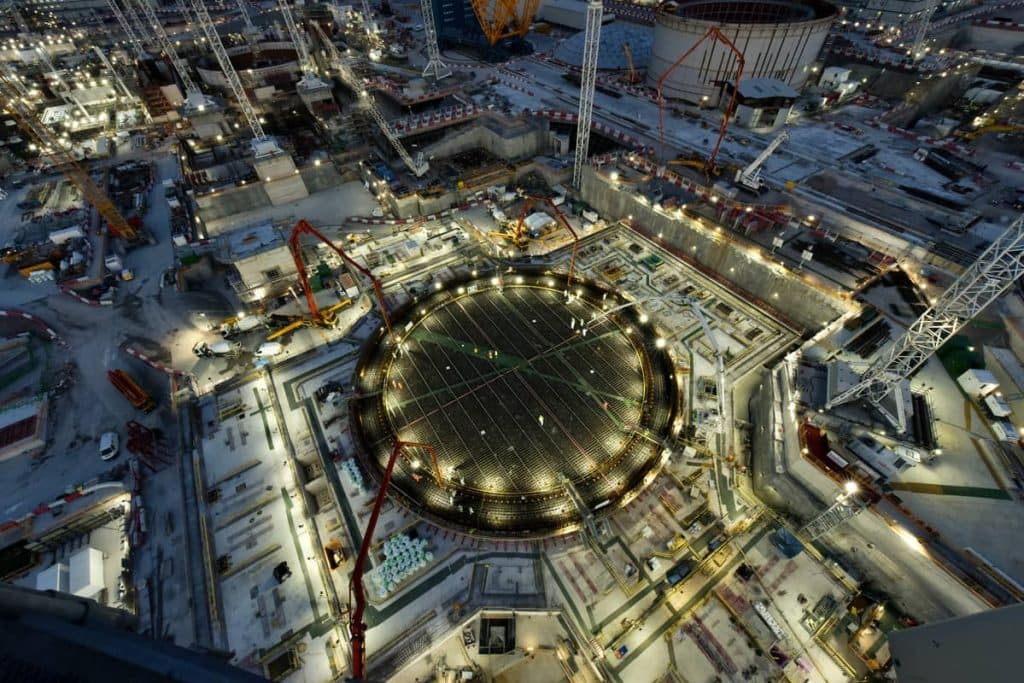
After months of intensive negotiations in Brussels on the proposed Net-Zero Industry Act (NZIA), the Council of the EU and the European Parliament agreed on 6 February to designate nuclear energy as a strategic technology for the decarbonisation of the EU, Euractiv reports. The aim of the NZIA, presented by the European Commission in March 2023, is to accelerate the deployment of technologies that can help the EU meet its target of reducing greenhouse gas emissions to net zero by 2050.
The proposed Net-Zero Industry Act (NZIA) comes in response to the massive US green subsidy programme, the Inflation Reduction Act, as well as China’s long-standing efforts to become a global leader in the production of clean technologies such as batteries, heat pumps and solar panels.
The law aims to ease the conditions for investment in green technologies. The EU wants to simplify the permitting process for industrial manufacturing facilities involved in producing components needed for renewable energy technologies and nuclear power, as well as bring greater clarity to public procurement and auctions, support strategic projects and create industrial valleys to make the EU a more attractive place to manufacture. The law also proposes favourable regulatory frameworks for the development, testing and validation of innovative technologies (so-called regulatory sandboxes).
Under the agreement reached, there will be a single list of “net-zero technologies” that will benefit from the measures proposed by the law. These are intended to ensure that Europe can manufacture domestically at least 40% of the technologies it considers strategic for achieving its goal of reducing emissions to net zero by 2050.
Simplifying permitting processes
The benefits for companies manufacturing components for net-zero technologies should include:
- Shorter and simpler permitting processes, with deadlines of 18 to 12 months for larger projects (more than 1 GW per year) and 12 to 9 months for smaller projects (less than 1 GW per year)
- Prioritising strategic projects to develop the infrastructure needed to expand nuclear power in Europe in public procurement
- Creating industrial valleys—clusters aimed at accelerating manufacturing activity, simplifying administrative procedures and reindustrialising regions
- Introducing additional criteria (beyond price) to give preference to auctionsfor the deployment of renewable energy technologies
Each EU country will have the sovereign right to define which projects are considered strategic on its territory and will benefit from faster permitting and simplified administrative rules.
Comparing the approach to renewable and nuclear energy
Negotiators from Parliament, the Council and the European Commission, who met in “trilogues”, confirmed the strategic status of nuclear energy projects included on the single list of zero-emission technologies, the so-called net-zero technologies, which will benefit from the NZIA.
The agreement covers proven and tested nuclear technologies as well as future third- and fourth-generation technologies, namely small modular reactors (SMRs) and advanced modular reactors (AMRs). Their fuel cycles are also included in the text.

Source: Renew Europe. Net Zero Industry Act (NZIA)
“The message is clear: the EU recognises that we need nuclear energy to achieve the goals of the Green Deal,” French MEP Christophe Grudler, who took part in the talks on behalf of the centrist Renew Europe group, told Euractiv.
The European Commission’s original proposal from March 2023 presented two lists of green technologies—one called “strategic” and the other “net-zero”, which offered fewer benefits—with nuclear technologies appearing only on the “net-zero” list. In addition, only third- and fourth-generation nuclear reactors were included, not existing ones.
A group of 16 European countries, including Czechia, involved in the “nuclear alliance” repeatedly called on the European Commission to recognise nuclear energy in the EU’s energy strategy and support better conditions for developing and deploying new nuclear power capacity in the EU.
After lengthy negotiations, nuclear energy was eventually included in the single list of 17 technologies proposed in November by the rapporteur for the legislative proposal, German MEP Christian Ehler of the European People’s Party (EPP). In addition, all nuclear technologies were covered: existing and future, fission, fusion and the fuel cycle.
“The result is that two forms of energy, renewable and nuclear, are finally being treated equally as part of the reindustrialisation process,” Grudler said.
Environmental groups were unhappy with the outcome. The German NGO Deutsche Umwelthilfe called the agreement a questionable compromise in favour of expensive and high-risk technologies. With nuclear energy and carbon capture and storage (CCS) included, renewable technologies such as wind and solar power are at risk, the organisation said.
Translation disclaimer
This article is a machine translation of the Czech original and has not yet been fully reviewed. In case of any doubt, please refer to the Czech version.
Sdílejte článek prostřednictvím:
You might also like

31 October 2026, 08:21
30 October 2026, 20:16
30 October 2026, 12:33