EU agrees to ban fossil fuel boilers from 2040
The European Parliament and the Council have reached a political agreement on the Energy Performance of Buildings Directive (EPBD), under which all new buildings will have to be zero-emission from 2030. The agreement also includes a decision to phase out fossil fuel boilers completely by 2040 and end subsidies from 2025. Both institutions must now formally approve the agreement, reports Euractiv.
The European Commission presented its proposal for the Energy Performance of Buildings Directive (EPBD) in December 2021 as part of the Fit for 55 package, which aims to achieve climate neutrality by 2050. The draft directive aims to ensure that all new buildings are zero-emission from 2030 and to renovate existing buildings, particularly those with high emissions.
“Tonight we achieved something remarkable. We have created a roadmap for transitioning to a zero-emission building stock,” said Ciarán Cuffe, the European Parliament’s rapporteur for the EPBD revision.
Agreement on the directive took a long time to reach, and the European Commission’s original proposal underwent several changes. The Council and European Parliament reached a compromise on 7 December. The Parliament’s Industry Committee has provisionally scheduled a vote on the agreed text of the directive for 23 January 2024.
“We are pleased and relieved that, after two years of work and many very difficult negotiations, we now have an agreement on the EPBD,” said MEP Seán Kelly, the European Parliament’s chief negotiator.
Key points of the agreement
Newly built buildings will have to be zero-emission from 2030, depending on the rules adopted by EU countries. This target was originally scheduled for 2028.
For existing buildings, the Commission had originally proposed a mandatory renovation target for the least efficient buildings and the introduction of minimum energy performance standards applying to the entire building stock. Following strong opposition from EU member states, this approach was dropped in favour of national benchmarks based on average performance. Minimum building standards will therefore not be tied to individual buildings and their owners, but to the average condition of each country’s entire building stock. The Czech Republic also criticised this original proposal.
Under the current proposal, commercial and public buildings will be first in line. By 2030, they will have to be renovated so that they perform better than the 16% of buildings with the worst energy performance in the country, and by 2033 they will have to achieve an improvement of at least 26%.
The most difficult part of the negotiations concerned residential buildings in Europe. They will have to achieve a 16% reduction in primary energy consumption by 2030 and a reduction of 20–22% by 2035, with more than half of this reduction (55%) achieved by renovating the buildings with the worst energy performance.
However, this target is relatively lenient compared with the original plan, since almost half (43%) of residential buildings are considered to have the worst energy performance. The remaining half of the energy consumption reductions is therefore expected to come from a gradual shift to clean heating solutions such as heat pumps.
Eva Brardinelli, a buildings expert at CAN Europe, a climate NGO, says the new rules are unlikely to prompt EU countries to increase renovation rates beyond the current average of 1% per year.
Ban on fossil fuel boilers pushed back by 5 years
The requirement to phase out fossil fuel boilers has also been softened and pushed back from 2035 to 2040. However, from 2025, EU countries will have to stop subsidising standalone fossil fuel heating systems, a phrase that leaves the door open to hybrid boilers that run partly on renewable energy. The ultimate goal is to decarbonise heating by 2040 and completely phase out fossil fuel boilers.
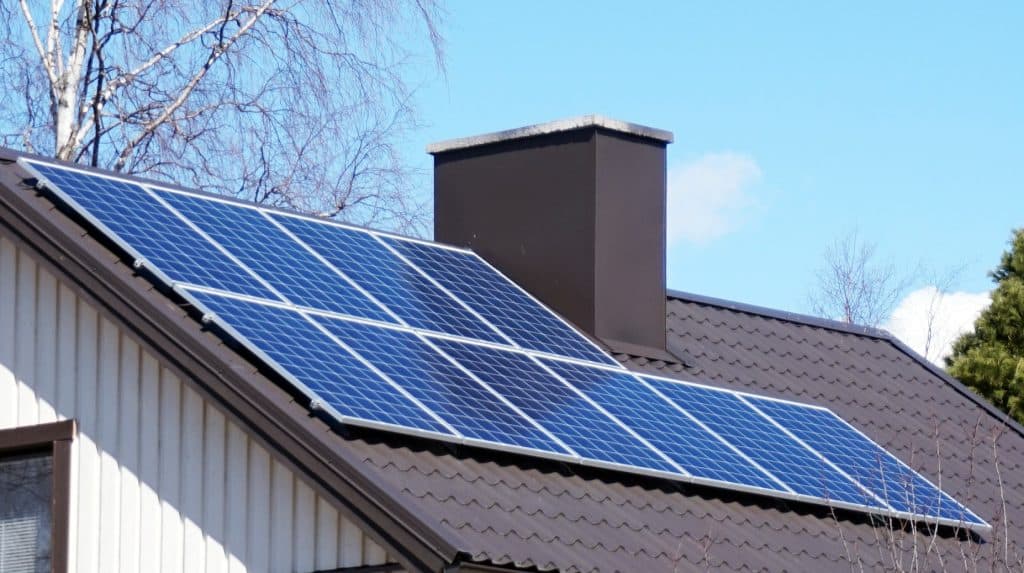
The provision requiring homeowners to install solar panels on roofs has also been softened, with existing residential buildings exempt from this obligation. Instead, the requirement will apply only to new buildings, public buildings and existing non-residential buildings undergoing renovations that require a permit.
Other exemptions include agricultural and heritage buildings, which may be excluded from the new rules. This also applies to buildings of special architectural or historical value, churches and other places of worship.
One issue the directive does not address is the lack of consistency in energy performance certification systems and standards currently in force across EU regions.
“We want to help people make their homes more efficient, so they are more energy-efficient, comfortable and healthy. This is a win for all citizens: improving the energy performance of buildings means lower energy bills and lower greenhouse gas emissions. Today’s agreement strikes the right balance between European standards, national implementation, individual autonomy and financial support,” European Commission Vice-President Maroš Šefčovič said in response to the agreement.
Implementing the directive
Once the EPBD is approved, the focus will shift to implementation by EU member states, which are expected to incorporate the new directive into their national building renovation plans.
Environmental organisations are mostly disappointed by the rules being watered down, but believe that implementation at national level could still bring changes.
“Although this directive has lost its potential to contribute to remarkable change, it is still a small step towards the implementation phase at national level, where the real fight for ambition will take place,” said Eva Brardinelli of CAN.
Translation disclaimer
This article is a machine translation of the Czech original and has not yet been fully reviewed. In case of any doubt, please refer to the Czech version.




