European Parliament elections could significantly shape the future of Europe’s energy sector

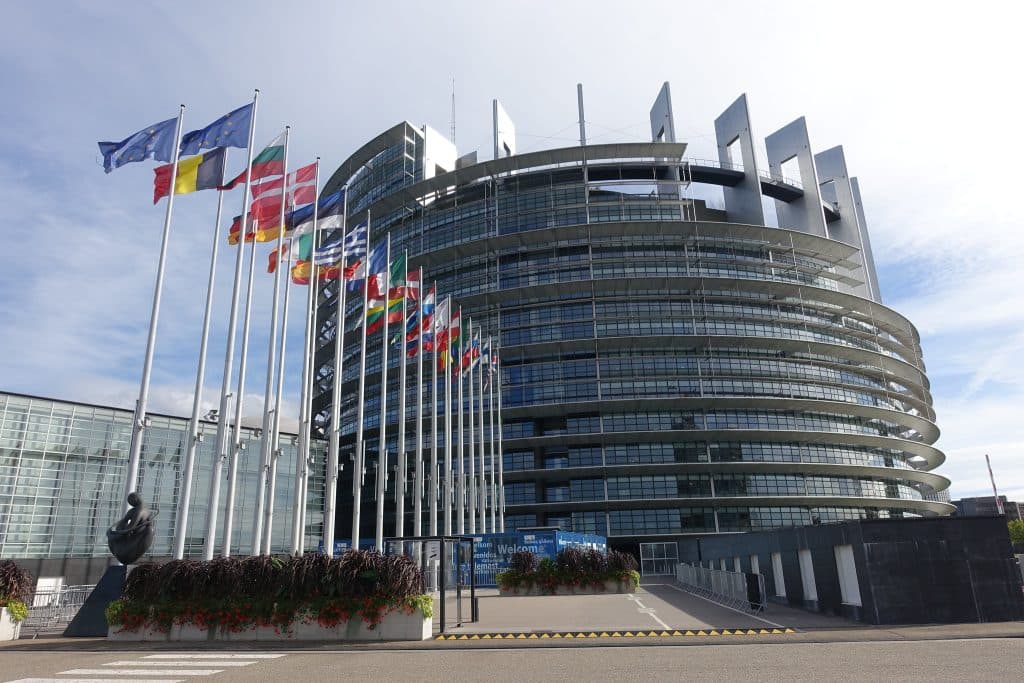
The European Parliament elections taking place on 7 and 8 June are likely to have a major impact on the future development of European climate targets. In light of the recent proposal by the Commission to set climate targets for 2040, however, these more ambitious plans seem rather unfeasible. News outlet Euractiv offers a brief overview of what to expect after the June elections and what the implications will be in the context of the new climate targets.
According to opinion polls, Europe as a whole is shifting towards right-wing ideals represented by nationalist parties. Their gains are also expected to come at the expense of the Greens, the Socialists and the left more broadly. This could slow the green machinery already in motion, which has significantly shaped trends in efforts to raise climate targets over the past 5 years.
A recent debate in the European Parliament on achieving a 90% reduction in greenhouse gas emissions compared with 1990 offers a preview of what may lie ahead.
Right-wing parties
The right argues that this approach to climate targets will negatively affect the development of European industry and will hit lower-income groups in particular.
According to Czech MEP Alexander Vondra, the proposed targets are “unrealistic”. He sees the problem as an “attempt to force people into a different lifestyle that would limit their freedom of choice”.
The European Conservatives and Reformists group, of which Vondra is a member, is expected to strengthen its position, gaining 18 seats on top of its current 62. At the same time, the far-right Identity and Democracy group, which includes a German MEP from the Alternative for Germany party, could increase its seat count from 73 to 93.
Sylvia Limmer’s comments offer a preview of the rhetoric the party is likely to adopt at the European level. Limmer says we should look at Germany as an example. She describes it as a “green champion” where deindustrialisation is proceeding rapidly “because German companies cannot afford to pay more for electricity”.
She also added that, despite the growing share of renewables in Germany, there are days when “more than 90% of electricity is generated using coal, oil and gas because the wind isn’t blowing and the sun isn’t shining”. Sylvia Limmer considers “red-green” climate policy the worst economic “collapse” recorded during the entire existence of the European Community.
What about the EPP?
The European People’s Party is focusing more on the current issue of farmers’ protests. Although it is expected to remain the largest party in the European Parliament with 178 seats, it looks set to take a more cautious stance on climate targets for 2040. Its main concern is the impact on farmers, with EPP representative Peter Liese stressing that “people who work hard for low incomes” cannot afford green technologies such as heat pumps or electric cars.
According to Liese, these people need “more support, not only through the Social Climate Fund, but also through national resources.”
The other side
The Socialists and Democrats fully support emissions-reduction targets aimed at limiting warming to a maximum of 1.5 °C, as set out in the Paris Agreement.
Comments by Dutch Socialist MEP Mohammed Chahim point out that the EU’s target of reducing emissions by 55% by 2030 was adopted by Parliament during the current term, and maintaining the same trajectory over the next decade would bring the EU to “90%, no more and no less.” He also urged his right-wing colleagues to debate the issue respectfully and said they should not pretend “that these targets are really ambitious.”
He added that Europe should strive to stay ahead and close the “huge gap” with China and the US in terms of green investment.
The Socialists and Democrats are very likely to remain the second-largest group in Parliament, with 143 seats, down from the current 154.
Centrists want to see concrete plans
The centrist Renew Europe group is expected to lose ground after the elections, with polls predicting 84 seats, down from 108 in the current Parliament.
Pascal Canfin, a French Renew lawmaker who chairs Parliament’s Environment Committee, said his party would support the 90% target because it is “based on science”. He was referring to the Intergovernmental Panel on Climate Change (IPCC), which has established the scientific consensus on global warming.
He noted, however, that setting climate targets is not the only issue. “First of all, we need the right amount of funding. If the funding is not available, we will not achieve the target,” Canfin warned. Like the EPP, the centrists are also focused on finding a fair way to address agricultural emissions. “Farmers have made an effort, but large supermarkets and the rest of the supply chain are not subject to the same kind of rules,” he said, adding his call for an effective solution from the Commission.
The Greens are losing momentum
As already noted, the Greens are likely to suffer major losses in June. They are expected to win 50 seats, down by 24.
Dutch MEP Bas Eickhout said the Greens would support the Commission’s recommended 90% target for 2040, even though it is “at the lower end” of the 90–95% range advocated by the European Scientific Advisory Board on Climate Change.
The key, however, will be setting out the precise steps needed to achieve the 90% target. “Above all, we need to send a very clear signal that fossil fuels must be phased out of the power system,” he argued.
He warned, however, against EU plans to support carbon capture and storage (CCS) technology as a way to tackle industrial emissions, condemning the move as a risky bet on unproven technology.
Eickhout concluded his remarks by calling for action on greenhouse gas emissions from agriculture, which were addressed only superficially in the Commission’s 2040 communication.
A weakened left
Like the Greens, the far left insisted on the need to follow scientific advice and set a more ambitious climate target for 2040.
According to Finnish MEP Silvia Modig, it is important to establish exactly how emitted greenhouse gas emissions are calculated. She added that it is necessary to “set different targets” for carbon removals from agriculture or forestry, so that efforts to reduce emissions required of the power generation and industrial sectors can be clearly distinguished.
The MEP stressed that agricultural emissions have not fallen over the past 20 years, despite billions of euros being spent on climate measures.
According to polls, this political group is also expected to lose seats, falling from 41 to a projected 37.
Translation disclaimer
This article is a machine translation of the Czech original and has not yet been fully reviewed. In case of any doubt, please refer to the Czech version.




