10 October 2026, 07:37
Loading...
Generation is growing faster than grids. Europe is hitting transmission limits.
Veronika Jurcová
27 January 2026, 11:55
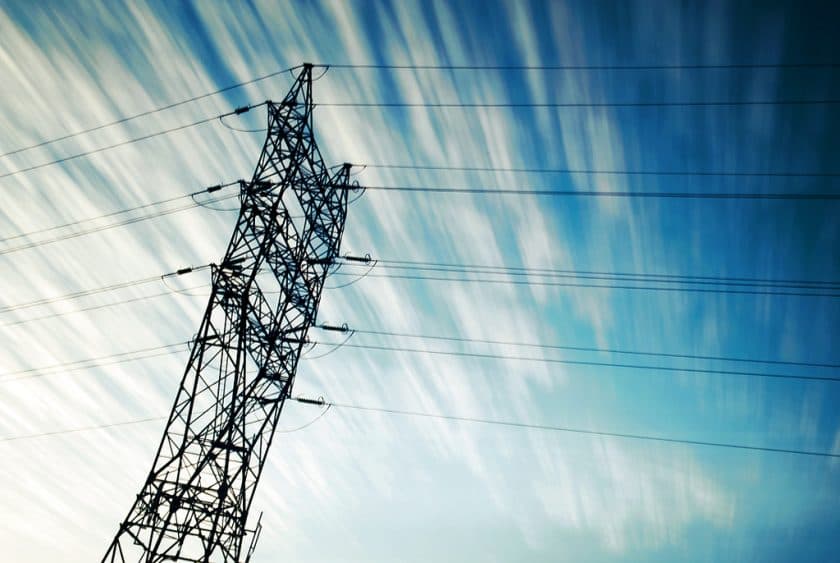
Europe is clear that its energy future will be electric. But for now, it is running up against a basic problem: it cannot get electricity to where it is needed. Fatih Birol, head of the International Energy Agency (IEA), has identified the slow development of transmission and distribution grids as the biggest brake on Europe’s transition. At the World Economic Forum in Davos, he warned that without massive investment in grids, green energy will remain only on paper, reports Montel News. Finding a solution is also complicated by disagreements among member states.
According to IEA head Fatih Birol, Europe has only one realistic way forward: “electrify everything”—transport, industry and buildings. This will require the Union to invest massively in grids while also ensuring that electricity remains affordable for households and businesses.
“Last year, we installed a record 80 gigawatts of renewable capacity in Europe, but more than 400 gigawatts were ready and we were unable to connect them to the grid,” Birol said at a panel in Davos. He likened the situation to Europe having “built a beautiful car but forgotten to build the roads.”
What is the grid package and why is it crucial?
The so-called grid package is intended to address this weakness. The package of measures was presented by the European Commission at the end of 2025. Its goal is to modernise outdated transmission systems, remove bottlenecks in cross-border interconnections and speed up permitting processes, which are currently holding back the construction of new power lines and substations.
The Commission is responding to the rapid growth of wind and solar power plants, which are geographically dispersed and increase the demands on grid flexibility. According to the Commission, Europe is not currently short of renewable electricity generation; rather, it is unable to transmit that electricity efficiently. Data from think tank Ember confirm this: wind and solar power generated more electricity than fossil fuels for the first time in 2025, but the grid remains outdated and prevents their full use.
According to Brussels, grid congestion costs the European economy billions of euros a year and directly slows decarbonisation. Analyses by Aurora Energy Research show that grid congestion could nearly double by 2030, reaching 140 TWh, while annual redispatch costs already amount to nine billion euros. Germany alone paid 1.6 billion euros for grid interventions in the first half of 2025.
Energy Commissioner Dan Jørgensen openly admits that the existing model has failed and that the current pace of grid construction is too slow. The Commission is therefore proposing a major change of approach: more centralised, top-down planning.
Brussels wants to do more planning; member states resist
The European Commission now wants to identify the biggest investment gaps itself and propose key projects. According to Jørgensen, this is not about taking powers away from member states, but about improving coordination.
The first test will be eight so-called energy highways—key cross-border projects ranging from connecting the Iberian Peninsula with the rest of the EU to undersea cables to Cyprus and hydrogen pipelines in southern Europe.
But this very shift towards centralisation is creating tensions among member states. The most visible dispute is between France and Germany, and it resurfaced this week.
France versus Germany: Who should decide?
The greater role for Brussels is creating tensions among member states. They were also on display at the Franco-German Energy Forum, where the differing views of Paris and Berlin were once again apparent.
France has warned against an overly “top-down” approach. Paris believes key decisions should first be made in regional structures, for example within the Central Western Europe (CWE) region.
“The best step is not fully centralised planning at EU level, but stronger regional cooperation,”said Jean Sevestre-Giraud of the French Ministry of Economy.
German representative Jan-Kristof Wellershoff, by contrast, emphasised the broader European picture. In his view, new cross-border projects should have the greatest possible impact on energy security and affordability.
The European Commission is closer to the German position in this dispute. According to Director-General for Energy Ditte Juul Jørgensen, the current system is failing, and without a more active role for Brussels, up to 41 gigawatts of key cross-border power lines may not be built. The Commission believes stronger coordination across the Union will lead to more effective investment and lower overall costs for Europe’s energy system.
Electricity as a test of European integration
Analyses warn that the situation will continue to deteriorate without rapid change. This is also borne out by the Agency for the Cooperation of Energy Regulators (ACER), which says grid costs are becoming one of the main drivers of rising electricity prices and a threat to the competitiveness of European industry.
The debate over grids is therefore moving beyond technical matters and becoming a political issue. The question is whether Europe can match the rapid growth of renewable energy sources with physical infrastructure, and whether it is willing to strengthen joint planning to do so.
As blackouts on the Iberian Peninsula and extreme price fluctuations in southern Europe have shown, the cost of inaction is high. Overloaded grids are not only holding back decarbonisation but increasingly affecting electricity prices for consumers and the competitiveness of European industry.
As Fatih Birol put it in Davos, Europe’s future is electric. But without new “roads” for electricity, the Union will struggle to get there.
Translation disclaimer
This article is a machine translation of the Czech original and has not yet been fully reviewed. In case of any doubt, please refer to the Czech version.
Sdílejte článek prostřednictvím:
You might also like
10 October 2026, 07:02
9 October 2026, 13:47