Germany will need another 100,000 workers to develop solar power

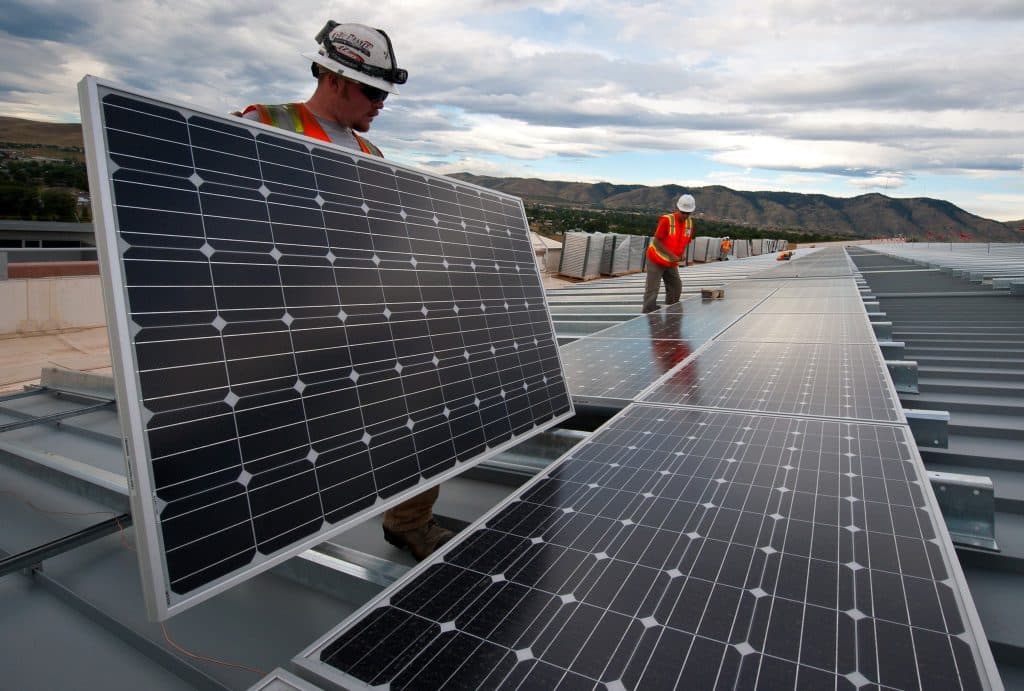
Germany needs to secure an additional 100,000 skilled workers to meet its solar power development targets. At the end of 2022, around 65,000 people worked in the German solar sector. The news was reported by the foreign news website Clean Energy Wire.
Last year, 7.4 GW of new solar capacity was installed in Germany, bringing total installed capacity to 67 GW. To meet its 2030 target of 215 GW of installed capacity from these sources, the pace of development will have to accelerate significantly in the coming years. By 2026, 22 GW of new solar capacity should be installed annually.
One of the biggest challenges in meeting the targets is a shortage of skilled workers. The German Solar Industry Association (Bundesverband Solarwirtschaft - BSW) estimates that an additional 100,000 workers will be needed on top of the current workforce of around 65,000.
A considerable share of the workers needed could come from abroad. The foreign news website Clean Energy Wire pointed, for example, to the February agreement between BSW and the Indian initiative Skill Council of Green Jobs to integrate skilled Indian workers into Germany’s solar industry.
"We need more hands to drive the energy transition, and we want to ensure the necessary massive expansion of solar power with trained tradespeople, whom we cannot find in Germany because of the shortage of skilled workers," said David Wedepohl, BSW’s managing director for international affairs, in February.
According to published information, more than 50,000 workers have already been trained under the Indian initiative and are available to enter the labour market.
The shortage of skilled workers is not limited to the solar sector; it affects practically every industry involved in the energy transition. Last year, a report by the German Economic Institute (Institut der deutschen Wirtschaft Köln) estimated that Germany is short of more than 200,000 skilled workers to successfully implement the energy transition.
Translation disclaimer
This article is a machine translation of the Czech original and has not yet been fully reviewed. In case of any doubt, please refer to the Czech version.




