6 November 2026, 14:13
Loading...
Germany's security reserve: lignite-fired power plants shut down early

David Vobořil
14 December 2023, 14:17
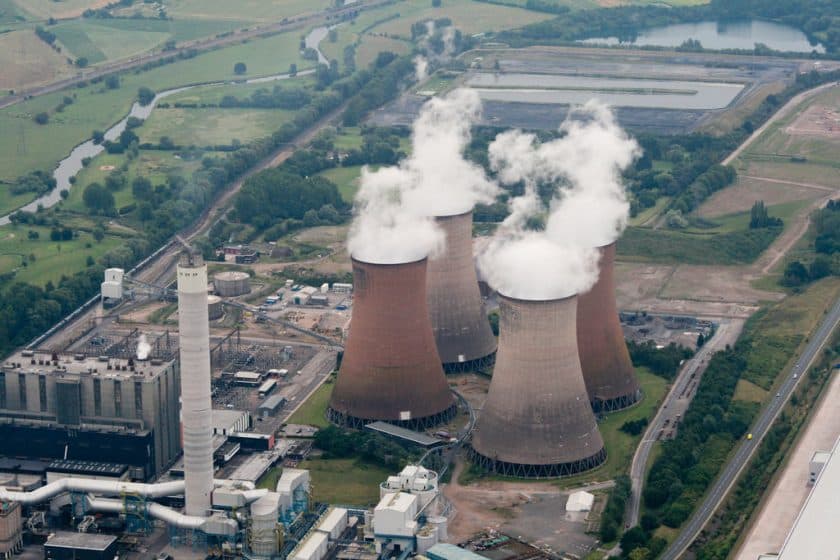
In addition to supporting renewable energy sources, Germany also provides out-of-market support to conventional power plants through several reserves that keep the capacity needed for various purposes on standby. These include, on the one hand, reserves that provide capacity to stabilise the transmission system and, on the other, reserves that serve to cover electricity consumption in the event of a shortage of generating capacity.
Germany currently keeps conventional power plants on standby in the following reserves:
- network reserve – to provide power plant capacity to stabilise the transmission system
- special grid equipment – to provide power plant capacity in southern Germany to stabilise the transmission system
- capacity reserve – to cover electricity consumption in the event of a shortage of generating capacity
- supply reserve – to save gas in the energy sector by activating coal-fired power plants
This article takes a closer look at the security reserve. It was introduced to bring forward the shutdown of lignite-fired power plants and reduce carbon dioxide emissions in the energy sector, while keeping their capacity on standby. The reserve operated until 2022, after which some of the power plants were transferred to the supply reserve.
Previous articles in the series covered:
Security reserve
The security reserve, also known as the “lignite reserve” or “climate reserve”, was introduced in Germany to reduce carbon dioxide emissions in the energy sector by shutting down lignite-fired power plants. Power plants in the security reserve could not participate in the market, but were kept in reserve in case the available power plant capacity, including the network reserve, capacity reserve and interruptible load, was insufficient to cover demand or meet redispatch and balancing energy requirements.
In 2015, the year before the first lignite-fired power plant entered the security reserve, lignite-fired power plants produced 50% of CO2 emissions in Germany’s electricity sector, but covered only 24% of German electricity consumption. When the reserve was introduced, it was expected that the gradual retirement of lignite-fired power plants would save 12.5 million tonnes of CO2 emissions annually from 2020. This represented approximately 50% of the savings needed in the energy sector to meet Germany’s 2020 climate protection target.
After four years in the security reserve, the power plants were permanently decommissioned. The security reserve was fully wound down in 2023. Due to the energy crisis and the reduction in Russian gas supplies to Germany, the power plants that were still part of the security reserve were transferred to the so-called supply reserve (see below).
At the request of the transmission system operator, power plants in the security reserve had to be ready to operate within 10 days and then be able to ramp up to partial output within 11 hours and to rated output within a further 13 hours. Power plant operators had to demonstrate in advance that their plants could meet these requirements.
Size of the security reserve
Eight power plant units with a total capacity of 2.7 GW were gradually transferred to the security reserve, equivalent to 13% of Germany’s installed lignite-fired power plant capacity.


Night view of the Frimmersdorf power plant. Source: Flickr, Craebby
Remuneration for power plants in the security reserve
The power plant operators (MIBRAG, RWE and LEAG) received a total of 1.61 billion euros in compensation for keeping their plants in the security reserve (230 million euros annually). These costs were covered through network charges and increased them by approximately 0.05 cents per kWh.
The operators themselves cover the subsequent costs of permanently decommissioning the power plants. Remuneration for the security reserve was to be reduced if plants failed to respond to a call in time, falling to zero from day 13. However, if a plant was permanently decommissioned early, its operator was to receive a one-off closure payment, with a sum of between one and two billion euros under discussion.
The European Commission approved support for the shutdown of lignite-fired power plants held on security standby on 27 May 2016.
Criticism of the security reserve
The German government was criticised in connection with the security reserve for not checking whether the power plants could meet the requirement to be ready to operate within ten days of a request from the system operator.
Claudia Kemfert, a member of the German Advisory Council on the Environment, said that for a power plant to be ready to operate within ten days, it would need to have personnel permanently available. According to Kemfert, however, keeping a power plant in reserve under those conditions would not be profitable.
The parliamentary party Die Linke questioned, in particular, whether coal could be secured in time if the Buschhaus lignite-fired power plant in eastern Germany were called on to be ready for operation. The party said the coal would have to be transported by rail from 200 kilometres away because the neighbouring open-pit mine had been exhausted. At a daily coal consumption of 6,000 tonnes, this would mean 240 railcars a day.

Buschhaus coal-fired power plant. Source: Wikimedia Commons / Axel Hindemith / CC BY-SA 3.0
The federal government referred to assurances from the power plant operators. It also relied on these assurances in response to concerns that high-moisture central German lignite would be considerably harder to transport in freezing weather in unheated coal wagons.
Criticism was also directed at the inadequate penalties for power plants that failed to meet the requirements. If a power plant failed to meet the request to start up within the specified ten-day period, its remuneration would be reduced by ten percent per year. Given the already very low likelihood that reserve plants would be activated, along with inadequate monitoring, losses in remuneration for power plant operators were therefore highly unlikely.
“Electricity consumers are paying for something that may not even exist,” Anton Hofreiter, co-chair of the Green Party parliamentary group, told Welt Online.
Power plants in the security reserve were never activated during its operation. This was in line with the expectations of political decision-makers.
“We assume that the power plants will not be deployed,” State Secretary Rainer Baake told energate messenger when the security reserve was being established.
Supply reserve and other measures to save gas in the energy sector
After Russia launched its war against Ukraine, the German government aimed to reduce Germany’s dependence on Russian gas supplies. From 1 October 2022, the lignite-fired power plants still in the security reserve were transferred to a new supply reserve, where they would be available more quickly than under the security reserve.
Germany also decided to transfer hard coal-fired power plants and fuel oil-fired power plants that had succeeded in the third and fourth rounds of auctions for support to shut them down to the network reserve.
Power plants in the supply reserve and hard coal-fired power plants transferred to the network reserve can participate in the market if an alert or emergency level is declared—that is, the second or third, and highest, level of Germany’s emergency gas plan.
In both cases, the power plants were to remain on standby until 31 March 2024, after which they would be permanently shut down.
Translation disclaimer
This article is a machine translation of the Czech original and has not yet been fully reviewed. In case of any doubt, please refer to the Czech version.
Sdílejte článek prostřednictvím:
You might also like
6 November 2026, 10:25